4. Universités – Sorbonne

Borgarrölt

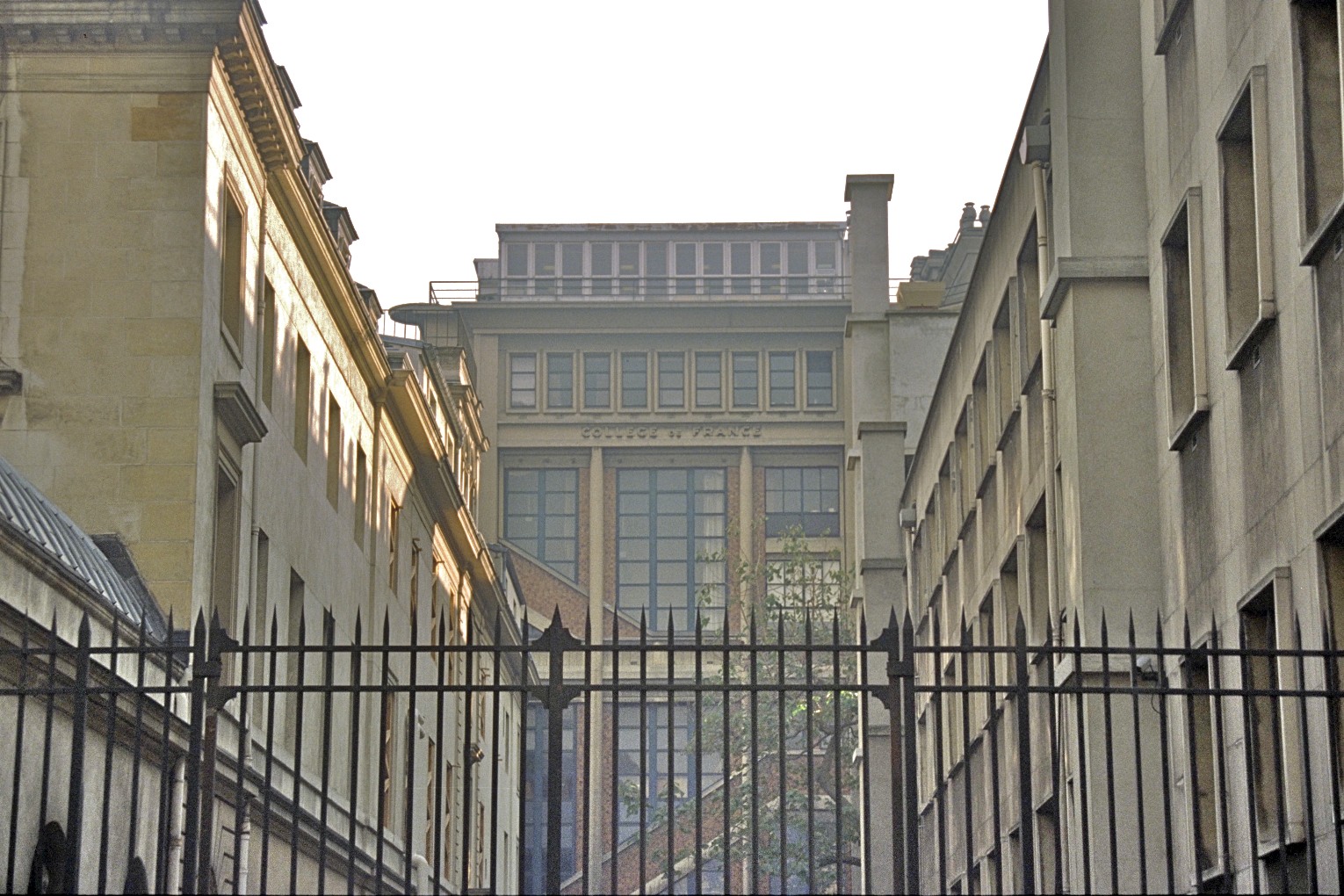
College de France

College de France, Paris

College de France

We turn right into Rue Valette and then left through Rue de Lanneau to Collège de France.

All buildings in this area are university buildings. In the 12th C. teachers and students evaded the power of the Ile de la Cité bishops and moved here. Many university colleges grew up here, the first in 1215.

The colleges or Universités in Paris now number 13 and have about 200,000 students. The buildings are spread over the city, but here their concentration is greatest. Learning gave the district its name, the Latin quarter, even if no Latin is spoken in its streets any more.

Sorbonne

We continue along Collège de France and come to the back of Sorbonne at Rue Saint-Jacques. We can make a detour around Sorbonne by turning left into that street, then right into Rue Cujas and finally to the right along Rue Cousin and Rue de la Sorbonne to the front of the Sorbonne.

The Sorbonne is the most famous of the Univeristés, founded 1253 as a college of theology. The first printing house in France started there in 1469. In 1968 the Sorbonne became one of the main centres of student unrest in France.
Next steps

3. Universités – Saint-Étienne-du-Mont

Borgarrölt

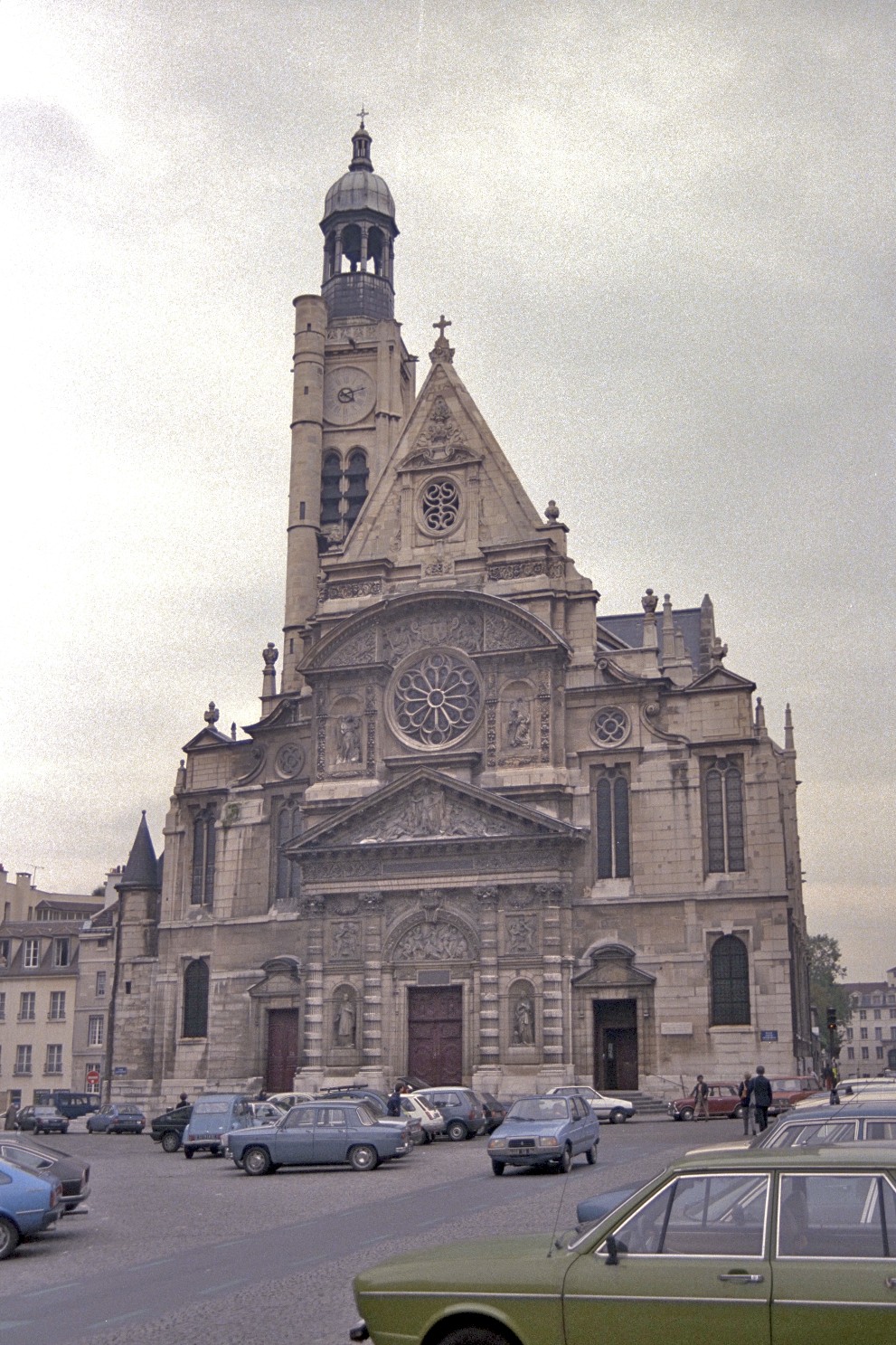
Saint-Étienne-du-Mont

Saint-Etienne-du-Mont, Paris

Saint-Étienne-du-Mont

We leave the arena and climb Rue des Arènes, cross Rue Monge and take the steps into Rue Rollin. With a short detour into Rue du Cardinal Lemoine to the right and then Rue Thouin to the left we arrive at the Rue Descartes to the right and then Rue Clovis to the right. This seems complicated but is in fact a very short distance. We are at Saint-Étienne-de-Mont.

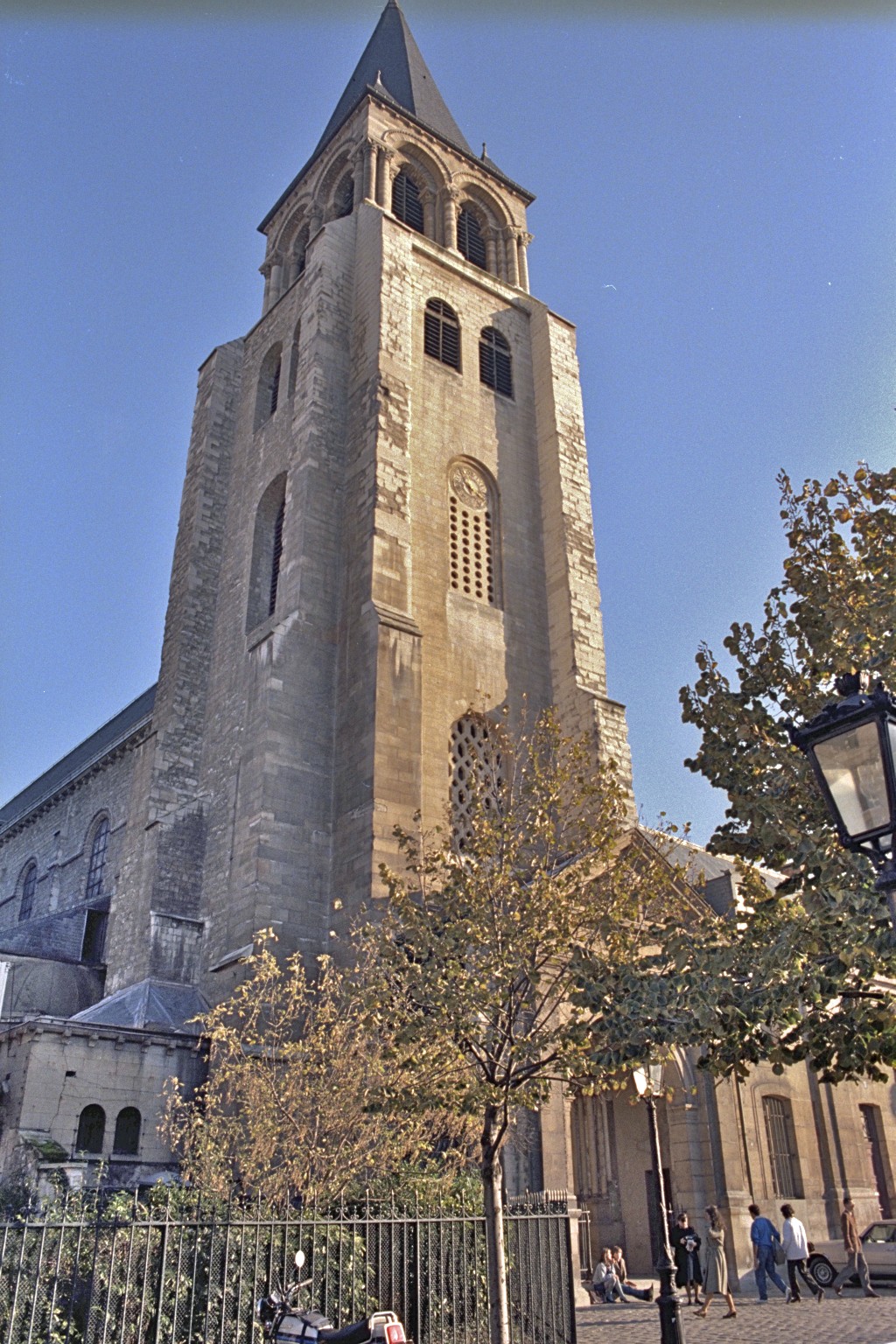
Built 1492-1626, a strange mixture of styles. It is even bent in the plan, as we can see by taking a look at its irregular west front. It is mainly Gothic, but some elements are Renaissance. It is unique in Paris in having a big rood screen in front of the chancel. Such screens were in fashion in the 15th and 16th C., but have been removed in other Paris churches.

Pantheon is here next door, but we saw it on our last walk so we will skip it here.

Next steps

2. Universités – Arènes de Lutèce

Borgarrölt

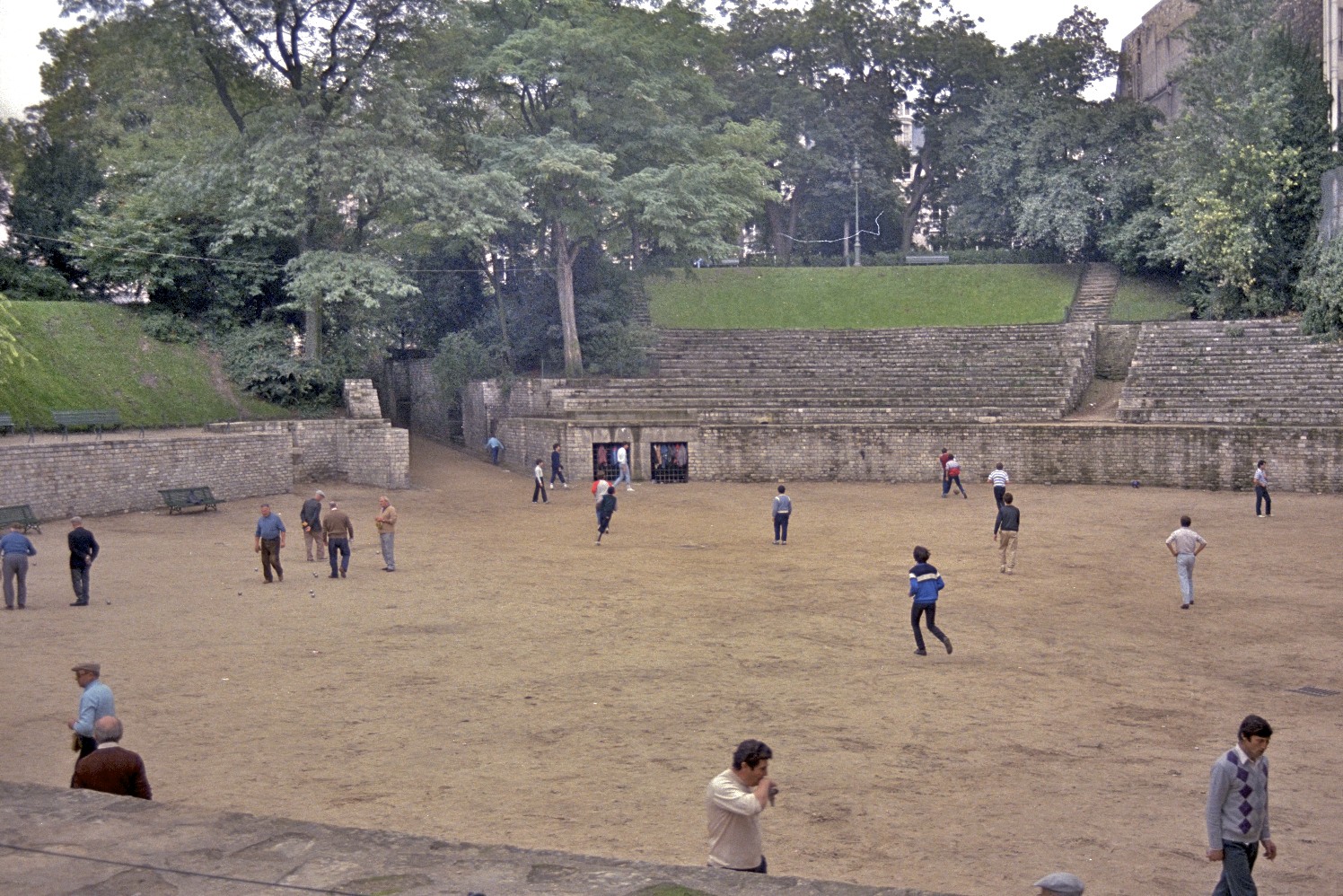
Arenes de Lutece, Paris

Arènes de Lutèce

From there we take Rue Lacépede and soon turn right into Rue de Navarre where we arrive at Arènes de Lutèce.

A relatively well-preserved arena from Roman times. Its age has not been established with certainty, but it could be from the 1st C. The Romans first came to Paris in 54 B.C. and had a permanent camp from the year 1 A.D. They called their settlement Lutetia, Lutèce in French. Christianity arrived here about 250. Barbarians sacked Paris in 280 and destroyed the arena.

Since then the structure was forgotten beneath the surface until it was accidentally found during road making in 1869. It has been excavated and now it is used by men playing pétoncle and boys playing soccer, while travellers rest in the audience stalls. Restaurant Baptiste is around the corner.

Next steps

Allt í fínu að ljúga

Punktar

Guðfinnu Jóhönnu Guðmundsdóttur finnst í lagi að reyna að ljúga sig út úr hvers kyns vanda. Borgarfulltrúi Framsóknar sagði DV hafa farið rangt með ummæli sín og eiginmanns síns, Svans Guðmundssonar, Mr. Camp Knox. DV birti símtölin, sem sýndu blaðið hafa farið með rétt mál. Guðfinna og Svanur voru að reyna að nota stöðu Guðfinnu til að troða gámum fyrir fátæklinga upp á Reykjavíkurborg. En Guðfinna lýgur ekki bara, heldur skilur hún ekki hugtakið spilling. Í Framsókn er talið eðlilegt, að hjón „hjálpist að“ á sama hátt og mafían. Það endar með því klassíska kjörorði, að fólk „eigi ekki að líða fyrir það að vera Framsókn“.

7. La Vie – Rue Fürstemberg

Borgarrölt

Rue Fürstemberg

Paris, France 2

We go back Rue de Seine and turn left into Rue Jacob and again left into Rue de Fürstemberg.

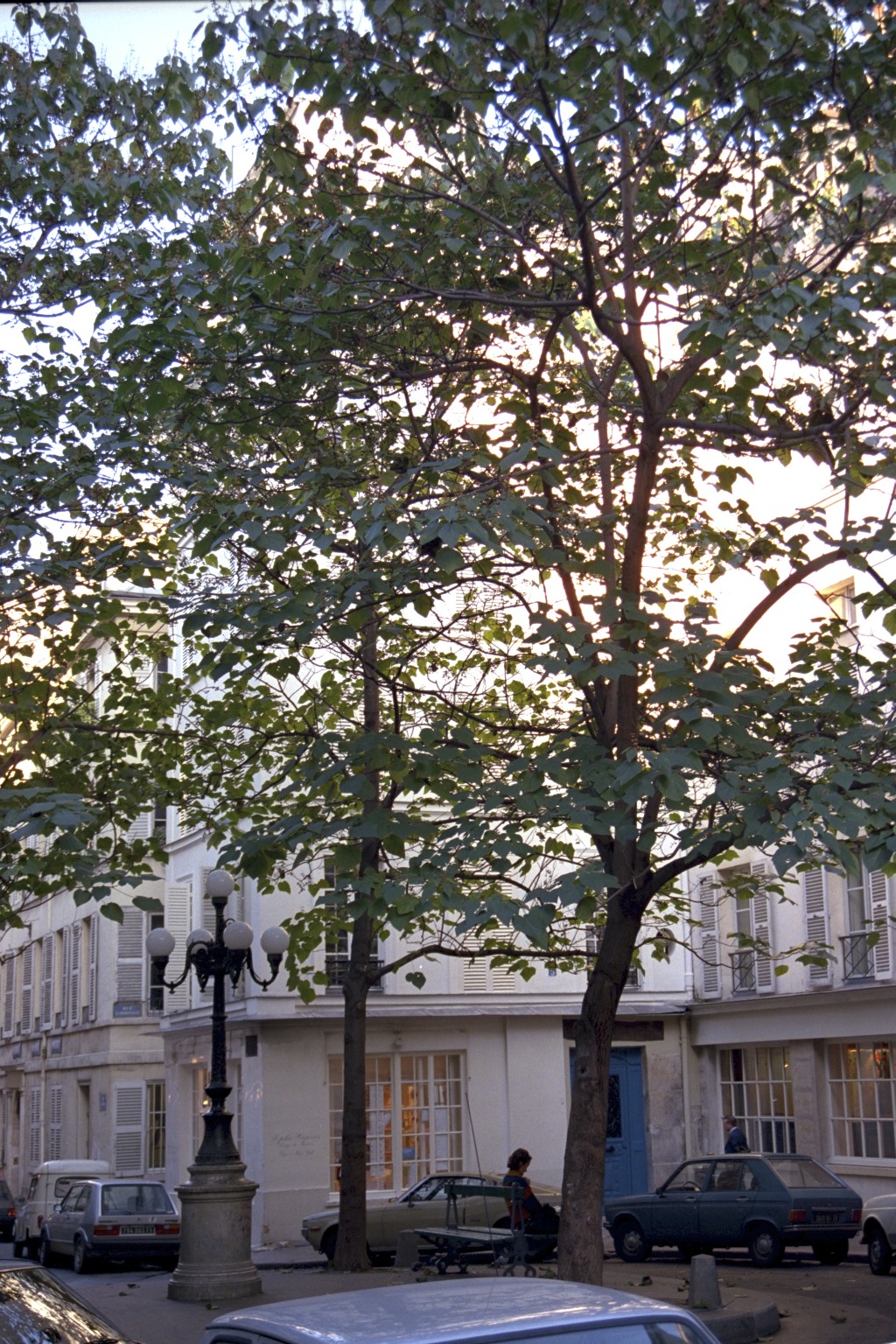
A peaceful pedestrian street with a romantic tiny square with old-fashioned street-lamps. Often there is singing and playing of musical instruments under the mild shadows of the trees in the square.

From the square we retrace our steps and turn right into a quaintly curved street, Rue Cardinale, with some old houses. Then we turn left and continue a few steps along Rue de l’Abbaye and then to the right along Rue de l’Échaudée, all streets reserved for pedestrians. We have reached Boulevard Saint-Germain again.

We almost immediately leave it to the left into Rue de Buci which lies in an angle over Rue de Seine, crossing the market. We have a look into Rue Mazarine where art galleries abound, before we turn right into Rue de l’Ancienne Comédie. Pub Saint-Germain is there and the historical Café Procope.

Once again we are in Boulevard Saint-Germain. Once more we immediately leave it, through the pedestrian Passage-du-Commerce-Saint-André, where we can see remains of the old city wall behind windows at no. 4 and where we can rest at Cour de Rohan.

At the end of the passage we turn right into Rue Saint-André-des-Arts, which we follow all the way to the Seine, passing restaurant Allard. 

This walk is finished.

Next steps

6. La Vie – Boulevard Saint-Germain

Borgarrölt
Rue de Seine, Paris

Rue de Seine

Boulevard Saint-Germain

The center of Left bank pavement café-life is around the church. We have a look around.

The boulevard lies in a curve through the 5th, 6th and 7th districts, starting at the Seine opposite Ile de Saint-Louis and ending at the Seine opposite Place de la Concorde. This part is in the 6th district, and is the cultural centre of Paris, the neighbourhood of publishers and book shops, antiquarians and art galleries, cafés and restaurants.

In the last century Montmartre was the main artists’ centre. Before World War II Montparnasse was the centre. But since then Saint-Germain has taken over as the cultural navel. In that vanguard were Jean-Paul Sartre and other existentialists such as Albert Camus and Simone de Beauvoir. Their cafés, Flore and Deux Magots are nestling here under the church.

The district is full of narrow streets, nooks and crannies, difficult for cars but the more so pleasant for pedestrians. We shall stroll around without hurry and give us time to have a look into side streets.

We go north from the west front of Saint-Germain-des-Prés, cross the boulevard and go into Rue Bonaparte. We scan Rue Jacob with quaint shops and small hotels, continue on Rue Bonaparte and turn right into Rue des Beaux Arts, with the “Hotel” where Oscar Wilde was in 1900 “dying above my means”.

Rue de Seine

We turn right into Rue de Seine.

Near the corner of Rue des Beaux Arts and Rue de Seine there is the old café Tabac de l’Institut. Rue de Seine is also a street of art galleries, and it is located in a district with the greatest number of cafés and restaurants, including Muniche.

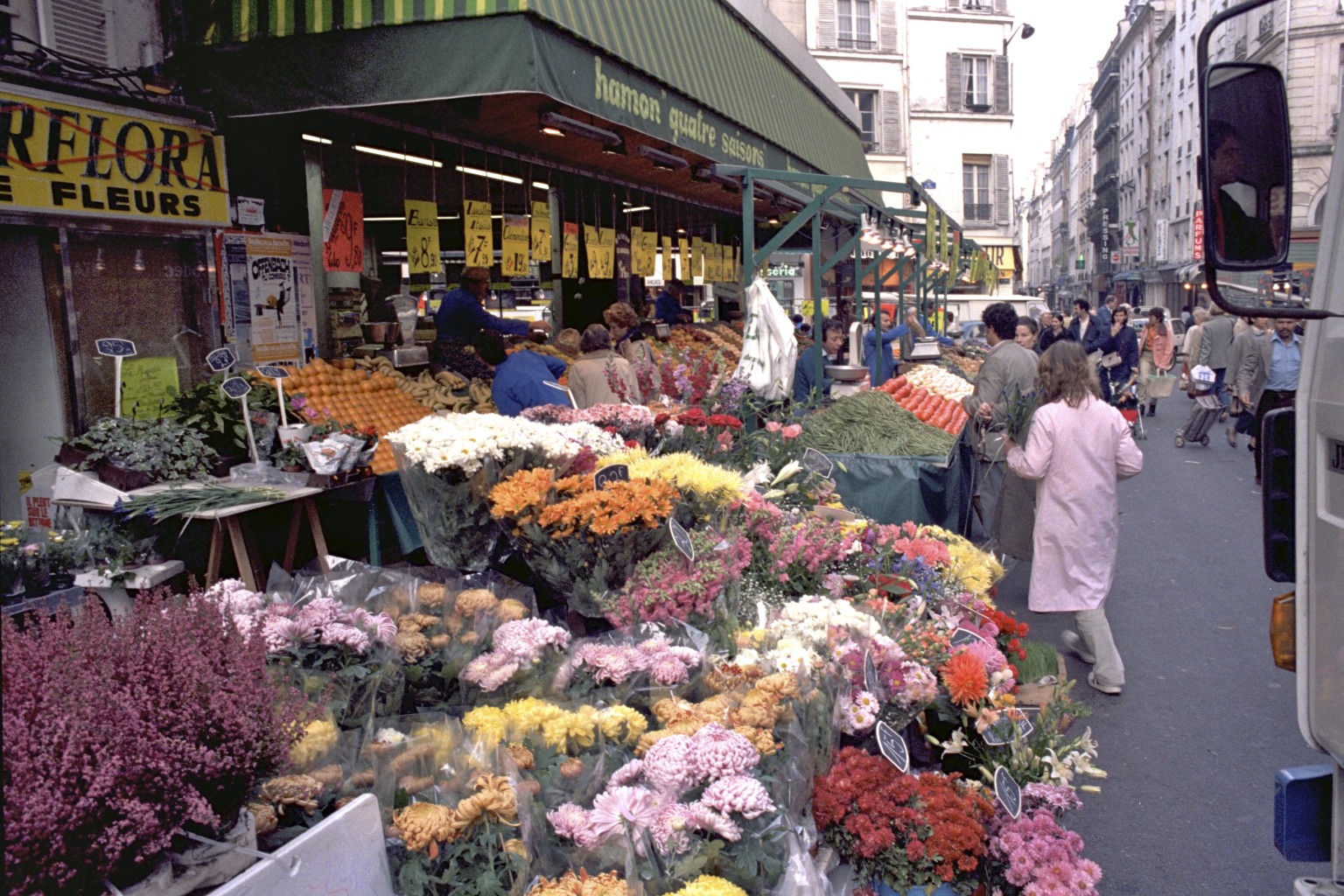
A food and flower market in the heart of the Left bank, in Rue de Seine, from Boulevard Rue de Buci to Saint-Germain and along Rue de Buci to the west along the latter street. This is a market vibrant with colours, especially convenient for visitors to the city.

Next steps

5. La Vie – Saint-Germain-des-Prés

Borgarrölt

Saint-Germain-des-Prés

Saint-Germain-des-Pres, Paris

Saint-Germain-des-Prés

We pass the north side of the church and turn left into Rue Mabillon, where a market building is on our right. From the north end of the street we walk a few meters along Rue du Four and have arrived at the famous Boulevard-Saint-Germain. We turn left and have in front of us the ancient Saint-Germain-des-Prés.

The oldest church of Paris, partly from 990-1021. For centuries it was one of the main churches of the Benedictine order. After the revolution it was for a while used as a saltpetre factory and became dilapidated.

The tower of the west front, the central nave and the north walls are still the same as almost ten centuries ago. The chancel is a little younger, from the 12th C., but the southern side, facing the boulevard, is from the 17th C. The church is one of few examples preserved in Paris of the Romanesque style, and the example that is most accessible to travellers.

Next steps

4. La Vie – Saint-Sulpice

Borgarrölt

Saint-Sulpice

Saint-Sulpice, Paris

We leave the garden at the north western corner, cross Rue Vaugirard and walk either Rue Séminaire or Rue Férou to Saint-Sulpice.

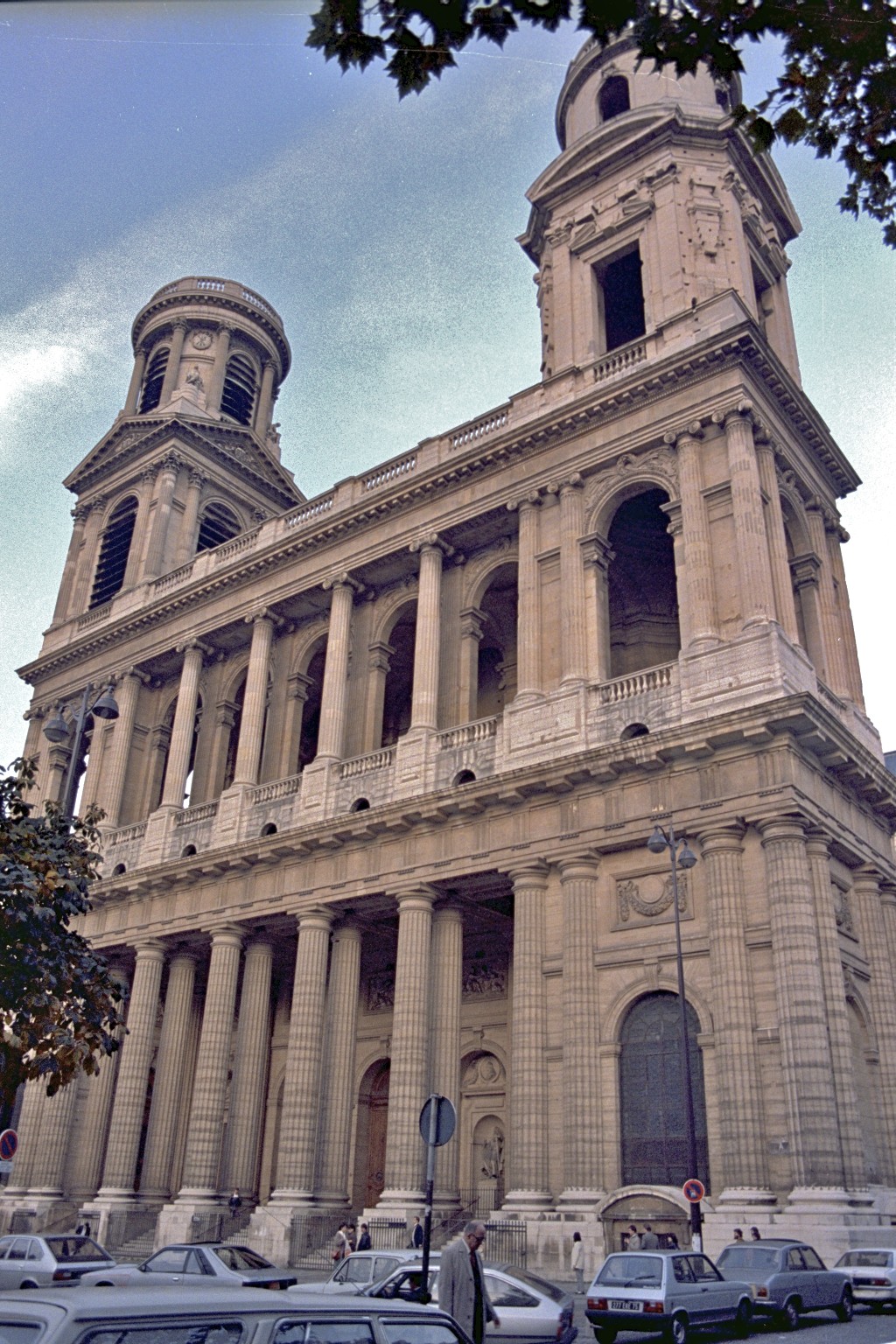
One of the great churches of Paris, built in various styles 1655-1788. The high and wide colonnades of the west front and its two towers are the main attributes of the church. One of the biggest organs in the world, with 6588 pipes, is inside. The church is much used for concerts.

Next steps

3. La Vie – Jardin du Luxembourg

Borgarrölt
Palais Luxembourg, Paris

Palais & Jardin Luxembourg

Jardin du Luxembourg

From the front of the Panthéon we walk down Rue Soufflot, cross the famous street of pavement-cafés and book shops, Boulevard Saint-Michel, and enter the Jardin du Luxembourg.

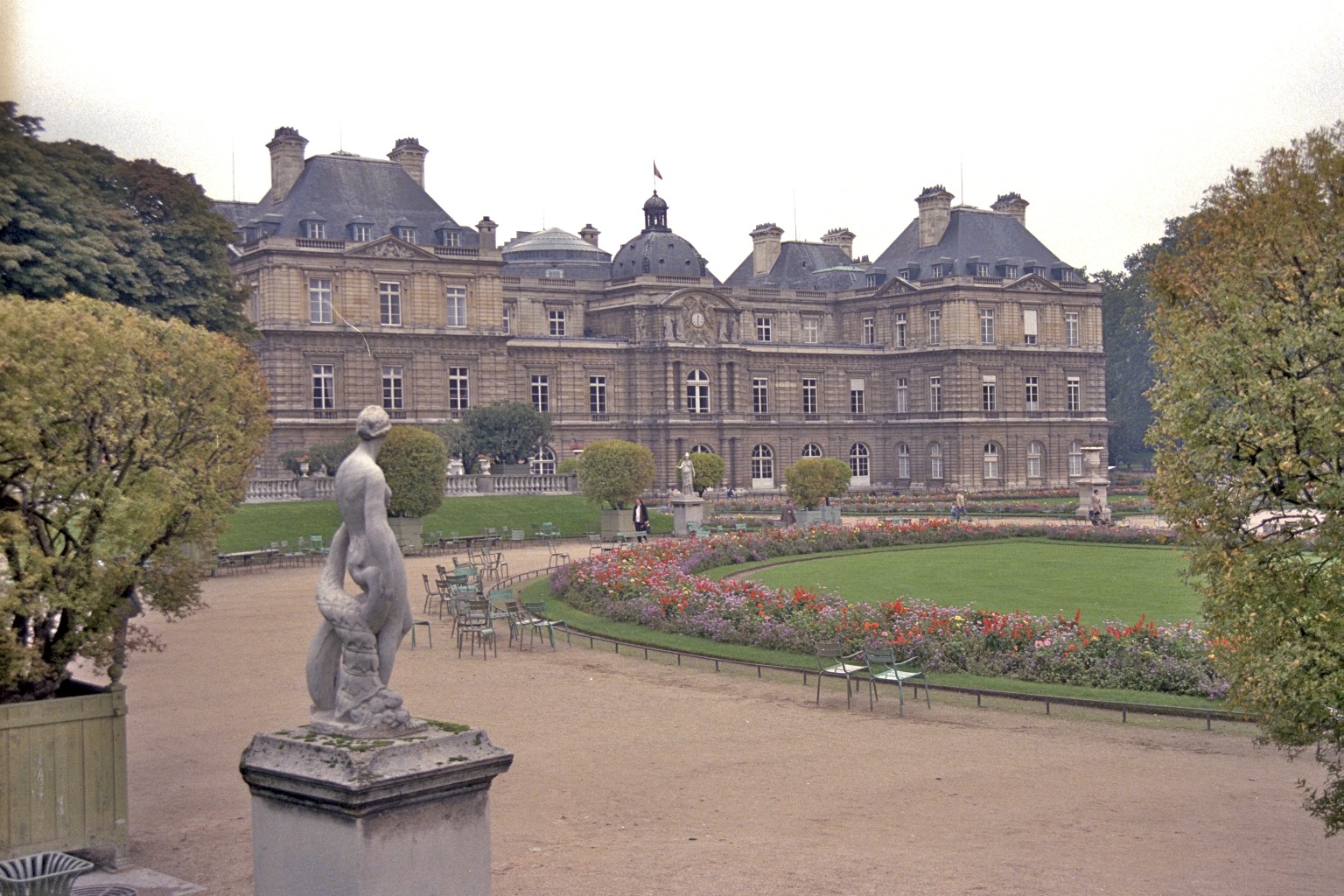
The most extensive green space on the Left bank, mainly laid out in a formal French style. The western and southern sides though are done in a relaxed English style. The centre of the garden is an octagonal pond in front of the palace. Children often play there with their boats. The garden abounds with statues and sculptures.

Palais Luxembourg

We turn our attention to Palais du Luxembourg.

Built 1615-1625 for Queen Maria dei Medici in Florentine Renaissance style. It now houses the French senate. Its president lives in the small palace, Petit Luxembourg, which adjoins the bigger one to the west. Many works of art are in the palace, including paintings by Delacroix in the library.

Next steps

2. La Vie – Panthéon

Borgarrölt

Panthéon, Paris

Panthéon

From the place we walk west into Rue Blainville and then straight on through Rue de l’Estrapade until we reach Rue Clotilde, which we follow to the right. We almost at once to the back of the Panthéon on the summit of Montagne Sainte-Geneviève.

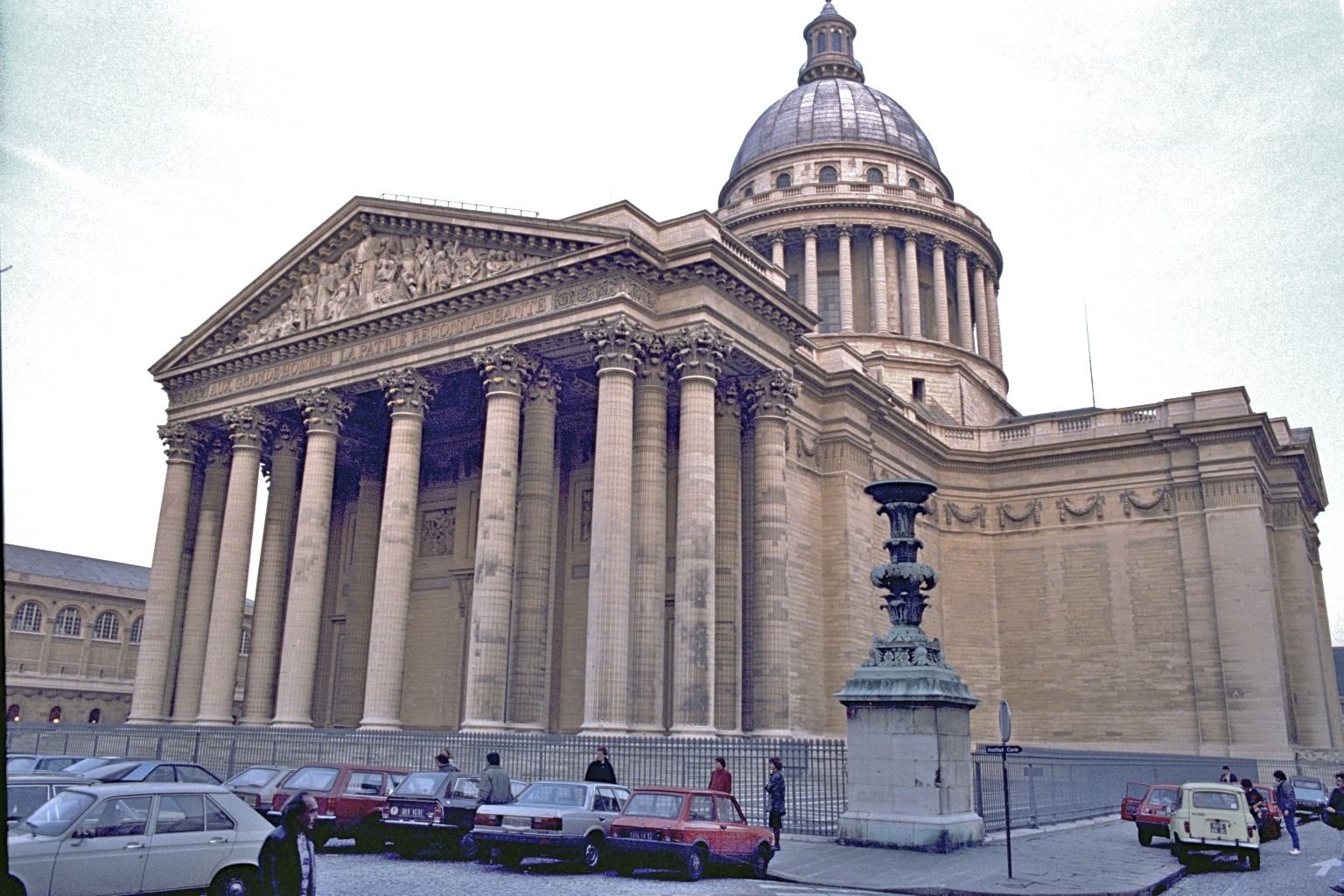
Built as a church 1758-1789, designed by Soufflot in Neoclassic style. Its plan is like a Greek crucifix and it has a giant dome which can be seen from many places in the city and is thus similar to the dome of Saint Paul’s in the City of London.

Soufflot gave the church a light design with very high and slender columns. The building was later made heavier and uglier by bricking up the windows. It was done when the revolutionary government changed the Panthéon into a mortuary of great Frenchmen. Voltaire, Rousseau and Victor Hugo are interred there. The interior is now cold and forbidding.

Next steps

5. Esplanades – Pont Alexander III

Borgarrölt
Pont Alexander III, Paris

Pont Alexander III

Esplanade des Invalides

We leave by the northern entrance to the museums.

This is the real front of the Invalides complex. In front of us is the field, Esplanade des Invalides, reaching from Invalides to the Seine. We can observe the game of pétoncle, in which the locals try to throw their ball either as near to the mark as possible or at the more successful balls of the competitors.

Pont Alexander III

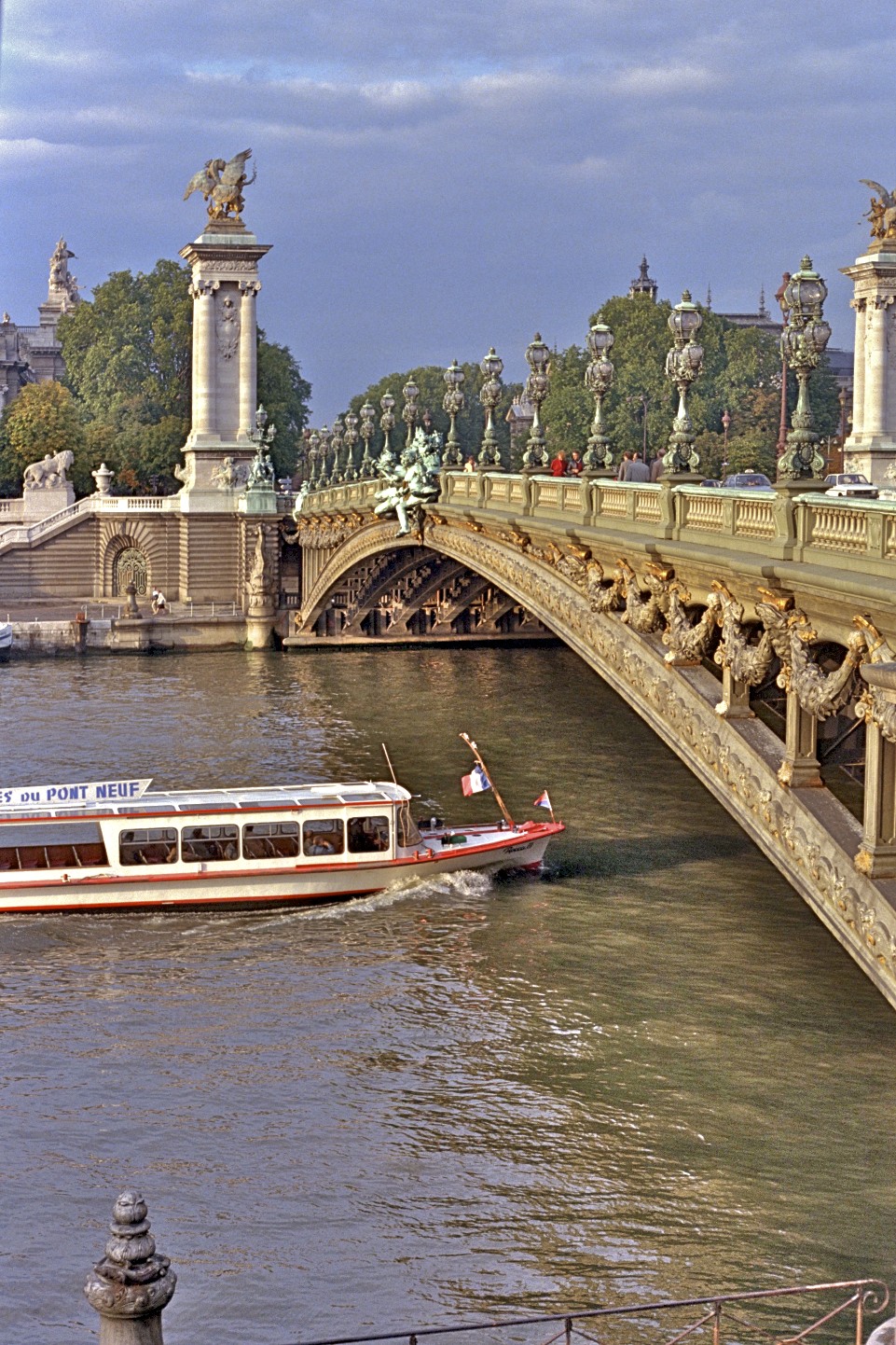
We cross the Esplanade and the Quai d’Orsay and arrive at Pont Alexander III.

The most exuberant Seine bridge, built in 1896-1900 for the World Fair in 1900. It is a single-span steel bridge, heavily decorated with Art Noveau lamps and statues.

This is the end of walk no. 7. The Invalides metro station is nearby.

Next steps

4. Esplanades – Invalides

Borgarrölt

Église du Dôme

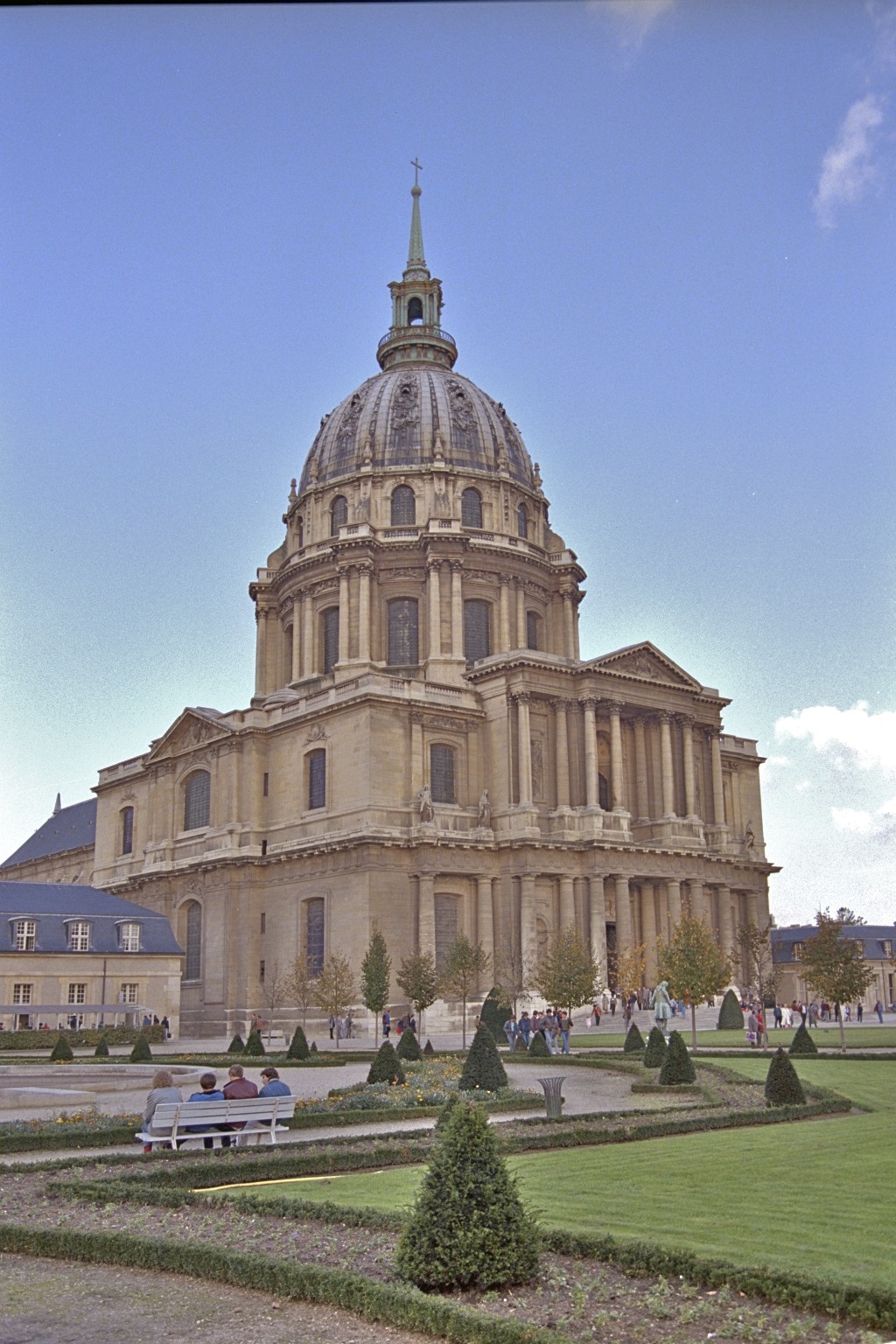
We turn left along the front of École Militaire and then right around its corner into Avenue de Tourville, leading us to Église du Dôme des Invalides.

The domed church is a perfect work of art by Hardouin-Mansart, designed in the Jesuit style of the 17th C. Napoleon lies in six coffins inInvalides, Paris

the middle of the church which really is his mortuary. His brothers and some generals also have their tombs in the chapels of the church. The atmosphere is very solemn.

The architectural style has the dome as its most distinctive feature and was a mixture of the French Mannerism and the Catholic Baroque which the Jesuits were at that time trying to introduce in France. The same style is evident in the colonnades with Romanesque arches, Doric columns on the ground level and Corinthian ones above. The dome is of lead, covered with gold leaf.

In a house on the left side of the church tickets are sold for the church and the army museum behind. There is another church behind the altar of this church. It is Saint-Louis-des-Invalides. In fact the two churches share the same altar.

Invalides

Along the side of the latter church we reach an entrance to the military museums in the Invalides complex.

The Musée de l’Armée and other military museums are in the former quarters of veterans centred on a courtyard on the north side of Église du Dôme. The Musée de l’Armée is one of the biggest military museums in the world. There are also special museums of military maps, of World War II, of the French resistance and a small museum with private belongings of Napoleon.

This was first a home for old and disabled veterans, built 1671-1676. At one time it housed 6000 veterans, but none are now left. It was also a weapons’ depot which was emptied out by revolutionaries in the morning of July 17th, 1789, when they carried away 28,000 rifles.

Next steps

3. Esplanades – École Militaire

Borgarrölt
Ecole Militaire, Paris

Champs-de-Mars & Ecole Militaire

Champs-de-Mars

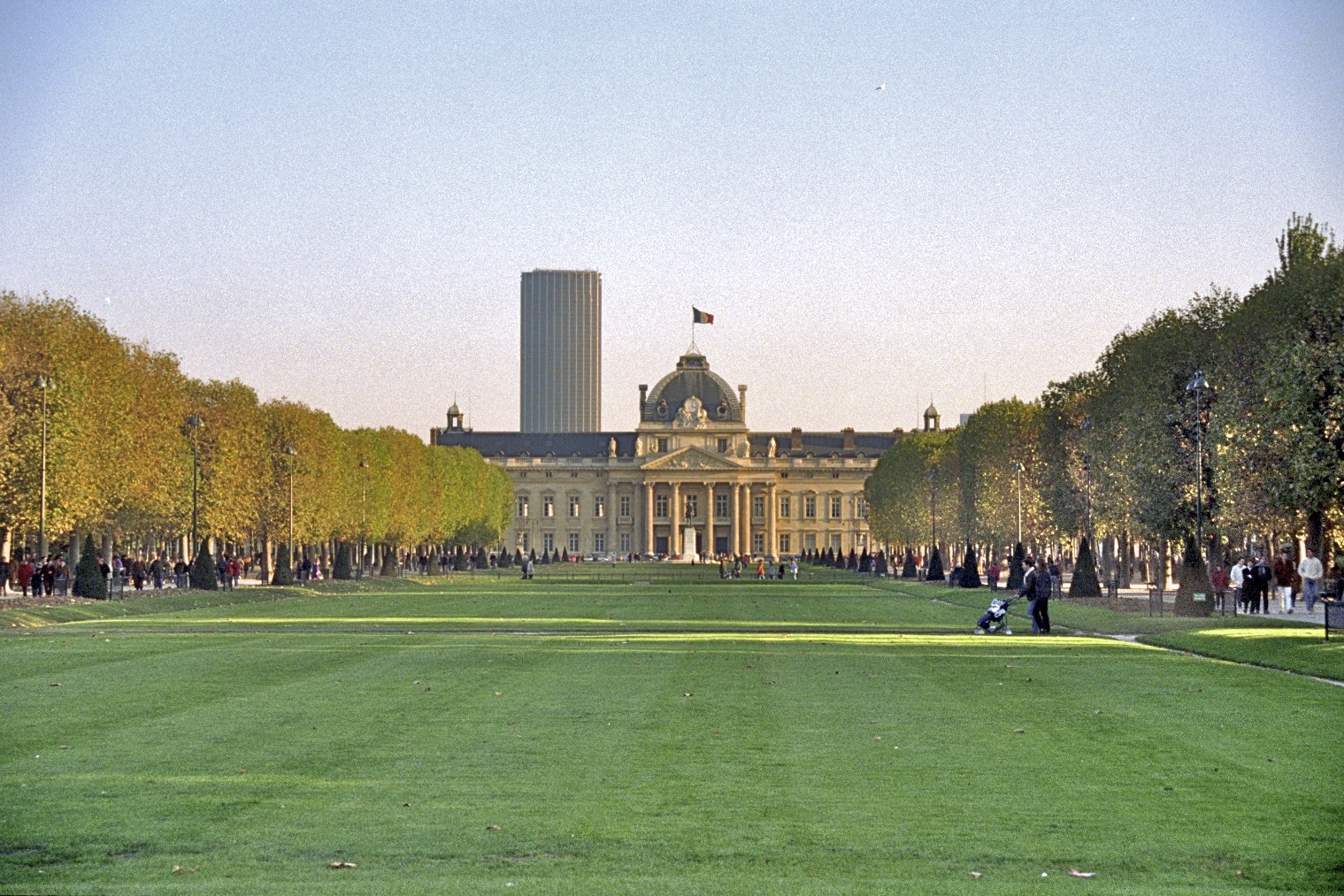
After a lunch in the tower restaurant Jules Verne we walk through Champs-de-Mars.

The formal French garden in very big and so formal that policemen blow whistles every time someone steps outside the paths. This was initially the training and parade ground of the military school. It has repeatedly been the location of world fairs. The present appearance dates from 1908-1928.

École Militaire

At the far end of the garden we reach École Militaire.

Built in 1769-1772 with Neoclassic elements blending into the French style, as is evident from the Corinthian columns at the entrance. The school is best known for cadet Bonaparte who later became Napoleon.

Next steps

2. Esplanades – Tour Eiffel

Borgarrölt

Tour Eiffel, Paris 2

Tour Eiffel

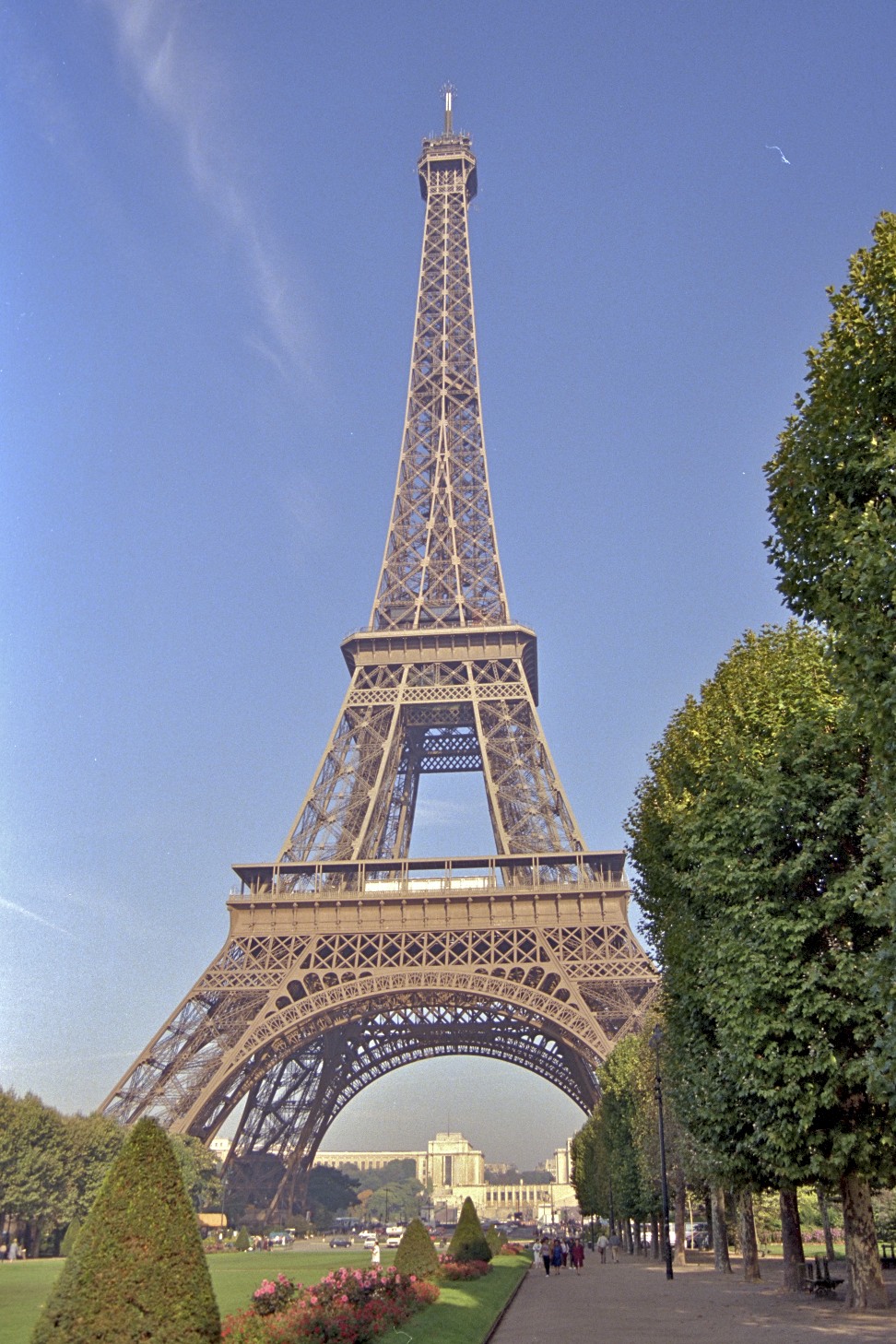
We cross the river by the Iéna bridge and walk under the most famous Paris landmark, Tour Eiffel.

The engineer Eiffel built the featherweight Tour Eiffel as an emblem of the World Fair of 1889. At that time it was the highest construction in the world, 300 meters. Now it is 320.75 meters, including an aerial. It weighs only 7000 tons, or four kilograms per square centimetre, or the weight of a chair and a man.

The height can vary about 15 centimetres due to changes in temperature and the swing at the top can reach 12 centimetres in storms. The tower has three floors, the lowest one in the height of 57 meters, the second in the height of 115 meters and the highest in the height of 274 meters. Elevators run between storeys and we can also take to the stairs up to the second floor.

French intellectuals hated the tower when it was being built. It was to have been razed after the fair. By that time it had become necessary for telegraphic purposes. And now many consider Tour Eiffel to be one of the major and most beautiful works of art in the world.

Next steps

9. Promenade – Tour Saint Jacques

Borgarrölt

Saint-Germain-l‘Auxerrois

Tour St. Jacques, Paris

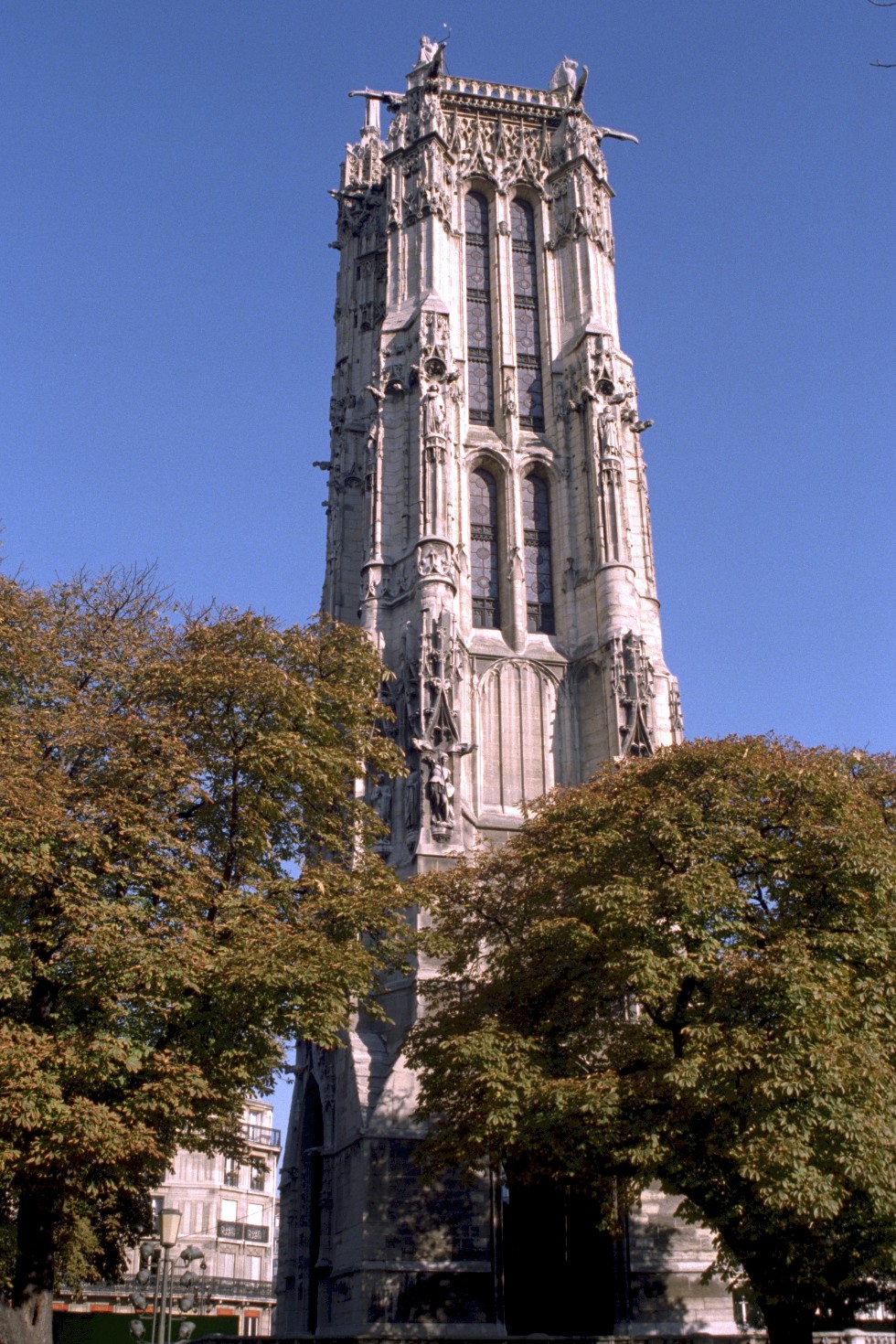
Tour Saint Jacques

We leave the museum, have a look at its colonnaded eastern front and turn our attention to the church on the other side of Place de Louvre, Saint-Germain-l’Auxerrois.

Tour Saint Jacques stands between the church and the city hall of the 1st district of Paris. The oldest parts of the church are from the 12th C. and the youngest from the 17th C. The front is in late Gothic flamboyant style from 1435.

This walk is over and here we have the Louvre metro station

Next steps