4. Passages – Passage des Panoramas

Borgarrölt

Passage des Panoramas
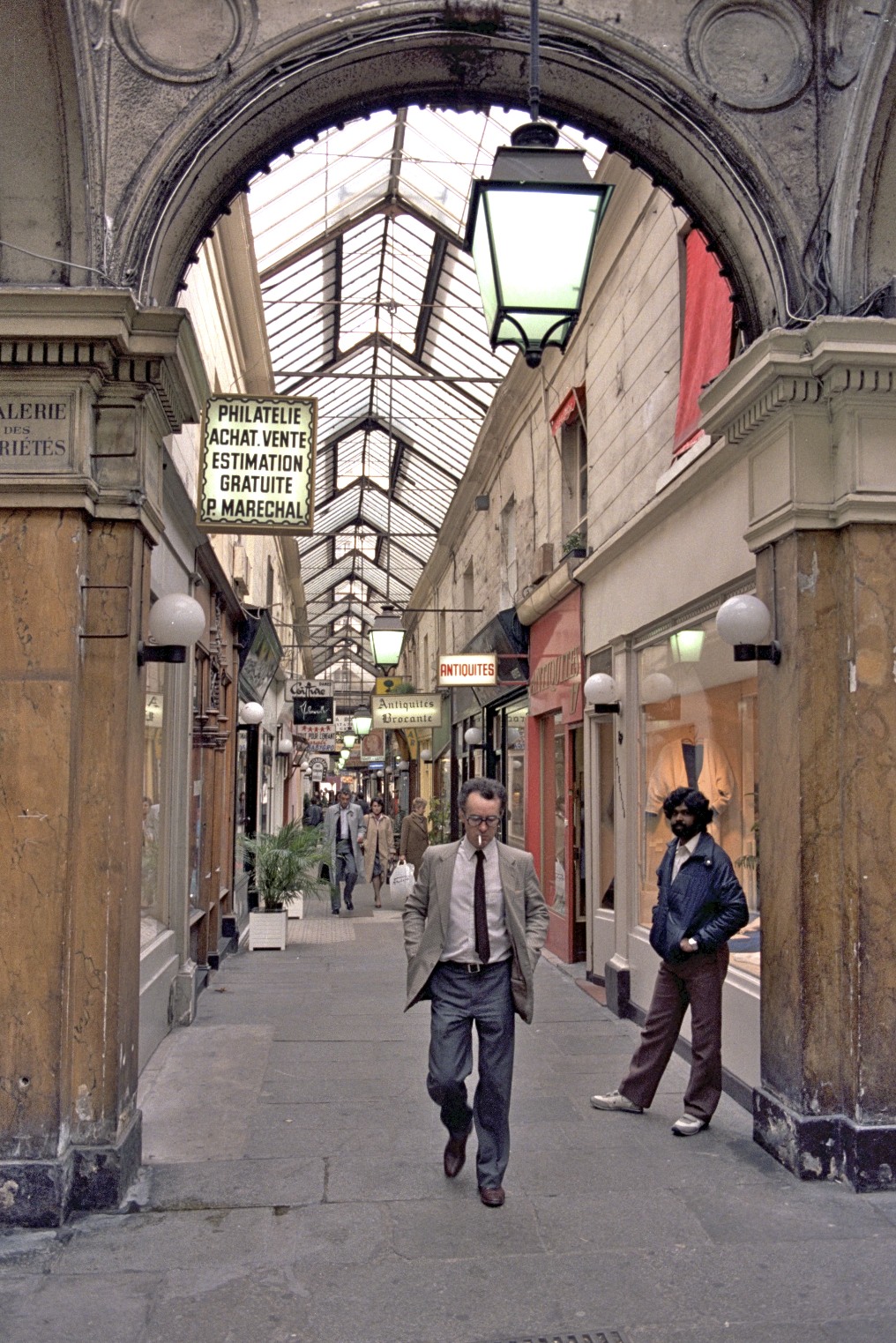
Passage des Panoramas, Paris

Passage des Panoramas

We continue north along Rue Notre-Dame-des-Victories and turn left into the glass-covered Galerie Montmartre.

This is a labyrinth of passages, known from the most important of them, which runs southward from Boulevard Montmartre to Rue Saint-Marc. These glass-roofed passages were opened in 1799 and preserve their time-honoured dignity. The best known is the Passage des Panoramas.
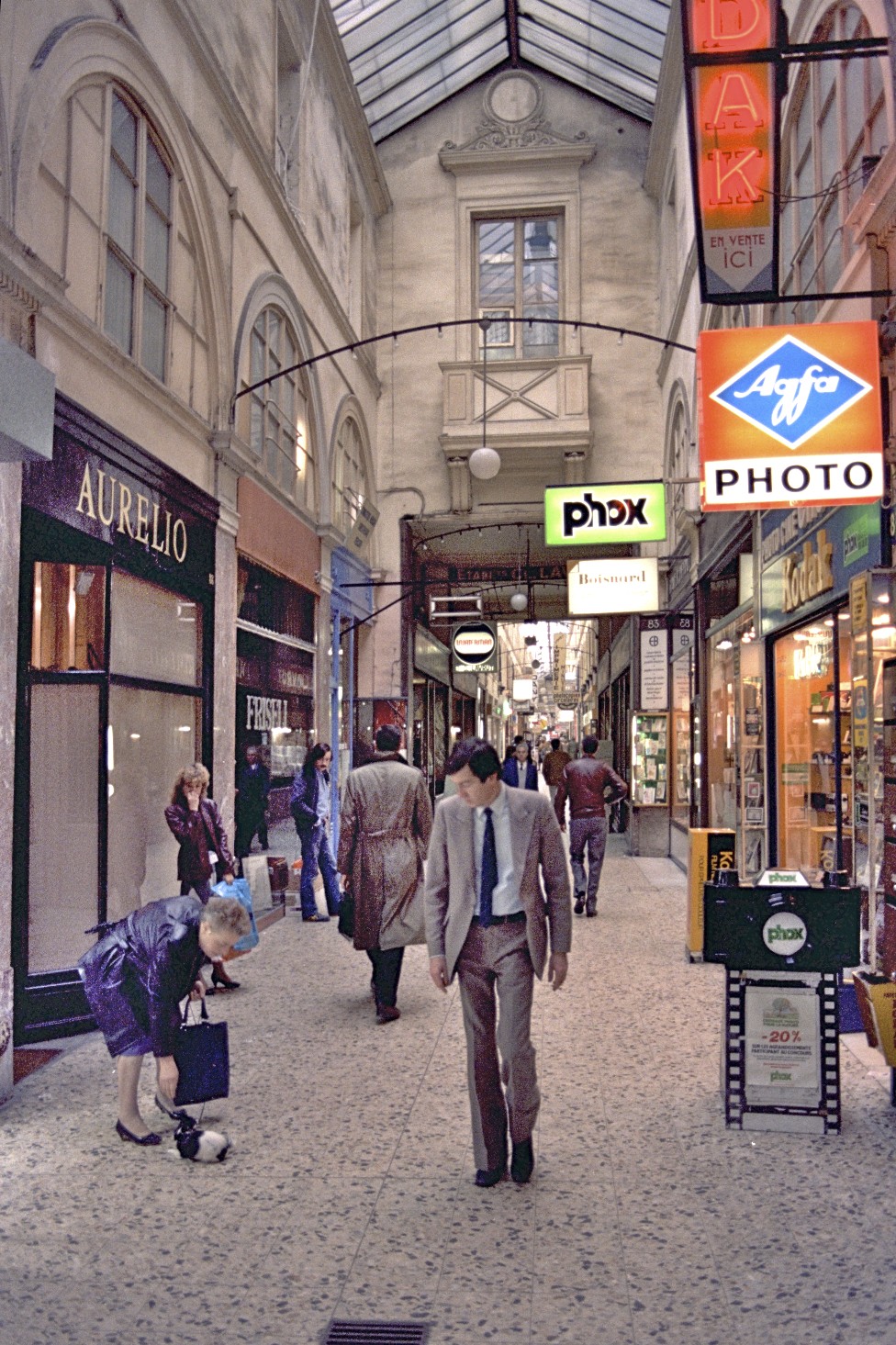
Passage Choiseul, Paris

Passage Choiseul

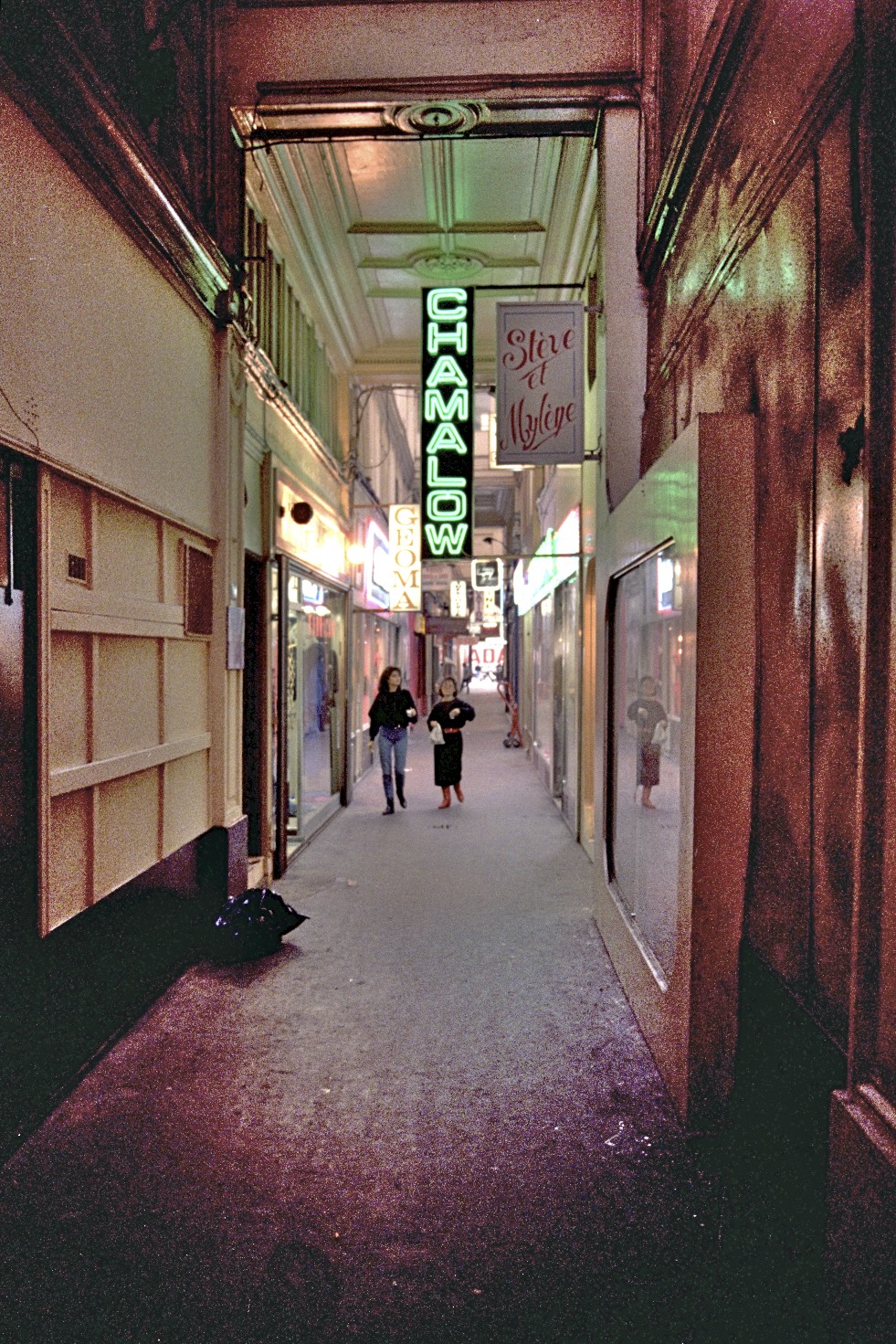
These passages or galleries were the forerunners of modern malls. People can shop there without the noise and danger and pollution from car traffic.

Passage Choiseul

After inspecting the galleries we return to the Bourse and at its southern end turn to the right into Rue du Quatre Septembre. When we reach Rue de Choiseul, we turn left, walk to the end of that street and continue into one more of the long passages, Passage Choiseul.

This glass-covered shopping passage has some elegant shops and lots of customers.
Next steps

Yfirvaldið er guð

Punktar

Héraðsdómur Nígeríu dæmdi í dag níu góðborgara í átta daga fangelsi fyrir að óhlýðnast YFIRVALDINU með stórum stöfum. Þau settust niður í Gálgahrauni, þar sem YFIRVALDIÐ réðist á þau og dró þau harkalega upp í bíla. Fyrir þetta þurfa góðborgarar að borga kvartmilljón hver eða sitja inni í átta daga. Ekki er enn ljóst, hvaða fangelsi þarf að rýma til að koma fólkinu fyrir. En Ástríður Grímsdóttir hefur eindregið skipað Íslandi í fylkingu frumskógaríkja, þar sem YFIRVALDIÐ er æðra mannréttindum. Samkvæmt úrskurði hennar er ljótt að mótmæla friðsamlega, enda vita allir, að VEGAMÁLASTJÓRINN er óskeikull guðs sonur.

3. Passages – Passage de Caire

Borgarrölt

Passage de Caire

Passage de Caire, Paris

Passage de Caire

We walk past the west fronts of the two churches and turn left to cross Square Émile Chautemps to enter the first passage, Passage du Ponceau. From the other end of the passage we turn a few steps to the left into the prostitution street Rue Saint-Denis and then turn right into Passage du Caire.

Passage de Caire

This long shopping passage from 1800 has become dilapidated but still keeps some of its initial charm. In a small widening near the far end of it rascals once congregated and caroused at nights, but during daytime they worked the city feigning blindness and other disabilities. Here the decorations are Egyptian

This long shopping passage from 1800 has become dilapidated but still keeps some of its initial charm. In a small widening near the far end of it ras
cals once congregated and caroused at nights, but during daytime they worked the ci
ty feigning blindness and other disabilities. Here the decorations are Egyptian.

Bourse, Paris

Bourse

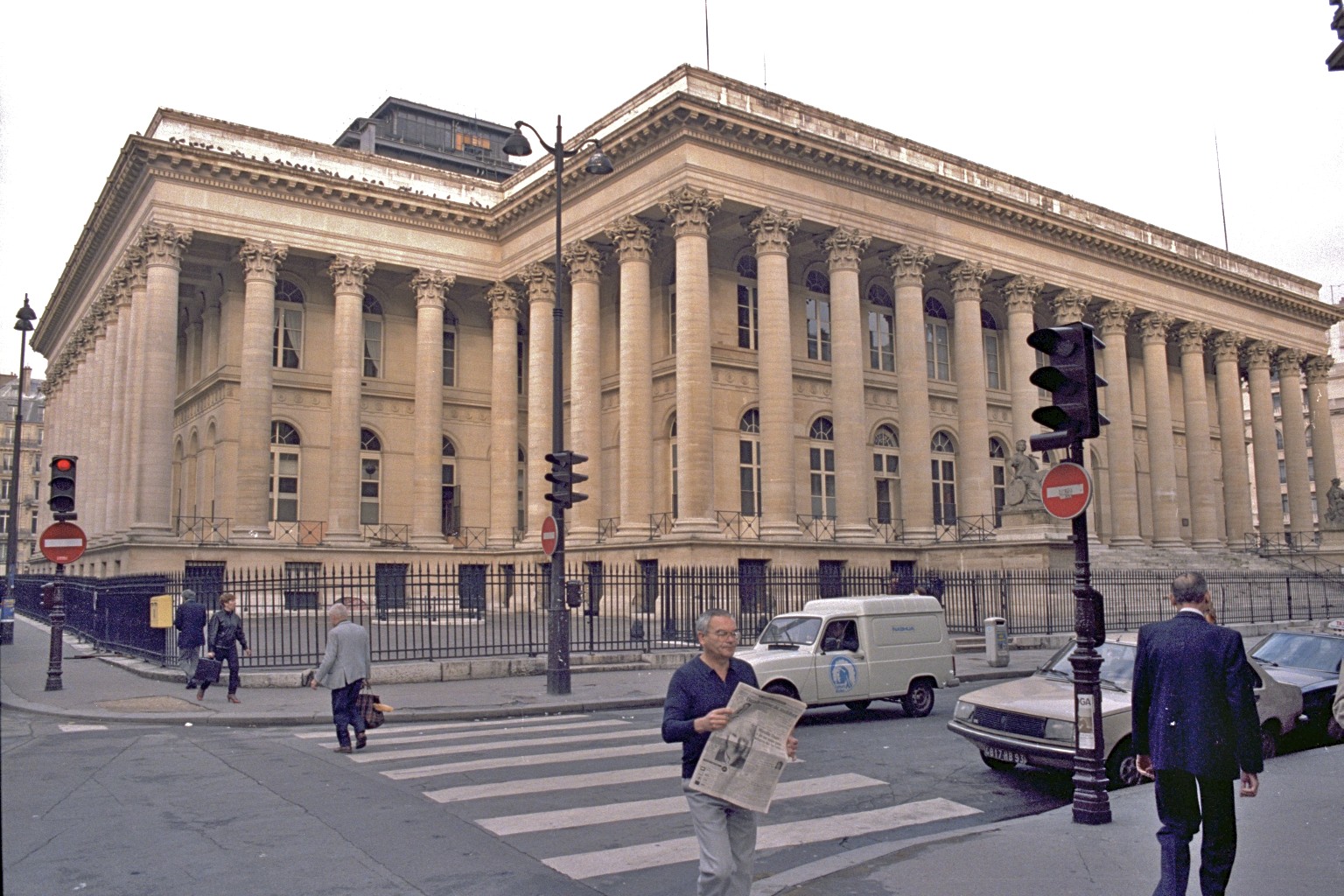
After leaving the passage at the other end we take Rue du Nil or Rue d’Aboukir to Rue Réaumur where we turn right and walk westwards. Here live many Arabs who have probably been attracted to the street names in this area which have been here since Napoleon came from his Egyptian campaign. Walking 400 meters we arrive at the Bourse.

The Neoclassic stock exchange was built 1801-1826 with Corinthian columns on all sides. From a balcony we can perceive the lively business on the exchange floor. It sometimes resembles a riot rather than bourgeois law and order.

Next steps

2. Passages – Saint-Nicolas-des-Champs

Borgarrölt

Saint-Nicolas-des-Champs, Paris

Saint-Nicolas-des-Champs

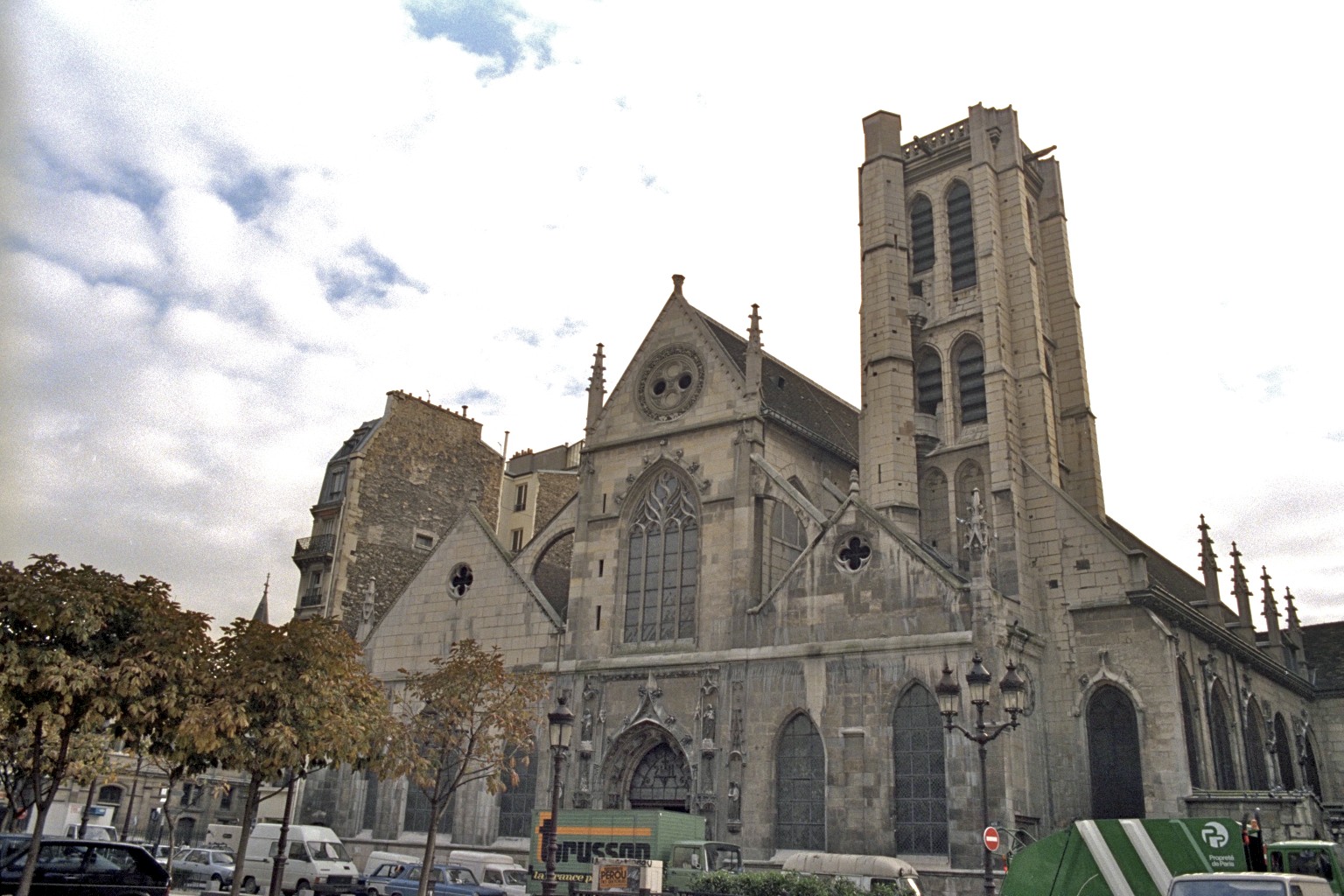
We turn again to the right and walk Rue au Maire to Saint-Nicolas-des-Champs.

A Romanesque church built in the 12th C. in honour of the saint who is now better known as Santa Claus. It is mainly Gothic, with Renaissance parts, the remains of a disappeared Benedictine monastery.

Almost alongside it is Saint-Martin-des-Champs, a Romanesque church from 1130, also a part of the same monastery complex. The back of the chancel is the only remains of the original style.

Next steps

D. Marais – Hotel de Sens

Borgarrölt, París (English)

Marais

A little known part of the city centre. The Marais or The Marshes were initially swamps and marshes which the order of the Templars had drained in the 12th and 13th C. Later they became the quarter of Christian societies and monasteries, as can be seen today from some street names. In the 16th C. the nobility began to build mansions here, the so-called hôtels.

The district became fashionable at the beginning of the 17th C. when the palaces around Place des Vosges were built. In those years the French Mannerist style of city mansions was developed here. In the 18th C. the aristocracy moved to the west and Marais slowly dilapidated.

André Malraux, Charles de Gaulle’s minister of culture, was a restoration enthusiast. He had many buildings cleaned and renovated. One of his most important deeds were the Malraux-laws of 1962. In the wake of them 126 hectares of the Marais have been restored to their original splendour. Since then the Marais have been on the upswing and well-off people have moved in.

The main attraction of this walk is the thrilling Pompidou museum in Palais Beaubourg. But first we are making our acquaintance with the Marais.

Hotel de Sens

We start our walk at the Pont Marie metro station. From there we walk a few meters along the bank and turn to the left into the first street. There we see the back side of Hôtel de Sens. We pass it to see it from its front side.

One of the most important houses of architectural history in Paris, one of two medieval palaces that have been preserved. It was built 1474-1507 for the archbishop of Sens. Its Gothic castle style is obvious in rounded corner-towers, in a pointed arch over the entrance and in tower spires. Access to the palace garden is through the main entrance.

Next steps

Óvísindalegar hugdettur

Punktar

Engin vísindi hef ég séð að baki þrengingarstefnu borgaryfirvalda, í mesta lagi skemmtilegar hugdettur prófessora. Við munum á næstu árum sjá heilmikil vandræði af hennar völdum, þar á meðal málaferli reiðra íbúa. Þétting er viðkvæm og hentar illa á áður byggðu landi. Umferð ætti að ganga greitt og viðstöðulaust á aðalæðum til að spara benzín og mengun. Í Reykjavík ætti að vera viðstöðulaus umferð, ekki endilega hröð, á Miklubraut, Kringlumýrarbraut og Reykjanesbraut. Í fáförnum íbúðagötum má hins vegar hafa þrengingar. Ég sé ekki erlendis, að umferð bíla ein og sér spilli borgum. Fremur eru að verki of mikil þrengsli umferðaræða.

9. Marais – Bourse du Commerce

Borgarrölt

Bourse du Commerce, Paris

Bourse du Commerce

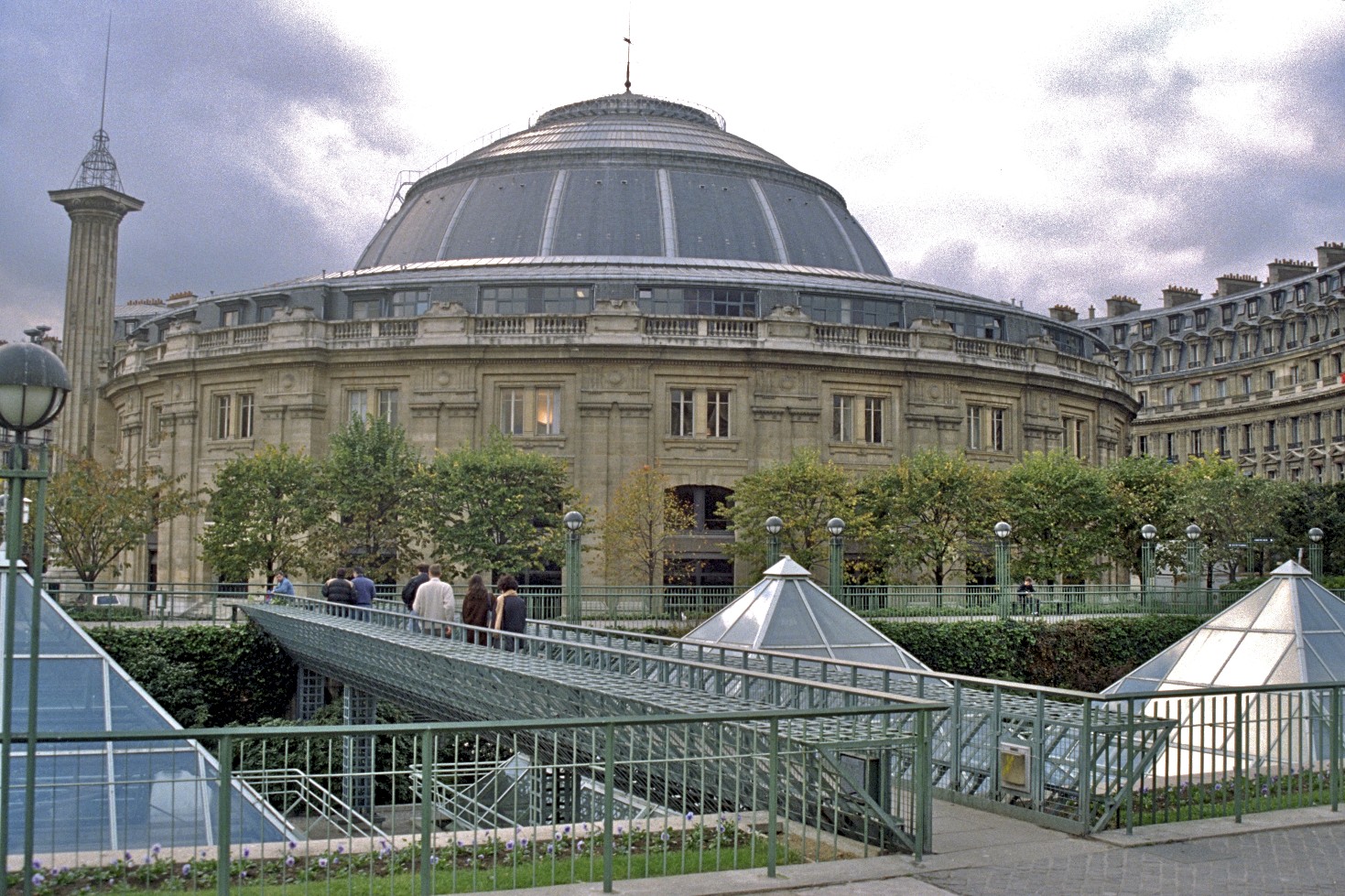
Almost beside the church, on the other side of the building site, there is the circular Bourse de Commerce.

The circular building with a dome is the commodities exchange with a lively trading in flour, sugar, wine, coffee and cocoa.

Here we end this walk. The Forum des Halles metro station is nearby.

Next steps

8. Marais – Forum des Halles

Borgarrölt

Forum des Halles & Saint-Eustace, Paris

Forum des Halles

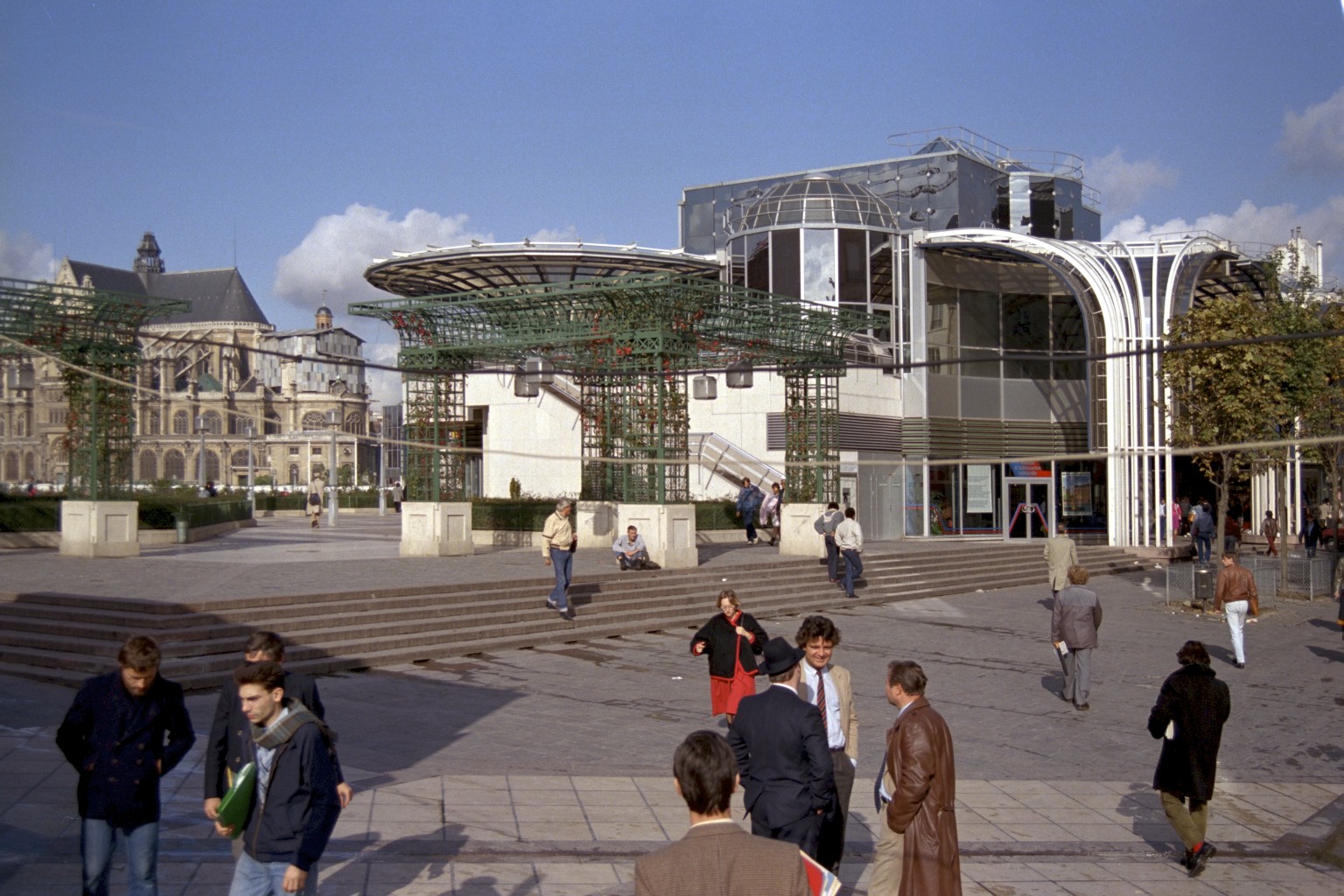
If we can break away, we leave and continue westwards along Rue Aubry Boucher and Rue Berger to the new shopping centre Forum des Halles.

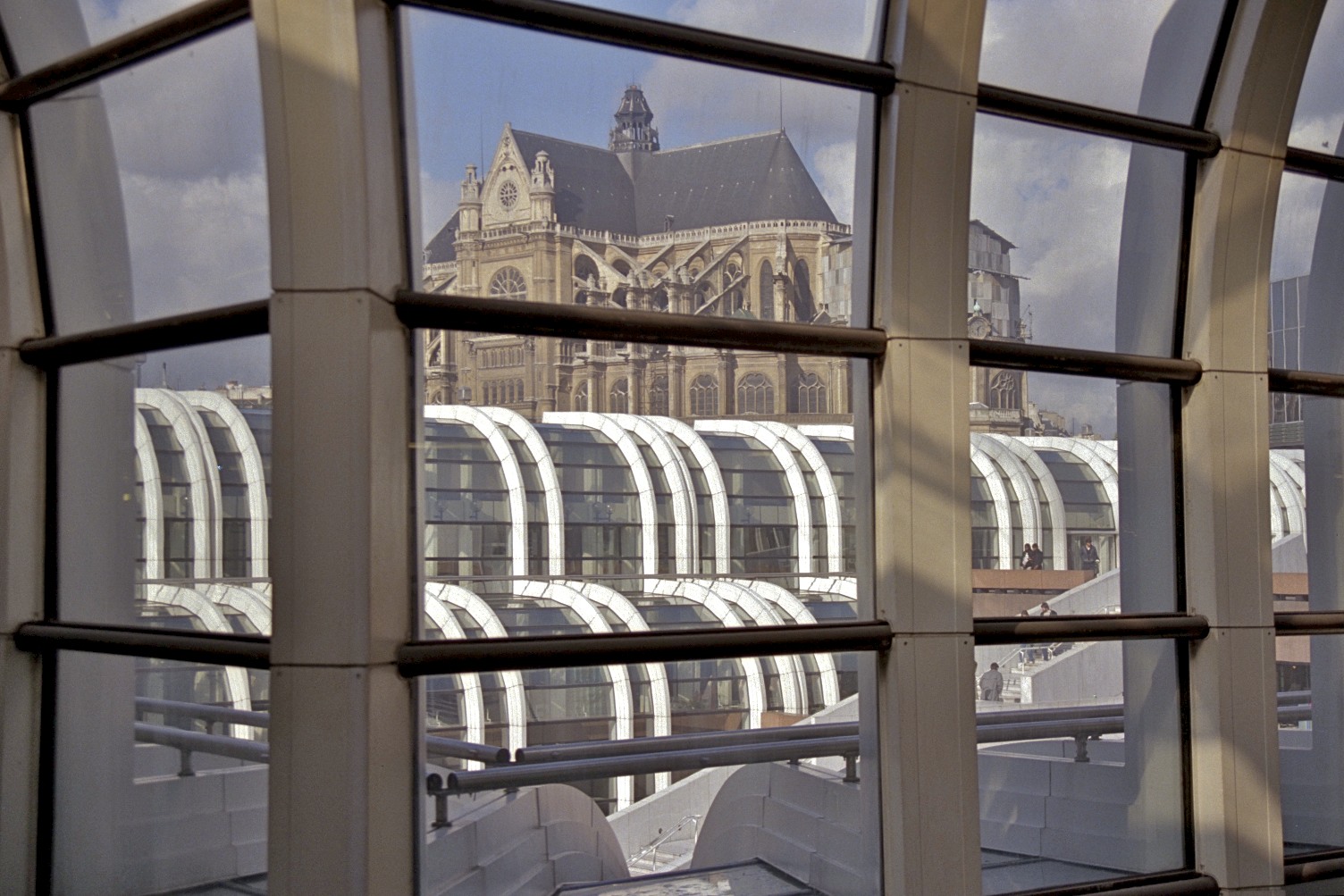
The Forum has been built on four floors, mainly underground, replacing the former famous food market for wholesalers, Halles, which has been transferred out to the Rungis at the Orly airport. This has been a marketplace since 1100. Forum now houses a lot of shops, including outlets of fashion houses, and cafés, in a rectangle around a sunken, open square.

On the other side of Forum des Halles is a big building site. It is planned to have there both under ground and above ground similar futuristic buildings in the style of Forum. We also see the same style in new apartment buildings around. This style could be called a waterfallism of glass and steel.

Forum itself is a lively place. Its central square attracts many people. Still, the French preserve the old when they build into the future. Where Rue Berger meets Forum, the area around the Innocents fountain has been conserved.

Saint-Eustache

Saint-Eustace & Forum des Halles, Paris

Saint-Eustace & Forum des Halles

Behind the steel and glass we glimpse Saint-Eustache, which is our next stop on this walk.

The second biggest church of Paris and also one of the finest, built in 1532-1640 in Gothic style with Renaissance decorations. The west front was built much later, in 17th C. style, the south tower still missing. The noble transept façade, which we see from Forum, is Renaissance, extensively decorated and flanked by two slender staircase towers.

The interior is solemnly and extensively decorated among Gothic columns and buttresses. The gems are the organ and the acoustics. Many a concert has been held here, including first performances of music by Liszt and Berlioz. Te Deum was introduced here.

Next steps

7. Marais – Centre Pompidou

Borgarrölt

Palais Beaubourg

Pompidou, Beaubourg, Paris

Centre Pompidou, Palais Beaubourg

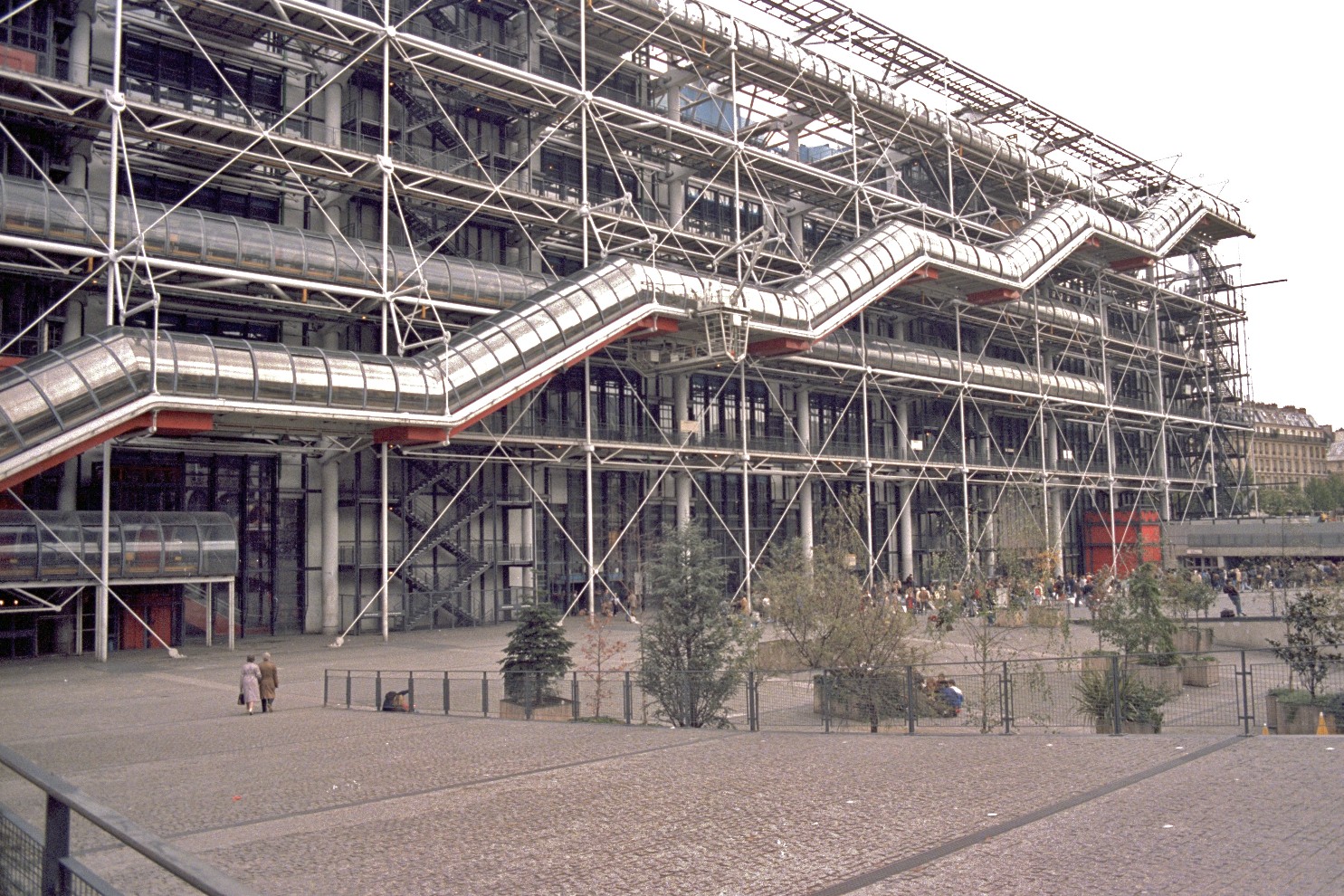
We turn our attention to Palais Beaubourg.

This was once the most controversial building in the world and has for a long time been one of the most popular museums in the world, opened in 1977.

Pompidou, Beaubourg, Paris 2

Centre Pompidou, Palais Beaubourg

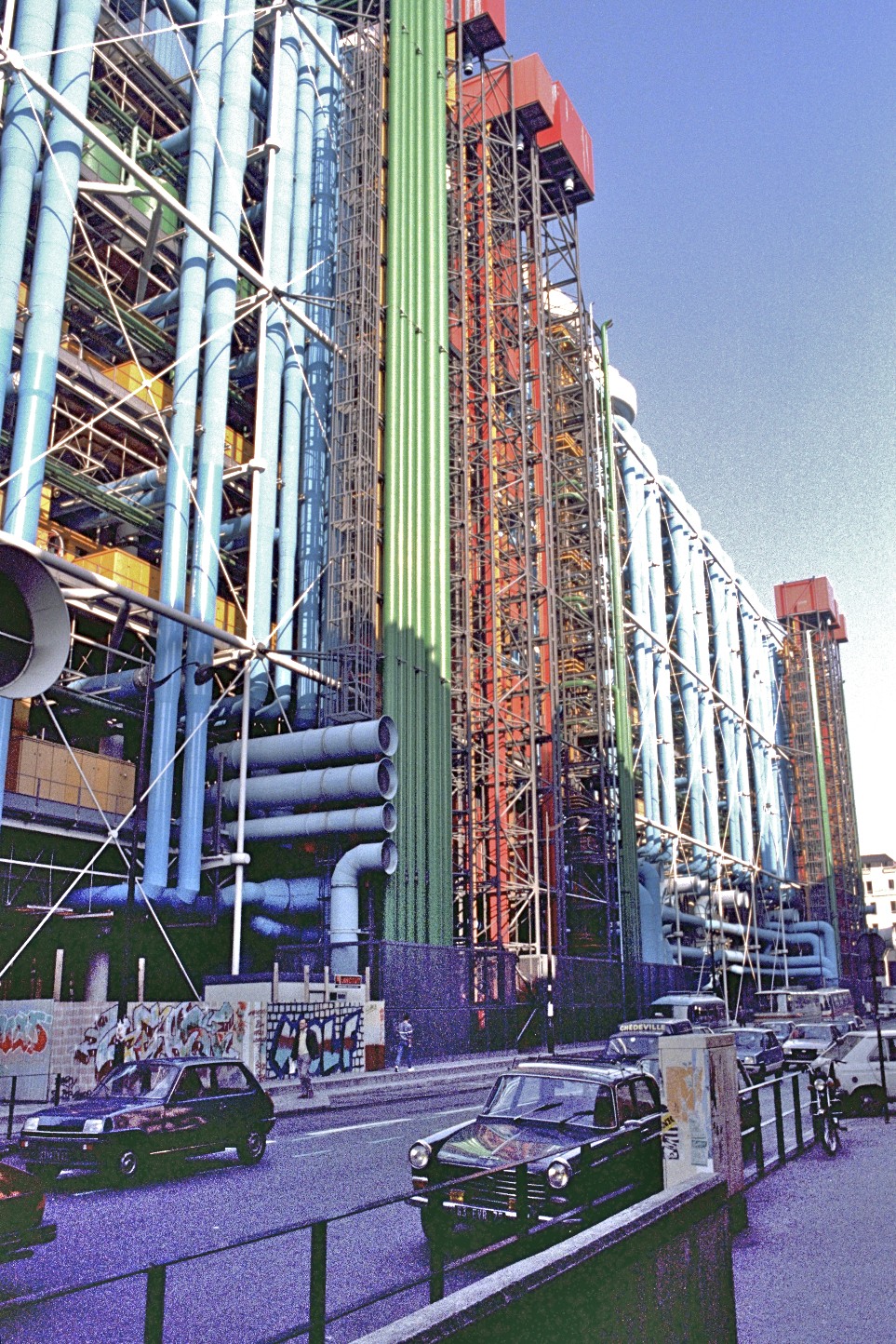
The palace itself has the appearance of a colourful oil refinery, all covered with ducts, big and small. Each colour represents a purpose, yellow for electricity, red for people and goods, green for water and blue for air-conditioning. The ducts are in a steel frame which is not covered on the outside. The palace was designed by Richard Rogers and Renzo Piano.

Centre Pompidou

We enter Centre Pompidou.

Inside there are a few museums. The most famous is the museum of modern art, one of the biggest museums of 20th C. art, a revelation for enthusiasts. The importance stems partly from French painters having been in the vanguard of modern art. This museum is on the 3rd and 4th floors. In a part of the 4th floor are shown the works of contemporary artists, partly avant gardists.

The museum covers mainly the history of 20th C isms, starting where impressionism left off. Exhibited are cubism and fauvism, abstract geometrism and expressionism, dada and surrealism, pop and conceptualism, etc. This history is clearly set forth in the museum and is in itself an excuse enough for a Paris visit.

Beaubourg also houses a branch of the famous film museum in Palais Chaillot, having a continuous run of vintage films. Also there are concerts, lectures and plays. The action is always on in the museum and it has proved to be one of the most successful museums of art in the world, a real pan-artistic museum. About 10 million people visit each year. Not to be forgotten is the view.

Next steps

6. Marais – Place Pompidou

Borgarrölt
Beaubourg, Paris

Place Pompidou & Beaubourg

Place Pompidou

We retrace our steps out of the alley, turn right and continue to Place Pompidou.

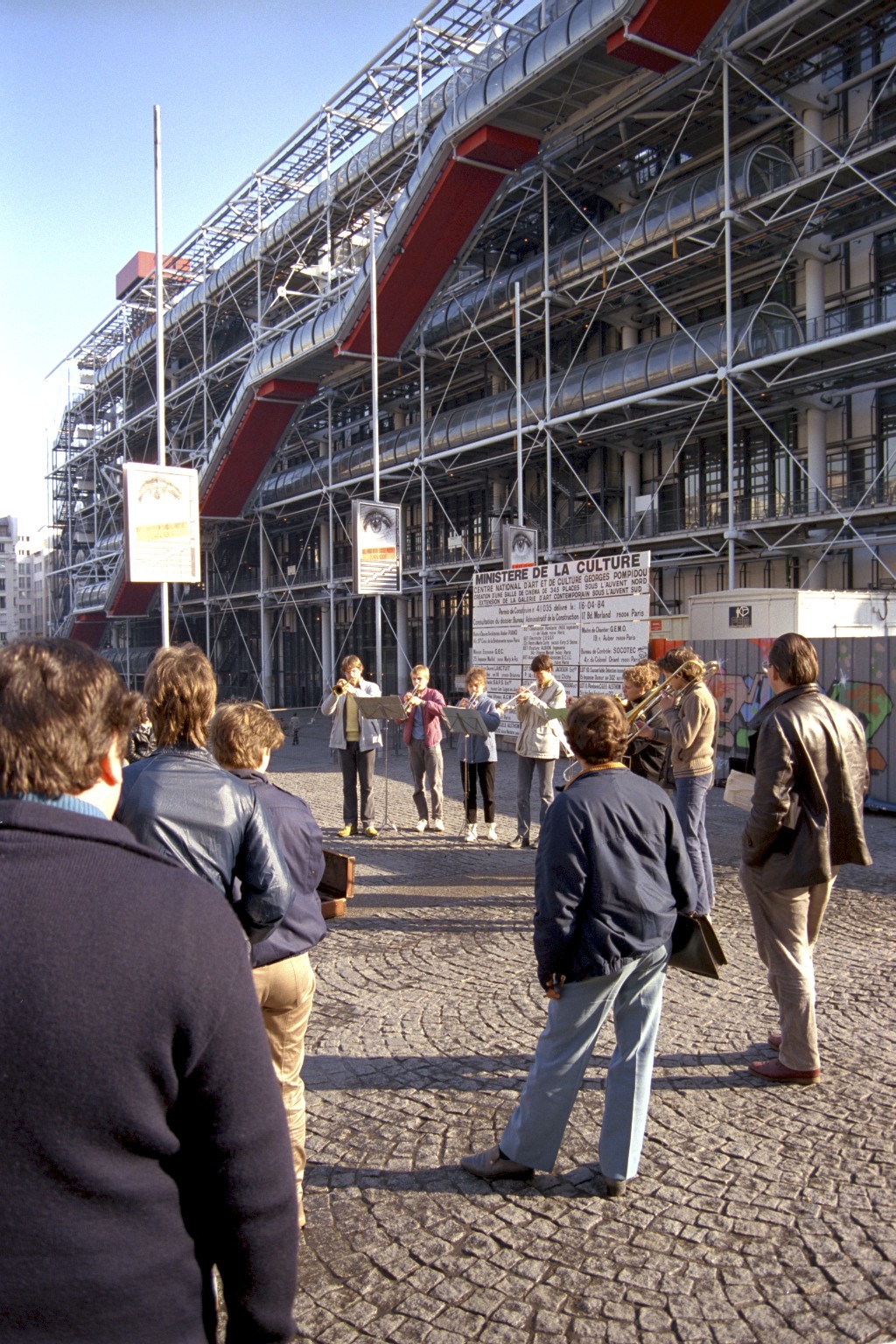
The square in front of Palais Beaubourg is a a lively place. Musical performers and circus artists show their talents for big and small crowds. At the end of the performance the artists walk around with their hats.

Last time that we walked through on a sunny morning a fire swallower and a music band of eight took care of the happenings. This is a good diversion for those who want to spend the day in the culture of the amazingly good museum of Beaubourg.

Next steps

5. Marais – Palais Soubise

Borgarrölt

Palais Soubise

Palais Soubise

Palais Soubise and Hôtel de Rohan

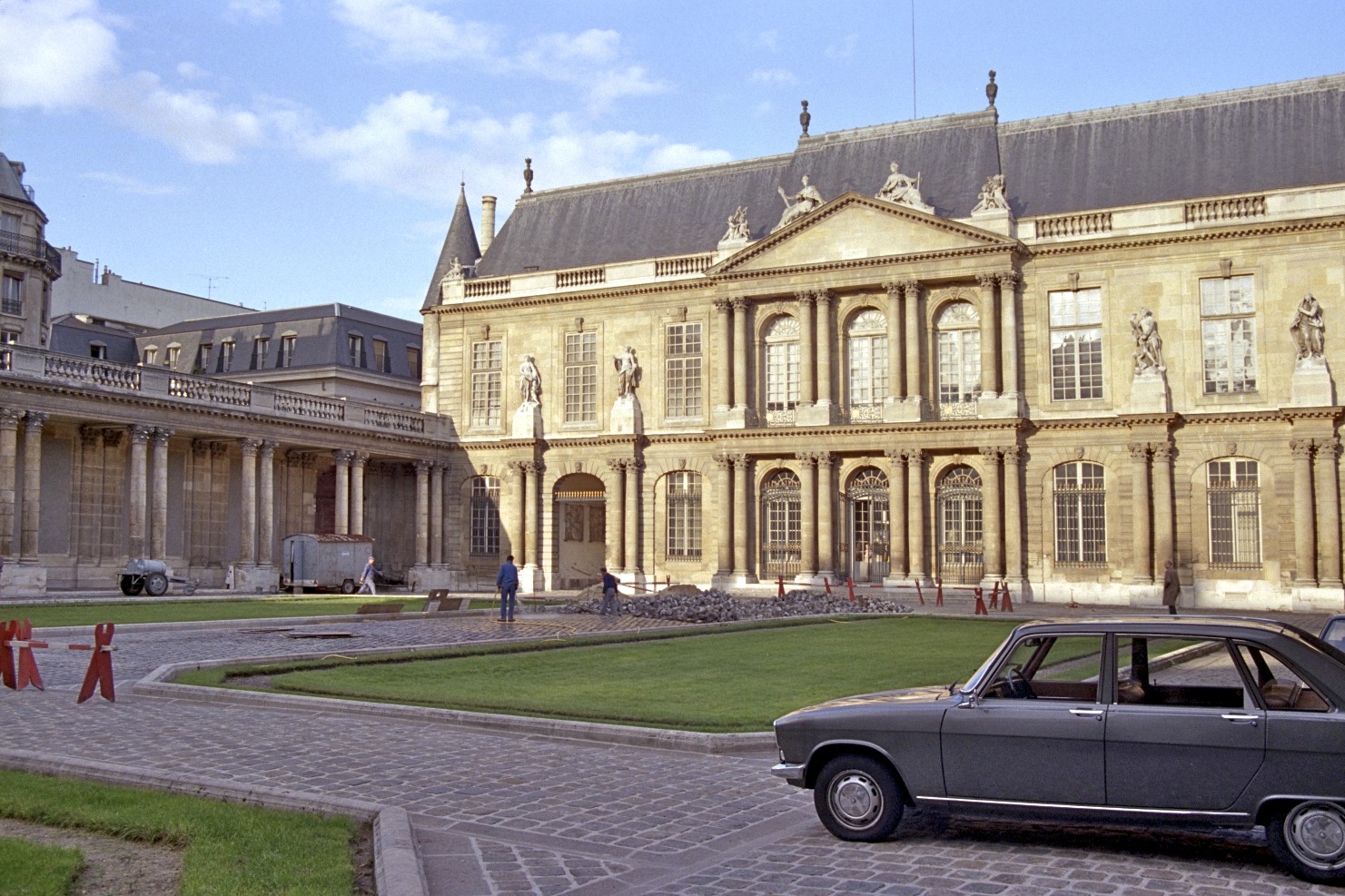
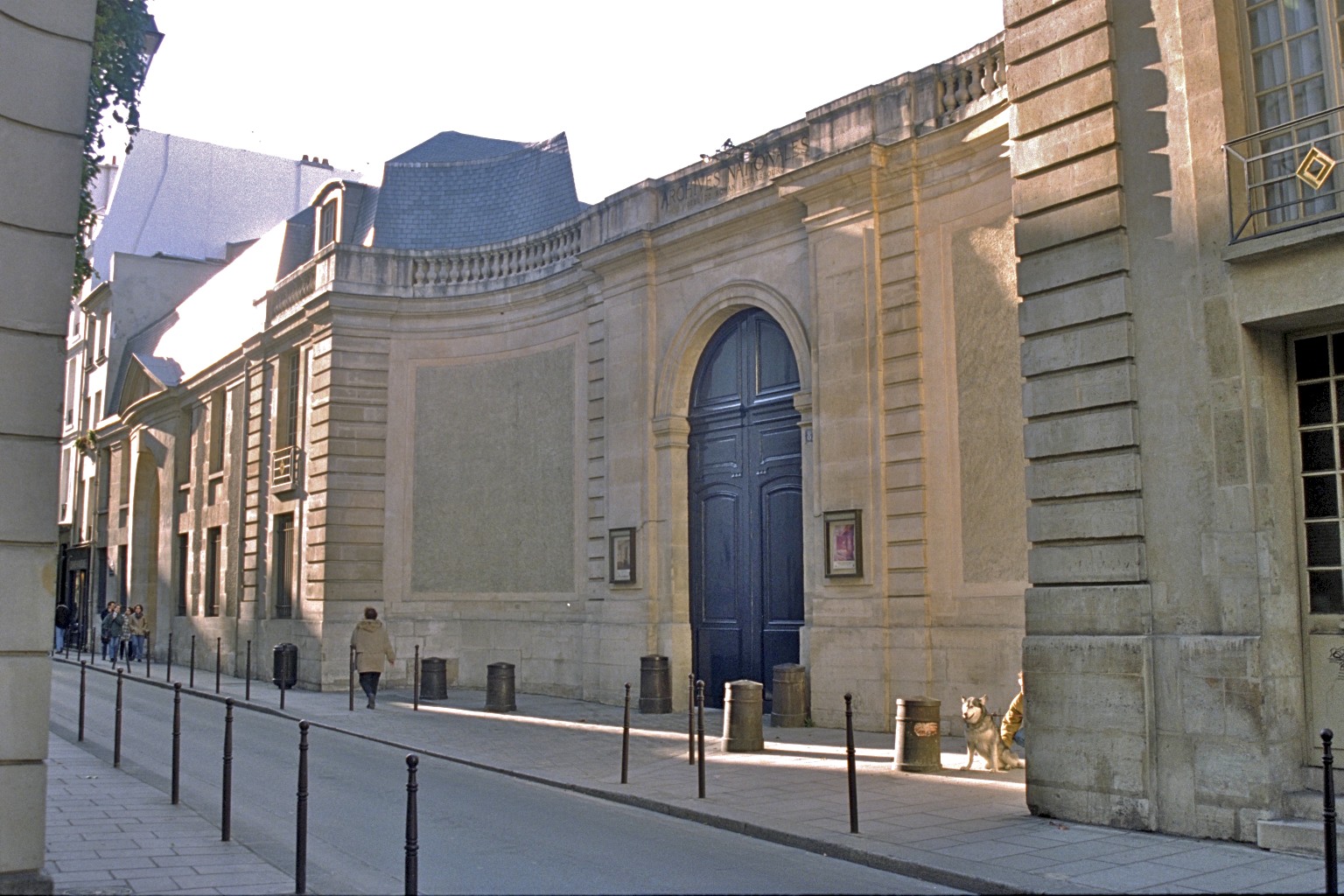
We continue to the end of Rue des Rosiers and turn a few steps to the right where there is a tiny garden behind Notre-Dame-des-Blancs-Manteaux. We cross the garden past the church and turn left into Rue des Francs-Bourgeois to the National Archives in Palais Soubise and Hôtel de Rohan.

Hotel de Rohan, Paris

Hotel de Rohan

Archives Nationales are housed in many adjoining buildings. The best known are Hôtel de Rohan, facing Rue Vielle du Temple, and Palais Soubise, facing us. That palace was built in 1705 in the style of Louis XV. It has a horseshoe shaped garden in front.

Beaubourg, Paris 2

Rue Pierre au Lard & Beaubourg

The museum houses 280 kilometres of shelves carrying six billion of state documents. Historic exhibitions are also held in Palais Soubise

Rue Pierre au Lard

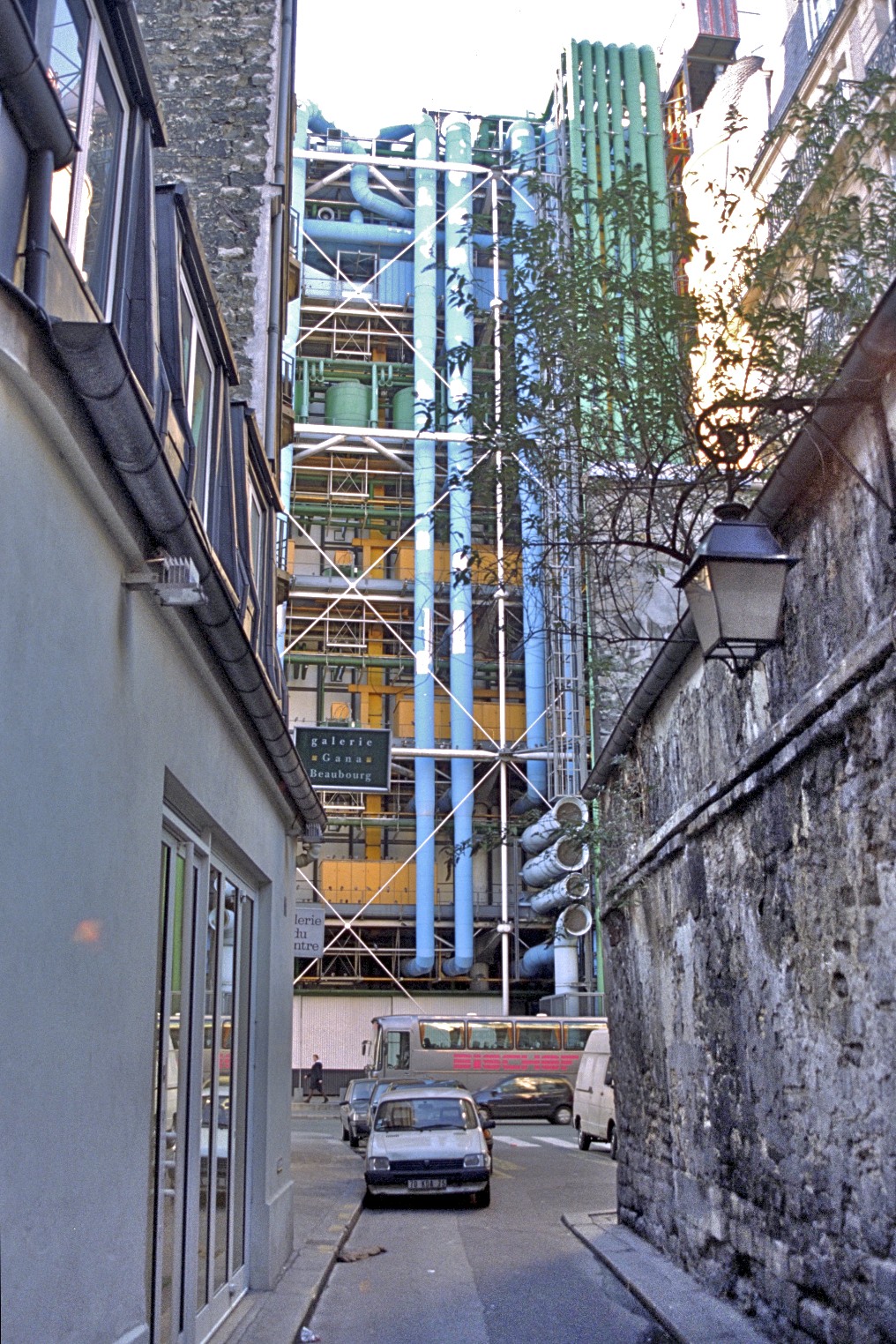
From the museum we go to the next corner and there turn left Rue des Archives until we arrive at Rue Sainte-Croix-Bretonnerie, where we turn right. Just before we come to Palais Beaubourg we turn right into a crooked alley, Rue Pierre au Lard.

The ancient and dilapidated walls of the alley contrast with the avant-garde landmark of Palais Beaubourg in front of us.

Next steps

Trausta heimilisbókhaldið

Punktar

Þýzka hagkerfið byggist á, að þjóðarbókhald sé eins og heimilisbókhald. Til að eignast þurfi að spara. Engilsaxneska hagkerfið byggist hins vegar á, að unnt sé að reka þjóðarbókhald á töfrum. Til að eignast þurfi að eyða. Slík hagkerfi reikna árangur sinn í aukinni viðskiptaveltu og kalla hana hagvöxt. Ísland hefur löngum verið hallt undir engilsaxa og við höfum grátlega reynslu af því. Hér opnar ekki sá hagfræðingur kjaftinn, að hann tali ekki um hagvöxt. Alveg eins og það bæti hag þjóðarinnar, að einhver kaupi óþarfan Range Rover eða fái sér gullduft á spaghettið. En óskhyggjan heimtar, að unnt sé að galdra gróða.

Svíinn á vaktinni

Punktar

Hin sænska Cecilia Malmström skiptir nú um stól hjá Evrópusambandinu og verður kommissar viðskipta. Hún hefur lýst efasemdum um fyrirhugaðan samning, TISA, um uppgjöf Evrópu gagnvart ágengni risafyrirtækja. Vonandi tekst henni í tæka tíð að tempra þennan ógæfusamning, sem meðal annars felur í sér réttarstöðu þeirra til jafns við þjóðríki. Því miður er hún að draga í land. Fulltrúi Íslands í samningunum þarf að hvetja Malmström til að tempra málið. Utanríkisráðherra Íslands flýtur sofandi að feigðarósi. Sættir sig við að sjá samninginn, þegar hann er fæddur og orðinn óuppsegjanlegur. TISA er stærsti glæpur aldarinnar.

Hafna íslenzka hatrinu

Punktar

ÞETTA er ógeð. Hálf íslenzka þjóðin er meira eða minna rugluð, þrúguð rasisma og fasisma. Hálf þjóðin vill ekki, að hér sé reist moska, hvað þá að múslimar fái fría lóð. Rugl þjóðarinnar nær líka til annarra trúarbragða. Þriðjungur vill ekki, að orthódox kristnir fái að reisa kirkju, fleiri en þeir, sem vilja leyfa. Engin furða, þótt Framsókn hafi gengið vel í kosningunum í vor, þegar hálf þjóðin er í keng. Ég vil ekki vera hluti þjóðar, sem er svo forstokkuð, að hún vill banna fólki að reisa sér guðshús. Enda er langt síðan ég hætti að líta á mig sem Íslending. Ég er Evrópumaður, hluti af grísk-rómverskri arfleið og hafna íslenzka hatrinu.

4. Marais – Rue des Rosiers

Borgarrölt

Hotel Carnavalet

Hotel Carnavalet, Paris

Hotel Carnavalet

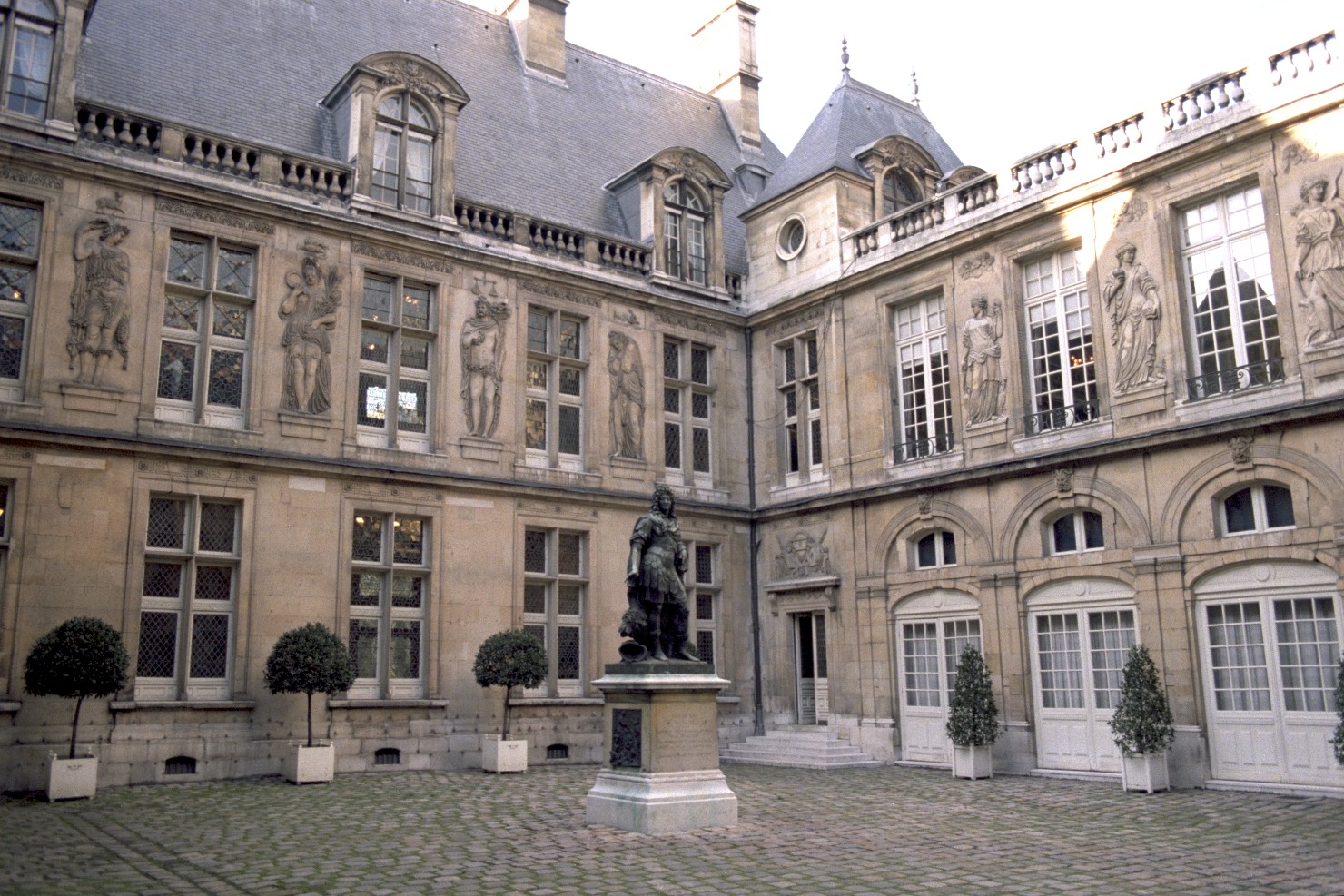
We leave the square at its north west corner and walk Rue des Francs-Bourgeois to Hôtel Carnavalet at our right.

Built in 1644 when the Mannerist style was developing into the French Château style. It was given its appearance by the well known architect Mansart. The original part of the mansion was built around a courtyard which is behind the main entrance. Later other wings were added so that the palace became a square and a crucifix around four courtyards.

The palace is now a museum of the history of Paris with exquisite antique furniture

Rue des Rosiers

We retrace our steps to Rue des Francs-Bourgeois, go past the museum and then immediately turn left along Rue Pavée and at once to the right along Rue des Rosiers.

Rue de Rosiers, Paris

Rue de Rosiers

The main Jewish street of Paris. Some synagogues and Middle Eastern shops and Hebrew book shops are in the street and also in the side street to the left, Rue des Ecouffes.

Next steps