8. Promenade – Museum de Louvre

Borgarrölt
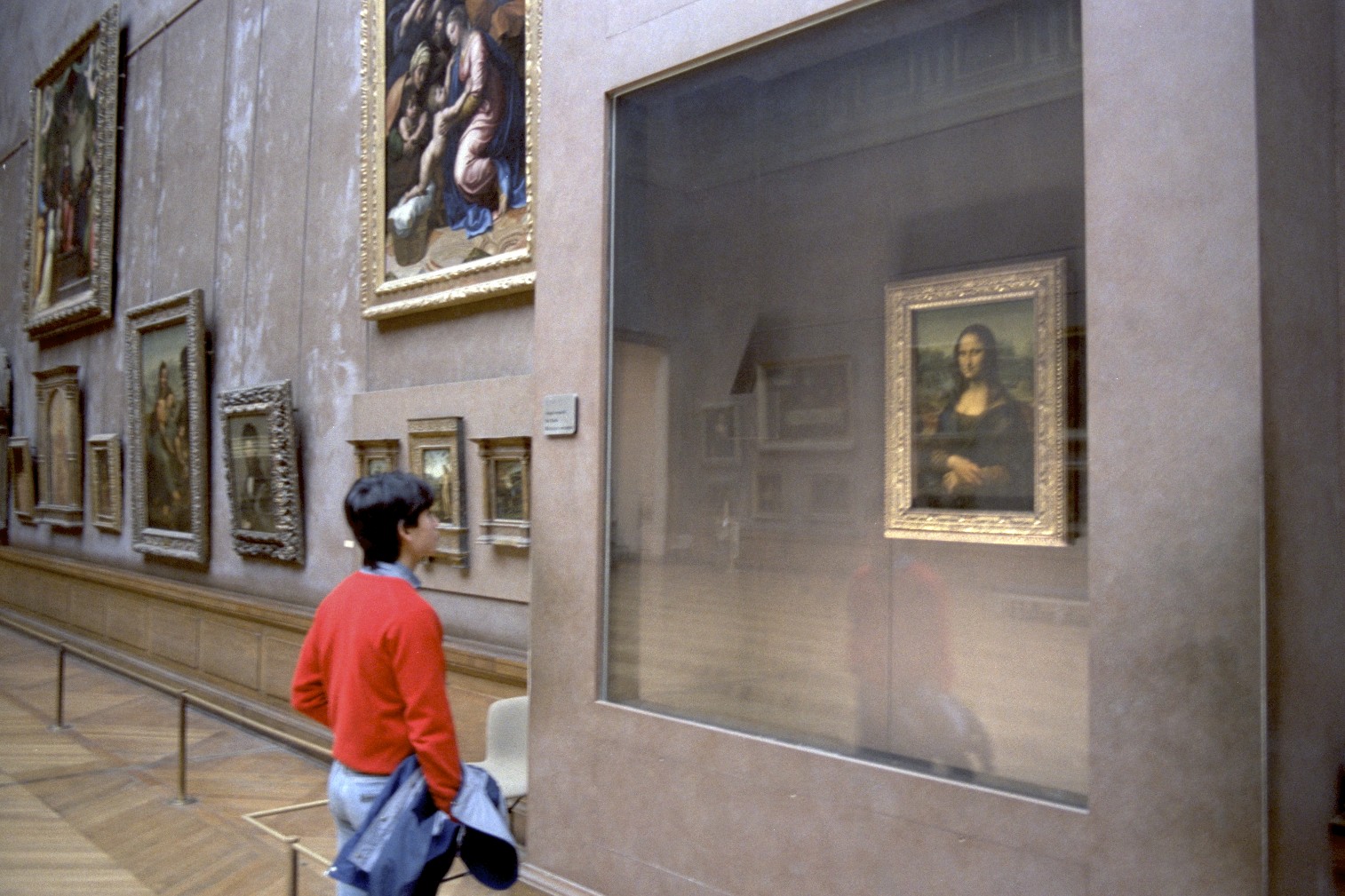
Louvre: Mona Lisa, Paris

Louvre: Mona Lisa

Museum de Louvre

We enter the museum itself, through the Pyramide.
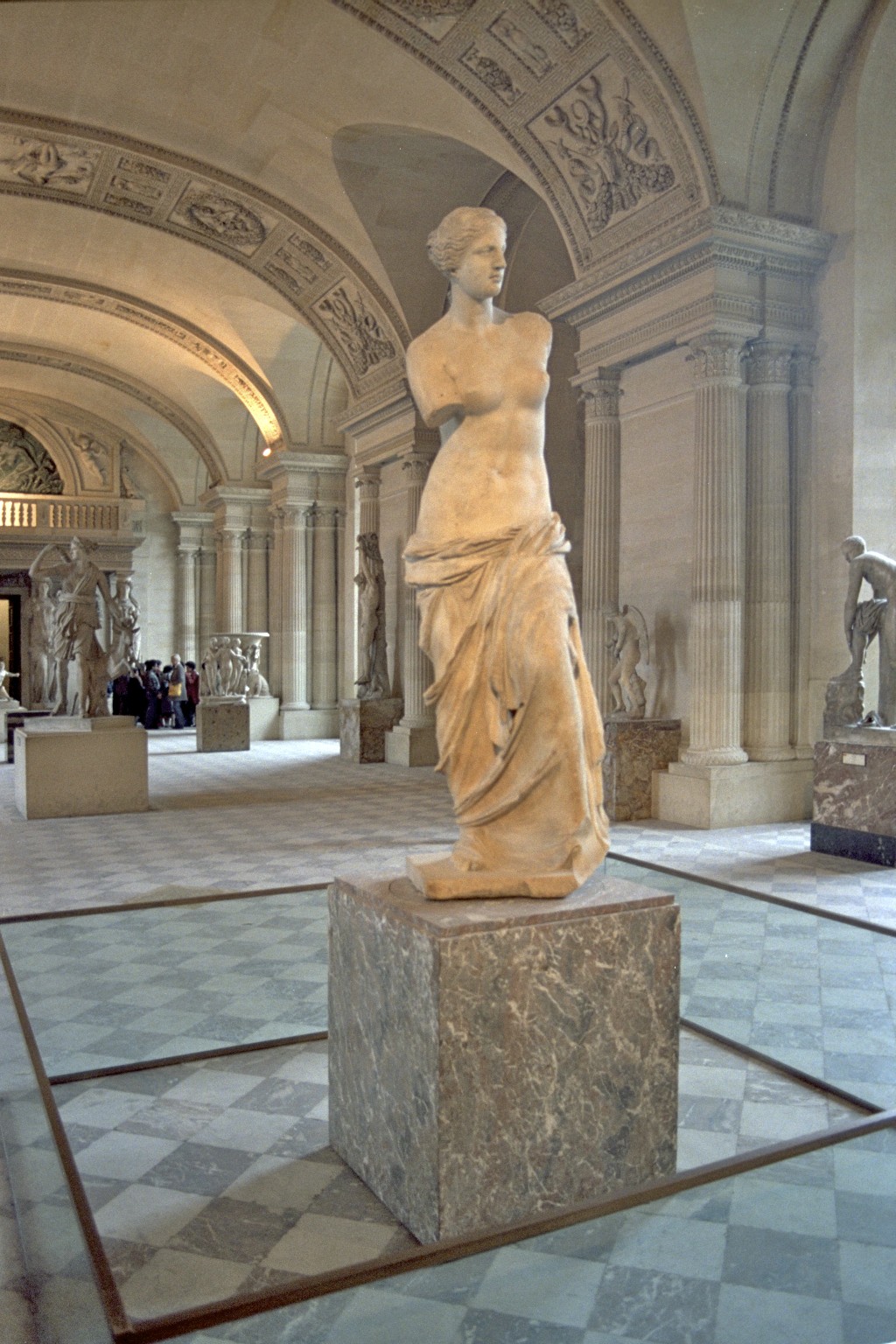
Louvre: Venus frá Milo, Paris

Louvre: Venus frá Milo

This is with the National Gallery in London one of the two greatest museums of art in the world. The second row is reserved for the Uffizi in Florence, Prado in Madrid and the Museum of Modern Art in Manhattan. It is estimated that there are now about 500,000 objects owned by the museum. It will take three months to inspect the exhibits by spending 30 seconds on each item.

Most French kings collected works of art, all the way back to Francis I who owned works by Titian, Rafaelo and Leonardo da Vinci, including the Mona Lisa. Formally the palace was converted into a museum in 1793, shortly after the great Revolution.

From the underground entrance corridors lead to different wings of the museum. Some of the most interesting works are on the ground and first floors of the southern Denon wing.

Mona Lisa

We go into the Denon wing.
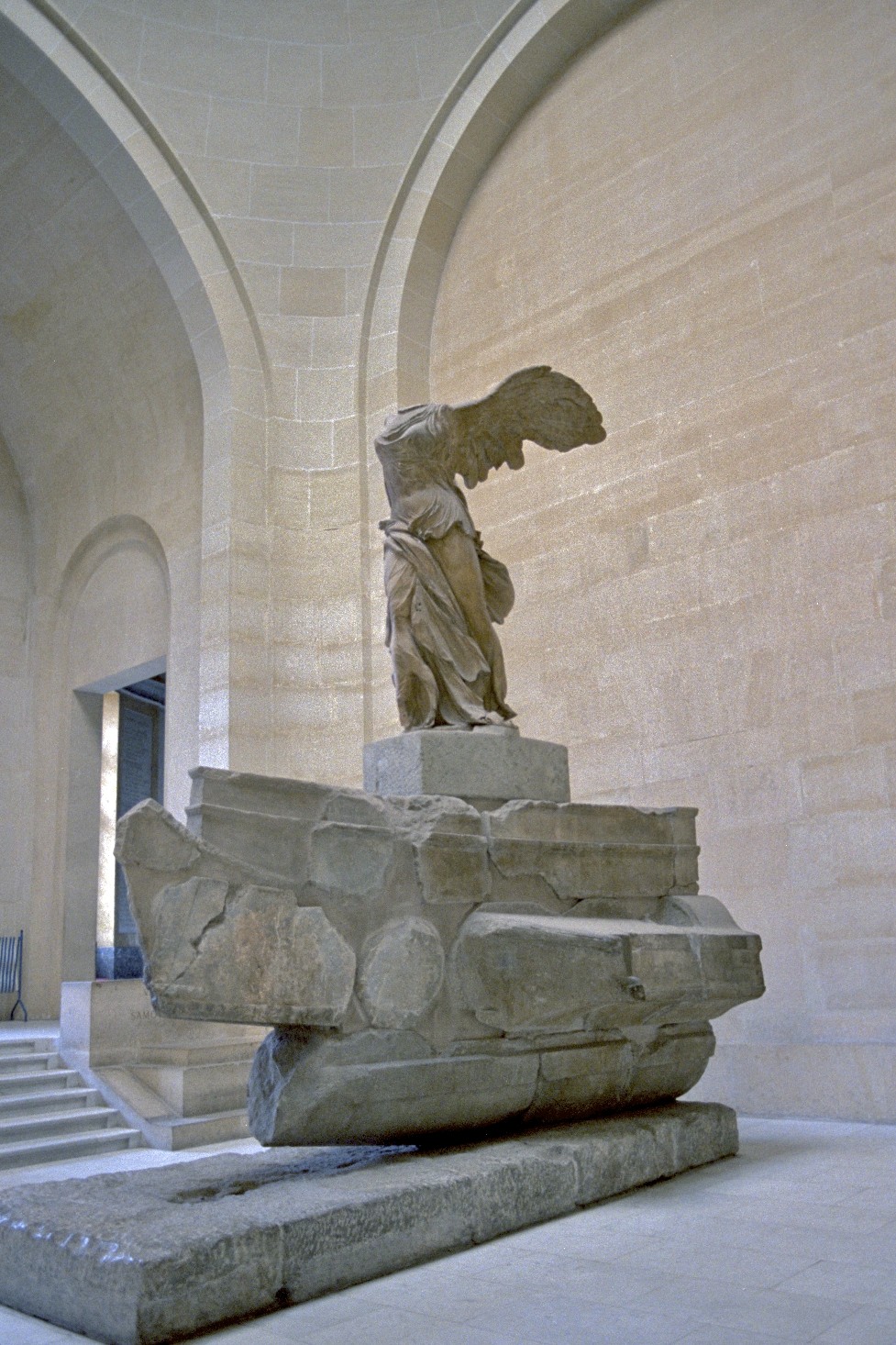
Louvre: Samothrake, Paris

Louvre: Samothrake

If we go directly into Salle Daru and then turn left we should find Mona Lisa by Leonardo behind security glass. This southern wing has many exhibition halls. We can se works by the Italians Angelico, Mantegna, Tintoretto, Titian and Veronese; the French Rigaud, Delacroix, David and Géricault; the Benelux van Eyck, Breugel and Rembrandt; and the English Gainsborough and Constable.

We go down the stairs past the Hellenistic 3rd C. B.C. Goddess of Victory from Samothrace. On the left is the Caryatides hall. In its middle stands the famous sculpture from the 2nd C. B.C, Venus from Milo. In this western corner of the floor there are Greek and Roman antiques. Egyptian antiques are in the southern corner and Middle Eastern ones in the other half.

Among famous items in the Louvre is the Egyptian Scribe and the bust of Amenofis IV, the statue of King Gudea and the Laws of Hammurabi. The museum is divided into three sections of antiques, according to geographic areas, and sections of painting, sculpture and applied arts. It is wise to buy a special guide-book for the museum, but the position of works can be changed.
Next steps

7. Promenade – Palais de Louvre

Borgarrölt
Louvre, Paris

Louvre to the left, Pyramide to the right

Pyramide

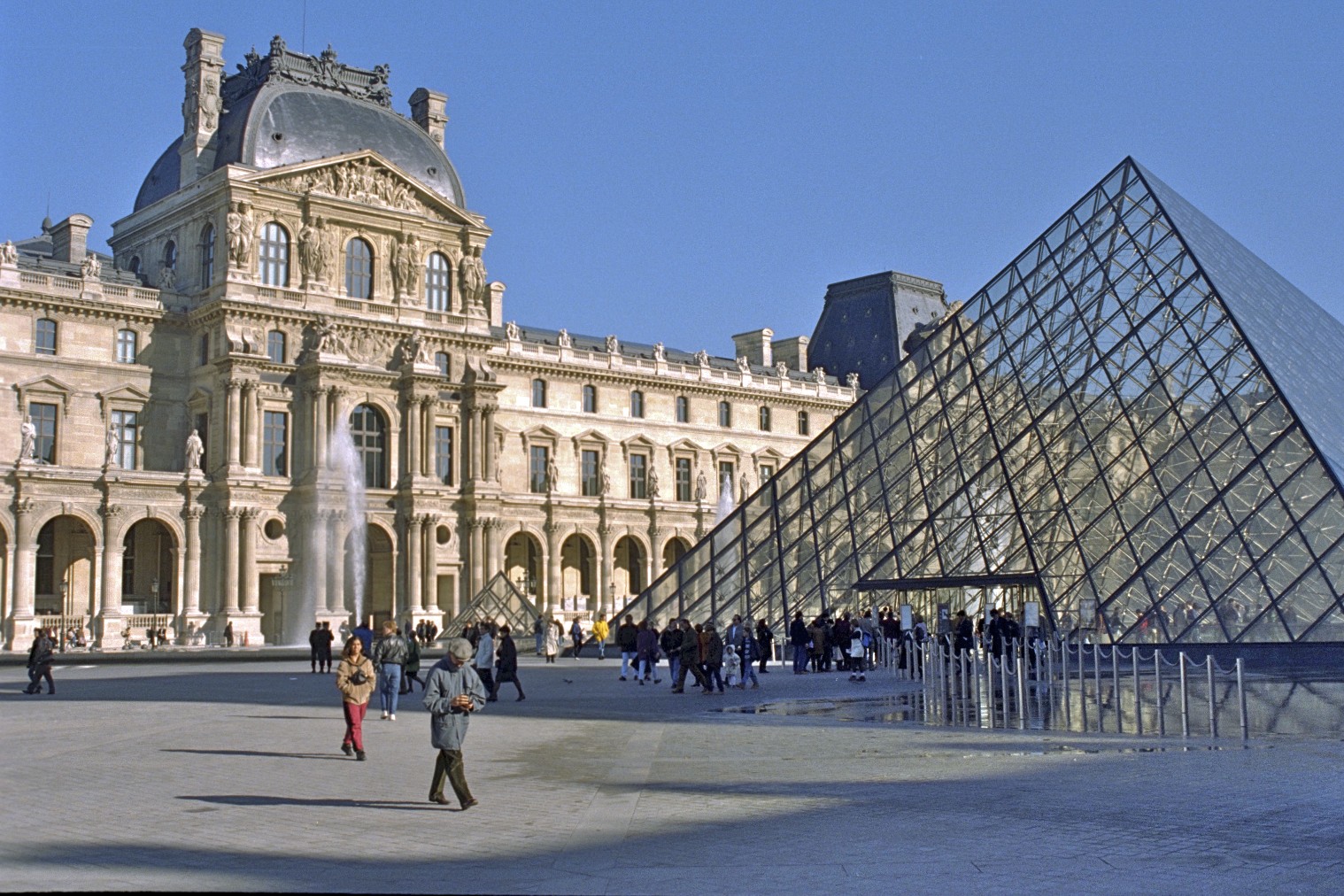
We enter the inner courtyard of the Louvre where a pyramid of glass dominates the scene.

The glass pyramid by Chinese architect Pei is the new entrance to the Louvre, which has been enlarged underground and into the northern wing of the Palais de Louvre. Being of glass the pyramid allows us to see the surrounding palace and brings light into the museum entrance below.

This building was very controversial as many avant-garde buildings have been in Paris, but the commotion has settled down. Most people seem to like it, just as they like the Beaubourg, which also was controversial in the beginning. The French have a knack for adventure in modern architecture.

Palais de Louvre

Before we enter the Louvre museum we have a look at the Palais de Louvre.

The building history of the Louvre is long and complicated. In the beginning there was Philippe Auguste’s castle from around 1200. In the latter half of the 14th C. the castle was temporarily the residence and royal palace of Charles V. The oldest existing part was built in the 16th C., the south western corner of the part which surrounds Cour Carrée.

In the reign of Henri IV the south western wing, Flore, was erected. In the reigns of Louis XIII and XIV the square around Cour Carrée was completed. Louis XIV lived for a while in Louvre while he waited to move to Versailles. In the reign of Napoleon the southern wing was finally completed and the northern wing in the reign of Napoleon III.

The enormous colonnade at the front of the palace, facing east, was designed by Perrault, Le Vau and Le Brun in the time of Louis XIV in the 17th C. French style. Behind it is Cour Carrée where we can on the left see the Renaissance style of the oldest part and to the right its later French evolution into the Mannerist style.

Next steps

6. Promenade – Tuileries

Borgarrölt

Tuileries, Paris 2

Tuileries

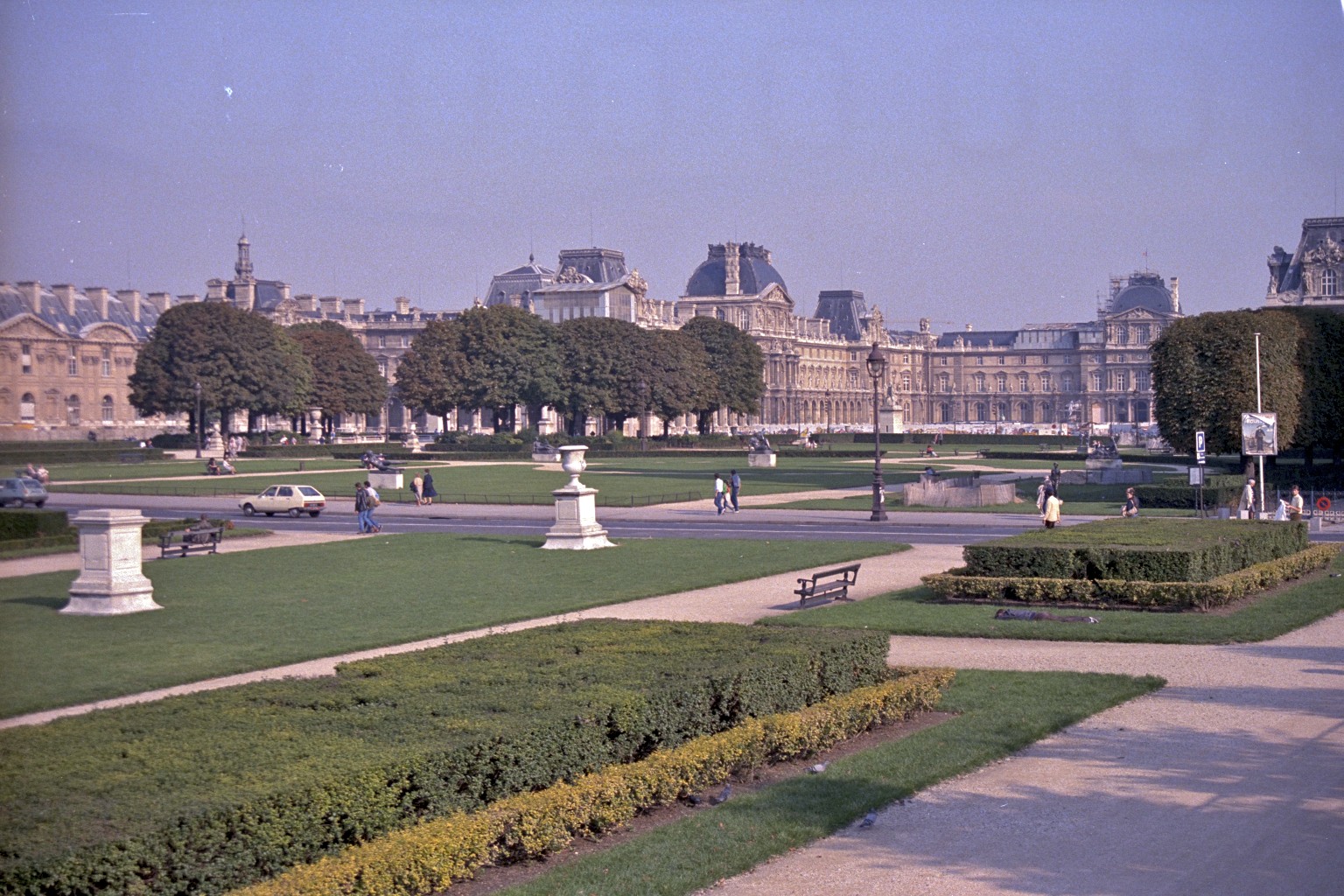
We turn into the Jardin des Tuileries.

A typical formal French garden, in opposition to the English style which is free and relaxed. On both sides of Tuileries there are terraces with views, over the Seine from the southern one. The path along the middle of the garden is straight in line with Champs-‘Elysées, only broken by two ponds.

This was once a dumping ground which the renowned landscape architect Le Nôtre designed into a park in 1664, initially as the king’s private park.

A street divides the Tuileries from the garden of the Louvre. Formerly the Tuileries palace was here, built by Catherine dei Medici in the years after 1563. It burnt down in the Communards revolt in 1871.

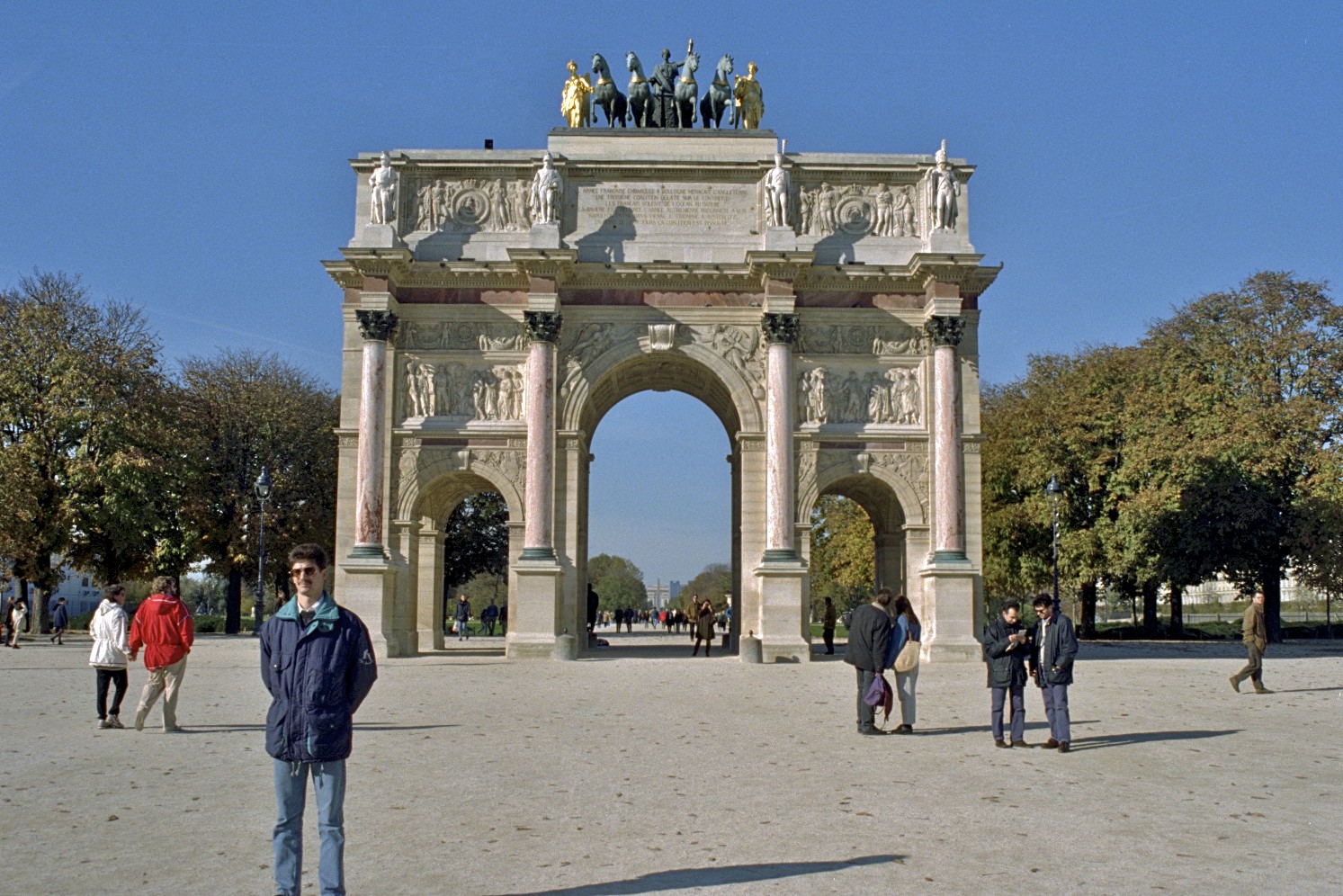
Arc de Triomphe de Carrousel

Arc de Triomphe de Carrousel, Paris

Arc de Triomphe de Carrousel

We cross that street, go into the Louvre garden and come to the Arc de Triomphe de Carrousel.

This small arch of victory was built 1806-1809 in memory of the victories of Napoleon. Formerly it was decorated with four horses of bronze which Napoleon stole from the San Marco in Venice, but the Italians have recovered them.

Once, the arch was the entrance to the disappeared Tuileries palace. The garden is full of sculptures by Maillol.

In the western end of the northern wing of Palais de Louvre an independent museum of applied art is located, Musée des Arts Décoratifs.

Next steps

5. Promenade – Jeu de Paume

Borgarrölt

Jeu de Paume

Jeu de Paume, Paris 2

Jeu de Paume

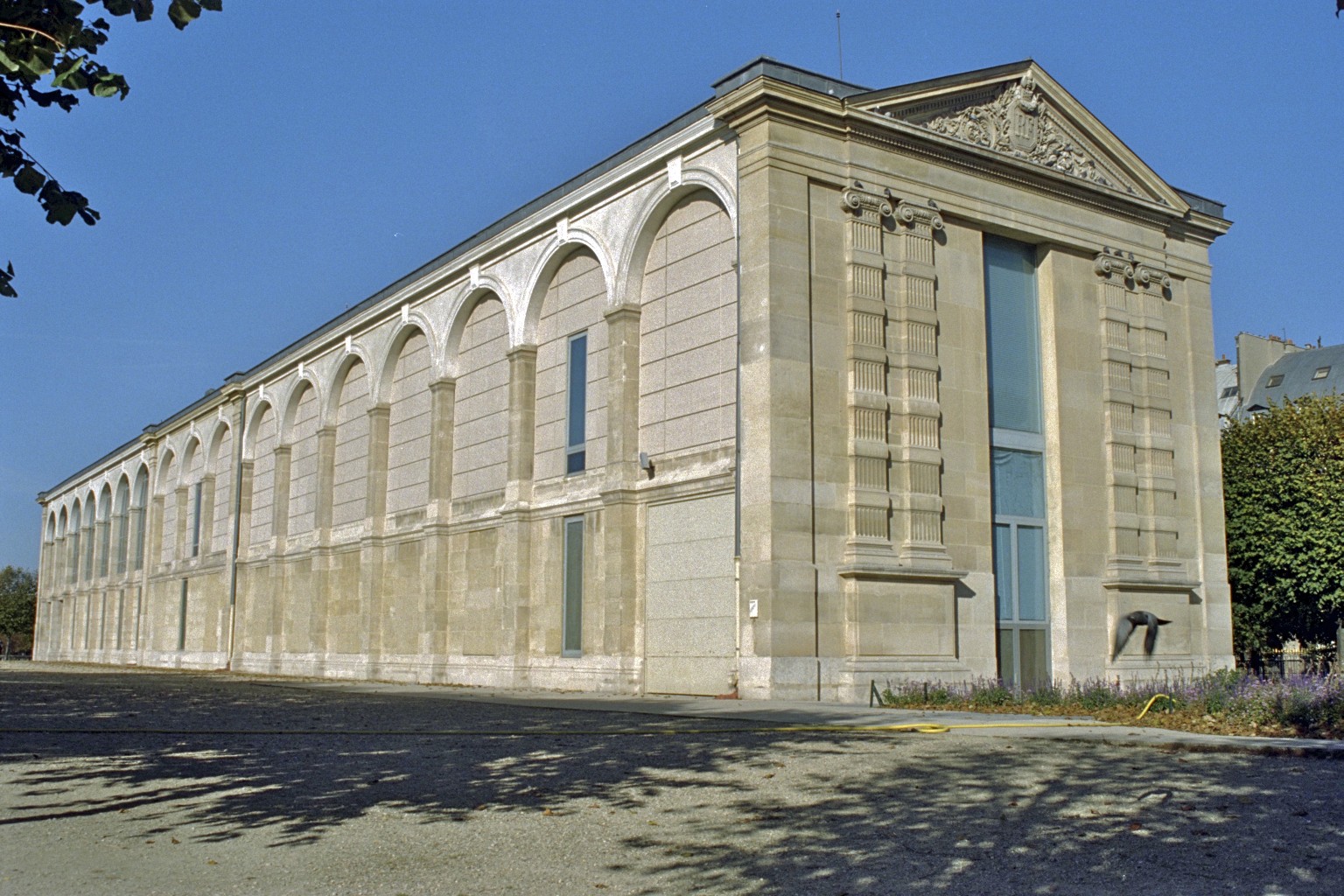
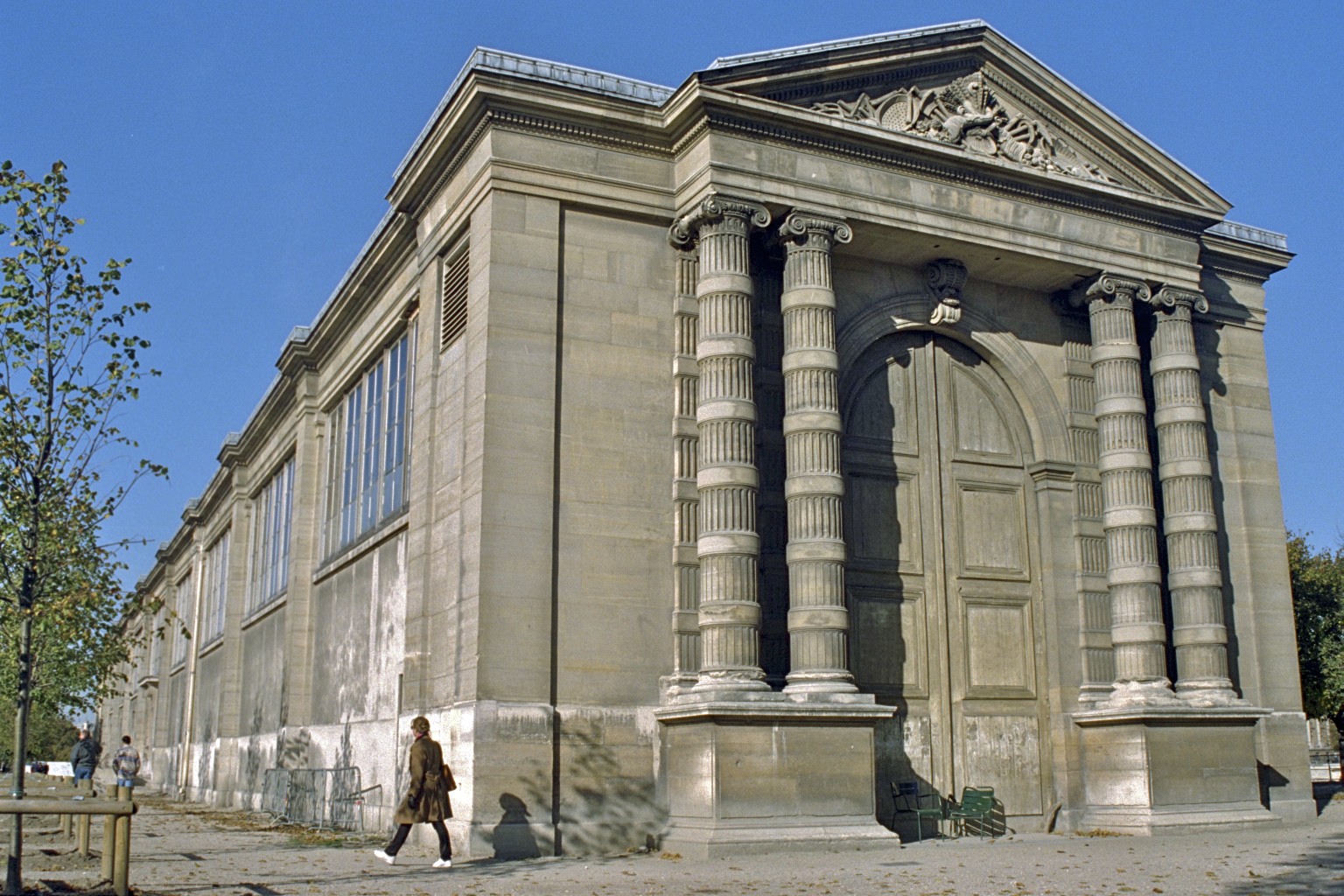
Before we enter Tuileries we should take note of two palaces which are on both sides of the garden at the end facing Place de la Concorde. They are Jeu de Paume to the north and left and Orangerie to the south and right.

The French museum of Impressionism, a style of painting that appeared in France about 1874 and developed into an artistic revolution that spread around the world. The French had until then been in the forefront of painting, but at that time took the absolute leadership.

This is the best Impressionist museum in the world, hung with paintings by Monet and Manet, Cézanne and Degas, Renoir and others, such as the later Gauguin and Rousseau, Seurat and Signac, van Gogh and Toulouse-Lautrec.

Orangerie, Paris

Orangerie

Jeu de Paume is on the divide of styles and times. Older art is in the Louvre and newer art in Beaubourg.

Orangerie

We turn our attention to the museum opposite, the Orangerie.

The mirror image of Jeu de Paume on the other side of the Tuileries garden. It houses amongst other works of art a series of murals by Monet and works by Cézanne and Renoir. It also has temporary exhibitions.

Next steps

4. Promenade – Place de la Concorde

Borgarrölt

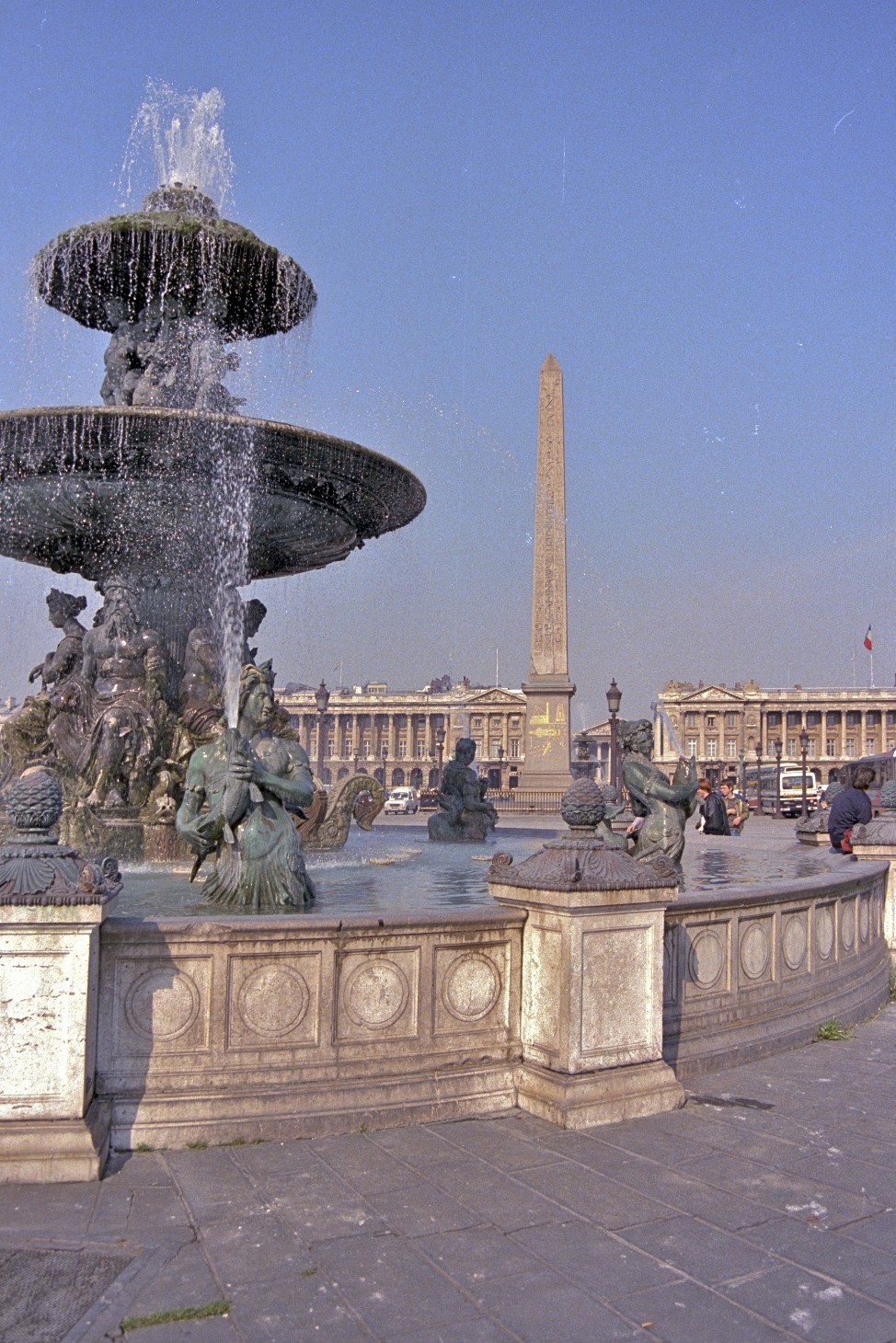
Place de la Concorde, Paris

Place de la Concorde

Place de la Concorde

Champs-Élysées ends as an avenue at Place de la Concorde.

A giant sea of asphalt with 84000 square meters of automotive traffic, laid out in 1755-1775. In its north eastern corner Louis XVI was guillotined. 1343 other victims of the Revolution were beheaded at the present entrance to the Tuileries garden.

The obelisk in the middle of the square is a gift from the viceroy of Egypt. It is 3300 years old and comes from Luxor in the Nile valley. It was re-erected here in 1836, weighs 220 tons and has a height of 23 meters, all of one single stone, three meters higher than Cleopatra’s needle on the Thames banks in London.

From the island in the middle of the square there are views to all directions. To the west along the axis of Champs-Élysées to Arc de Triomphe. To the south over Pont de la Concorde to French parliament in Palais Bourbon. To the north along Rue Royale to the Madeleine, with the Crillon hotel on the left side at the square. To the east through Tuileries to Palais du Louvre.

Next steps

Sturtið gamla bankanum

Punktar

Ríkisstjórnin getur ekki leyft Seðlabankanum að semja við gamla Landsbankann um eftirgjöf á gjaldeyrishömlum. 8% gengisfall mundi verða skrifað beint á IceSave og fólk mundi spyrja: Drap Sigmundur Davíð ekki IceSave? Beint samband er milli IceSave og 230 milljarða skuldar nýja bankans við þann gamla. Ríkið á nefnilega nýja bankann og þessar reddingar eru allar vegna IceSave. Stafa af, að ekki var samið um IceSave, heldur málið sett í dóm, sem skildi þetta eftir. Þess vegna verður ríkisstjórnin að hafna sátt. Auðvitað á að sturta gamla bankanum í gjaldþrot. Hrægammar keyptu pappírana á slikk og geta svo reynt að kæra ríkið.

3. Promenade – Grand & Petit Palais

Borgarrölt

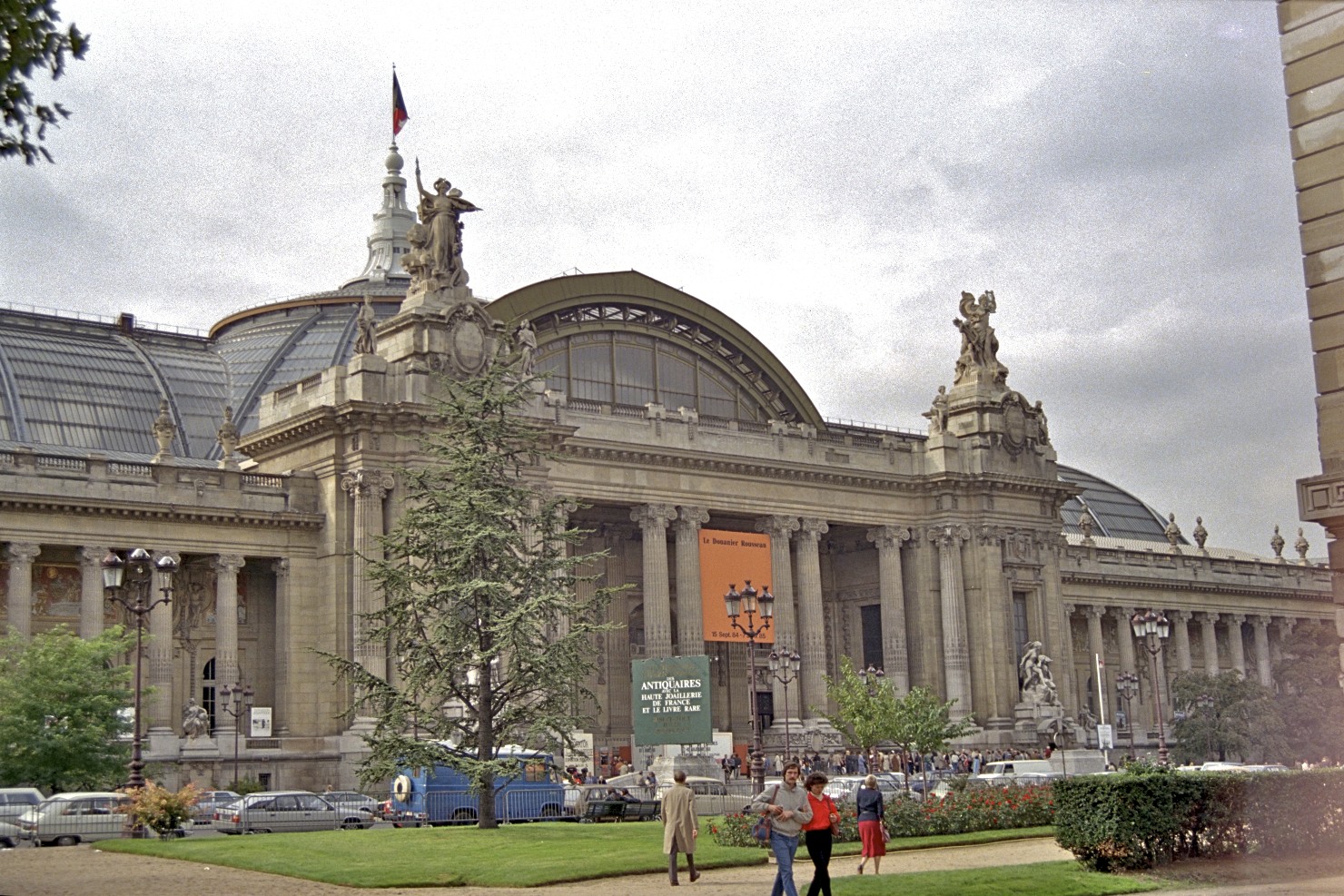
Grand Palais, Paris

Grand Palais

We continue along the Champs-Élysées. To our right we see the Grand Palais.

Grand Palais and Petit Palais were built to house the World Fair of 1900. Their structure is of steel and glass, but the exteriors are in the heaviest of the Historical style of architecture, popular at the end of the last century. The fronts of Grand Palais are for example completely lined with Ionic columns.

The part of Grand Palais facing west, to Avenue Franklin D. Roosevelt, houses the French museum of inventions, Palais de la Découverte. It is an ode to French achievements in technology and science, open 10-18, closed Monday.

The other part, facing east, to Avenue Winston Churchill, is the venue of yearly fairs, such as automobile fairs, and also of specialized exhibitions of art.

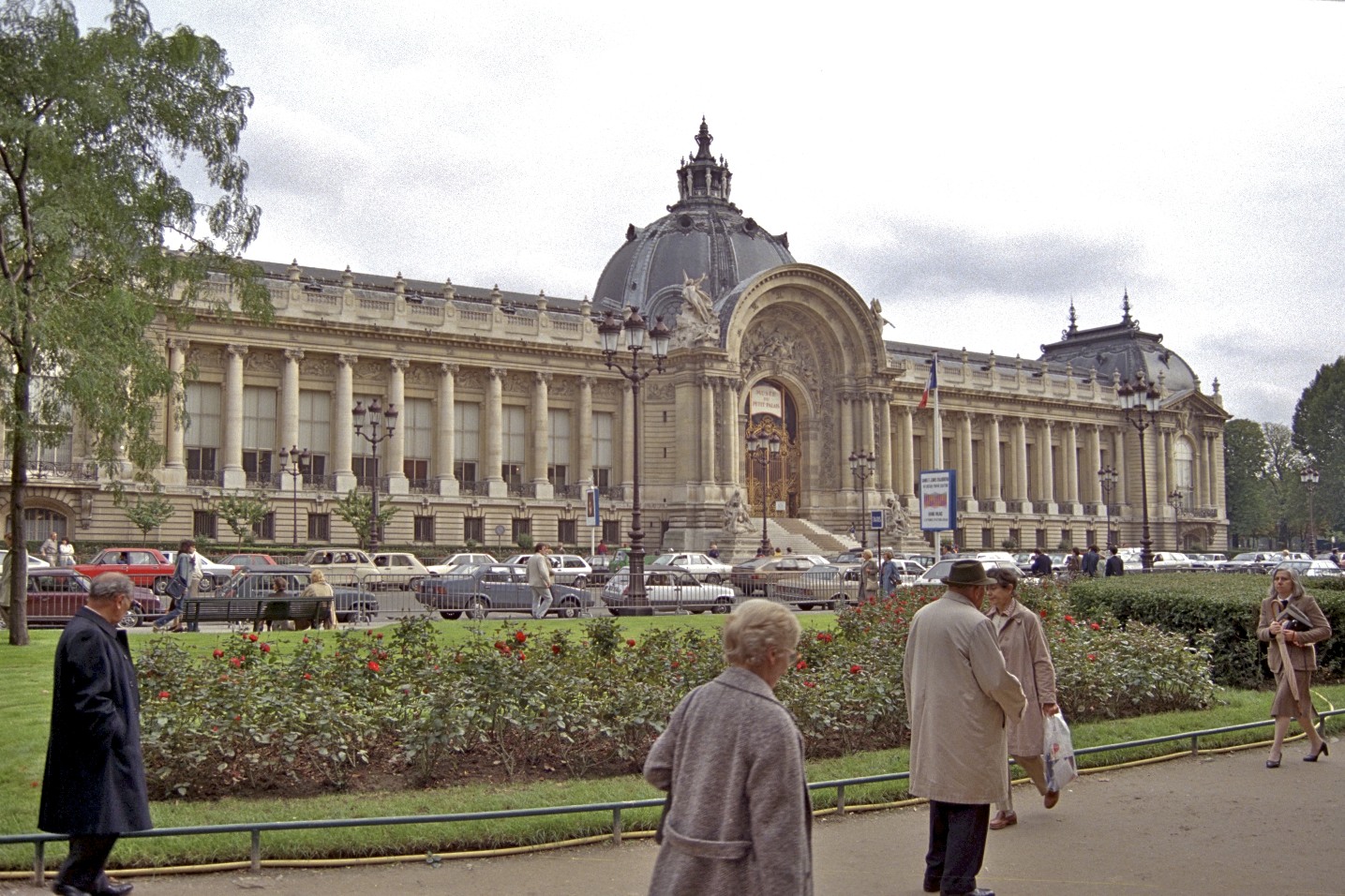
Petit Palais, Paris

Petit Palais

Opposite Grand Palais there is the Petit Palais.

It houses one of the biggest museums of art in the city. It covers most epochs in history, ancient and recent. There are also monumental exhibitions, some of them so difficult to assemble that it will not be tried again.

From Avenue Winston Churchill we can see directly over Pont Alexander III all the way to Invalides. The bridge was built in 1900 in the ornamental style of that period.

Next steps

2. Promenade – Champs-Élysées

Borgarrölt

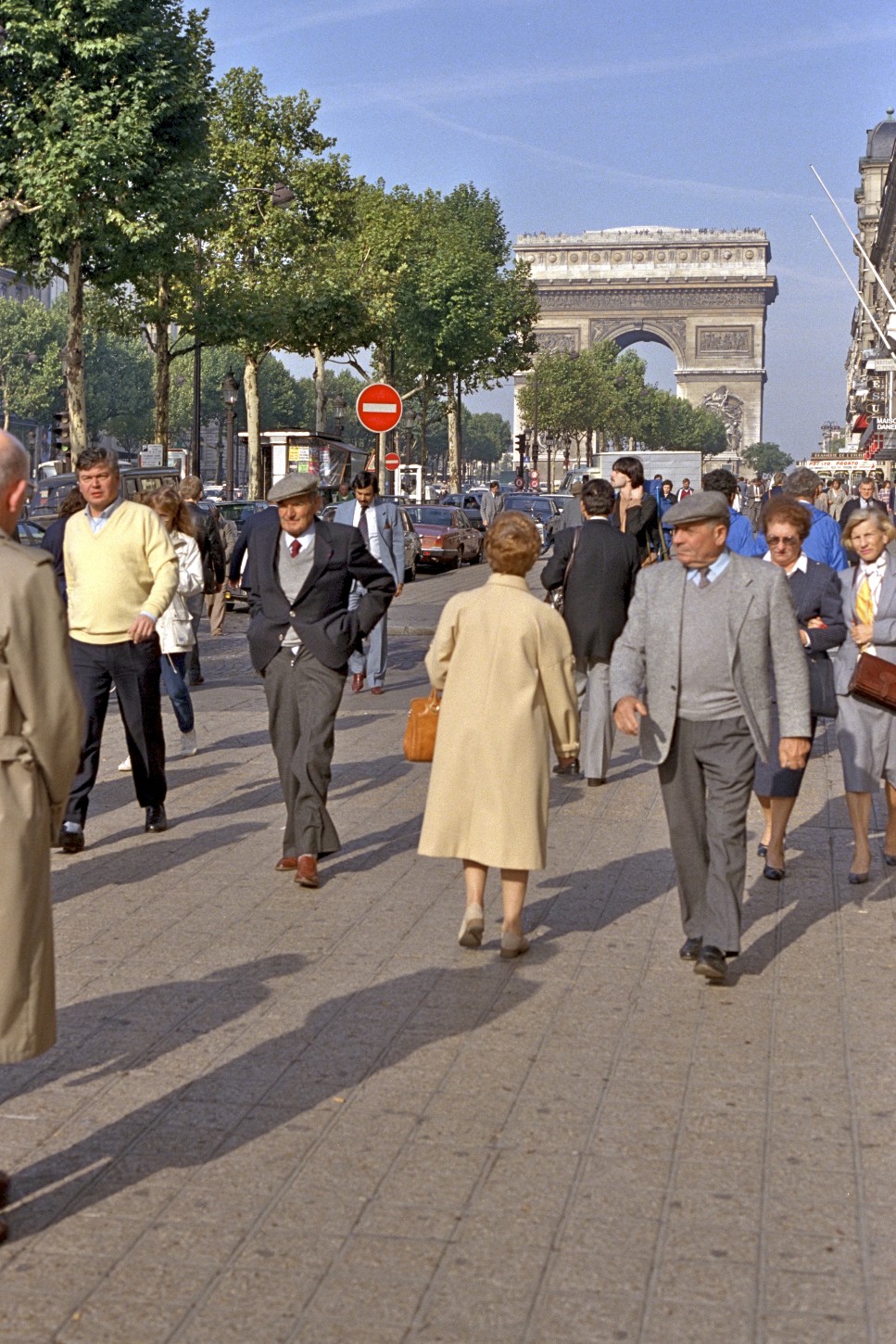
Champs-Elysées, Paris

Champs-Élysées

We now walk along Champs-Élysées downhill from Étoile in the direction of Place de la Concorde.

On the stretch from Étoile to Rond Point airlines and car makers line the avenue, also cinemas and other places of entertainment. Many shopping arcades lead off into labyrinths of shops, cinemas and restaurants. On this stretch there are more tourists than in any other place in Paris. Many sit in side walk cafés and observe the pedestrian traffic.

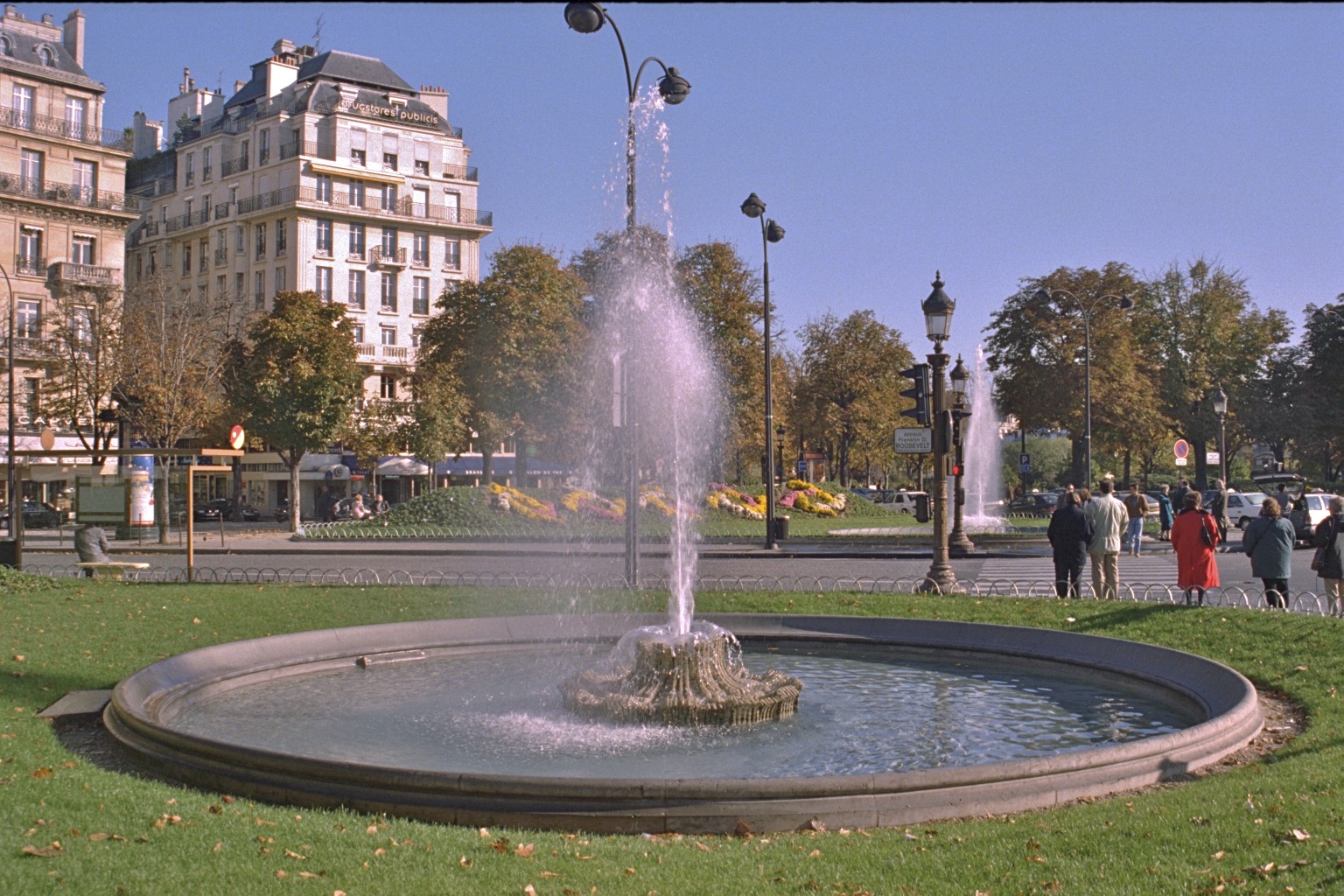
Rond Point, Paris

Rond Point

We arrive at Rond Point.

A big circle of 140 meters in diameter, where Champs-Élysées meets the fashion streets Avenue Montaigne and Avenue Matignon. The appearance of Champs-Élysées also changes. From Rond Point to Place de la Concorde it is lined with mighty trees and gardens on both sides, including the Palais Élysée garden.

Next steps

Eyður í innflutningi

Veitingar

Hér hafa um skeið fengizt ágætar döðlur frá Íran í ýmsum pakkningum. Eins og þær, sem seldar eru þar eystra. Einnig fást hér gullnar rúsínur frá Chile og gráfíkjur frá Spáni. Allt fyrirtaks vörur á sanngjörnu verði. Ég skil því ekki, af hverju pistasíur eru svona daufar hér. Kom heim með glás af pistasíum frá Íran og þær bragðast enn sem glænýjar. Slík vara getur því ekki verið erfið í flutningi. Auglýsi því eftir innflytjanda, sem vill bregðast við áunninni fíkn minni. Þar eystra fást líka grænar rúsínur, sem eru frábærar og hljóta að vera auðveldar í flutningi. Tyrkneskar súltönur eru líka bragðgóðar. Hér er bisness!

6. Mode – Palais Elysée

Borgarrölt
Elysée, Paris

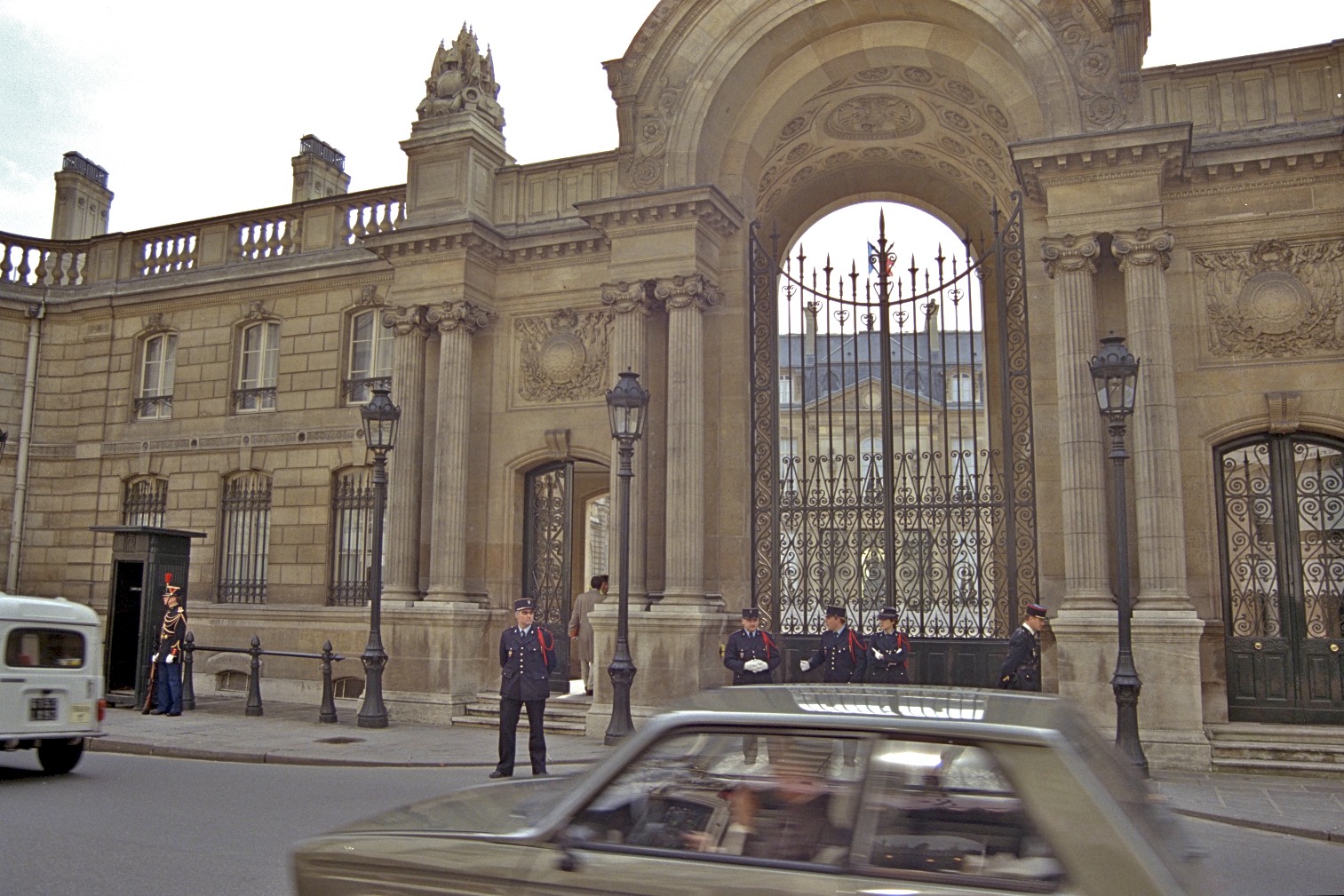
The formal entrance to Palace Elysée

Palais Elysée

500 meters along the street we arrive on the left side at the main entrance to Palais Élysée.

The President of the Republic of France lives in this well guarded palace and receives guests of honour. The palace was built in 1718 and has since 1873 been the presidential palace. the presidents are said to envy the prime ministers who live in Hôtel Matignon on the Left bank.

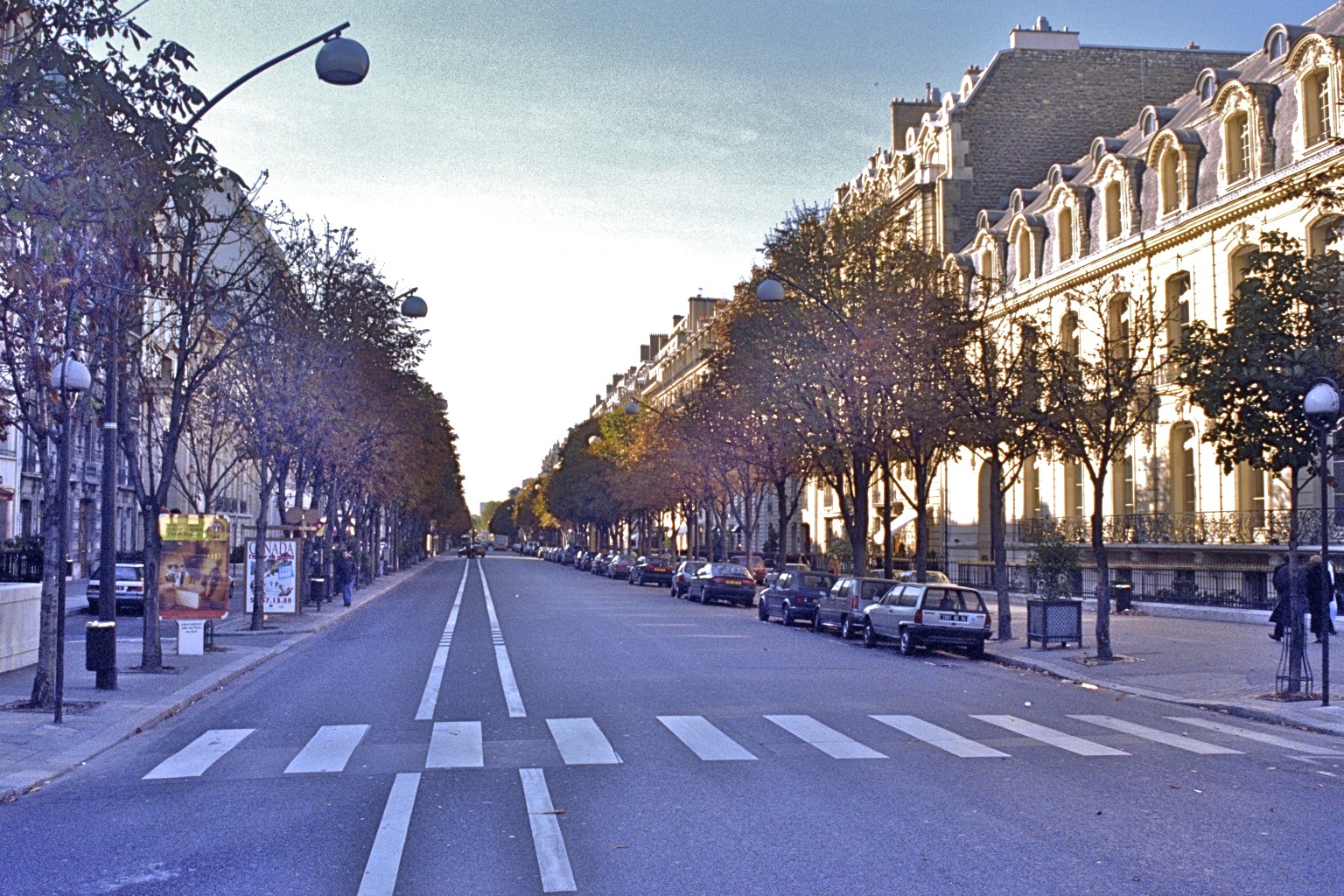
Avenue Montaigne

We continue along Faubourg Saint-Honoré and are soon passing the Bristol hotel on our right. Soon after that we turn left into the wide Avenue Matignon. We cross Avenue Gabriel with its Élysées Matignon club and the stamp market. After crossing the enormous Champs-Élysées at the flowery Rond PoAvenue Montaigne, Parisint we continue directly into Avenue Montaigne.
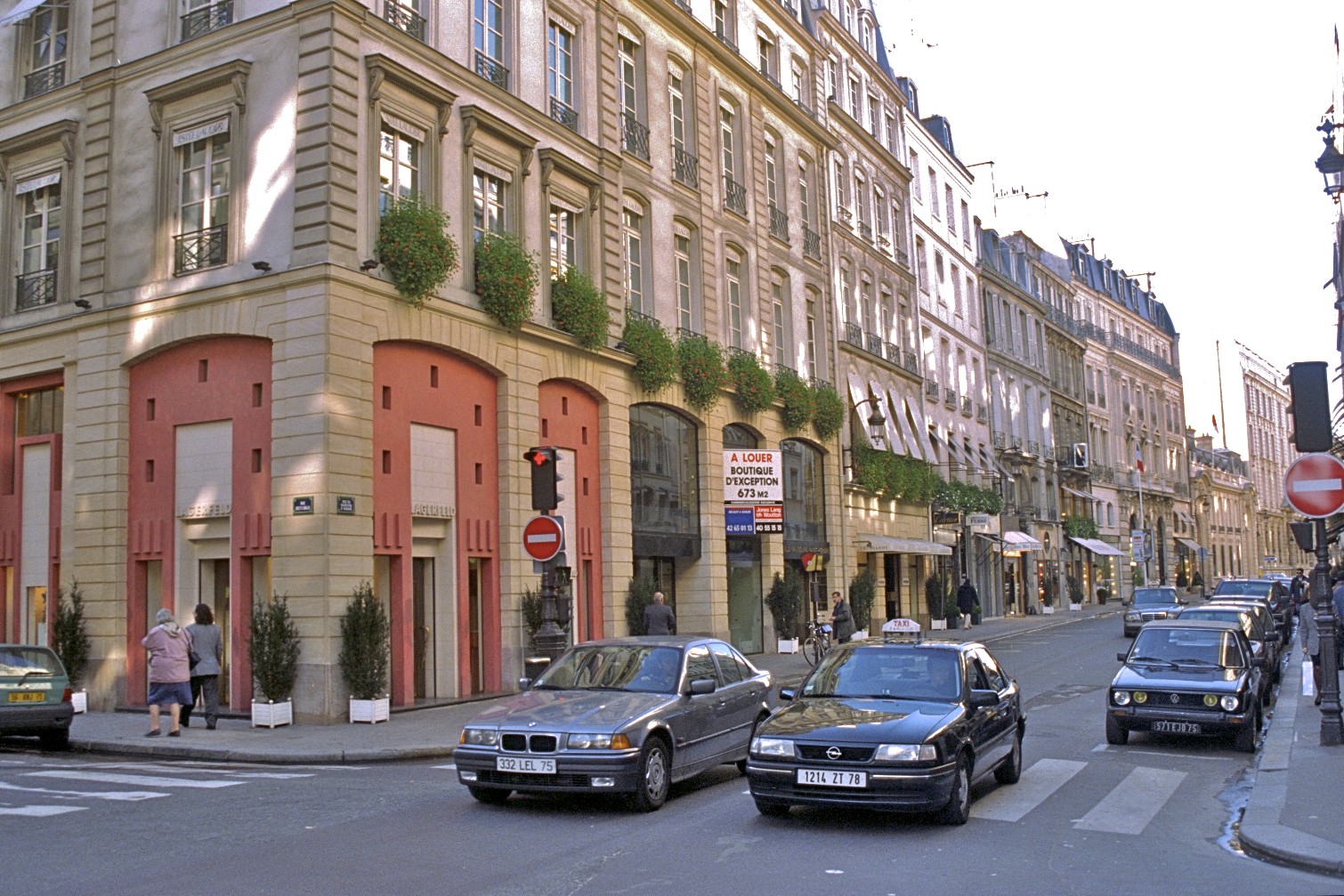
The main offices of some of the best known fashion houses line this street. They include Dior and Ricci in palatial buildings. Also, the best hotel in town, Plaza-Athénée, on our right.

This walk ends at the river bank at Place de l’Alma at the Alma Marceau metro. We have gotten a glimpse of the fashionable Paris. In our next walk we will cross the same district, but by a different route.

Next steps

5. Mode – Faubourg Saint-Honoré

Borgarrölt

Faubourg St. Honoré, Paris

Faubourg Saint-Honoré

We retrace our steps along Rue Royale, past an alley leading from the street to Cité Berryer with Caves Madeleine, the wine shop of Steven Spurrier. We continue on Rue Royale and turn right into Faubourg Saint-Honoré.

The part of Faubourg Saint-Honoré from Rue Royale to Avenue Matignon is a continuous spectacle of world-famous fashion houses. We see here Courreges, Féraud, Givenchy, Hermes, Jourdan, Lancôme, Lanvin, Lapidus, Laroche, Saint-Laurent, Scherrer, Torrente and Ungaro.

Fashionable ladies sail between destinations and we are sorry that the pavements are too narrow for their show to develop to the fullest.

Next steps

4. Mode – Madeleine

Borgarrölt

Madeleine, Paris 2

Madeleine

We continue along the wide and arcaded Rue Castiglione and turn right into the fashion street Rue Saint-Honoré, which we continue all the way to Rue Royale, where we see the Madeleine on our right. We turn that way and approach the church.

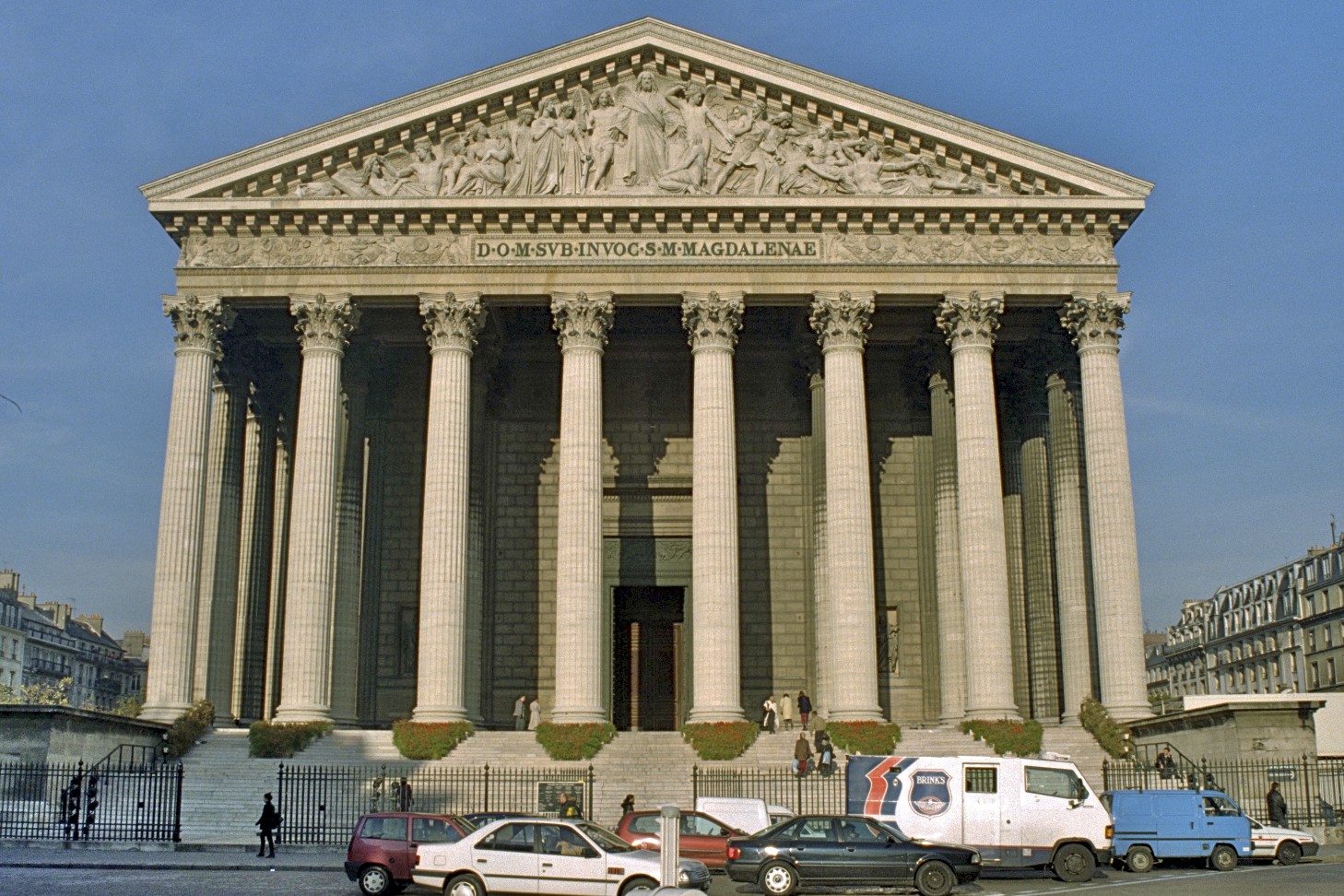
Sainte-Marie-Madeleine rises majestically as a Greek temple above crossroads where Haussmann’s boulevards congregate on the church from all directions.

Building started in 1764 and was not finished until 1842. It was initially meant to become a church, but in the meantime there were plans to convert it into an army temple or a railway station. It was in the end built as a church. It was designed by architect Vigneron at a time when the Neoclassic style was emerging and examples were sought in ancient Greece.

There is an excellent view from the church steps along the length of Rue Royale, over Place de la Concorde towards Palais Bourbon on the other side of the Seine. One of the flower markets of the city nestles under the eastern side of the church. Famous gourmet shops are around the square, Fauchon and Hédirard. Also, Senderens’ culinary temple, Lucas-Carton.

Next steps

3. Mode – Place Vendôme

Borgarrölt

Rue de la Paix

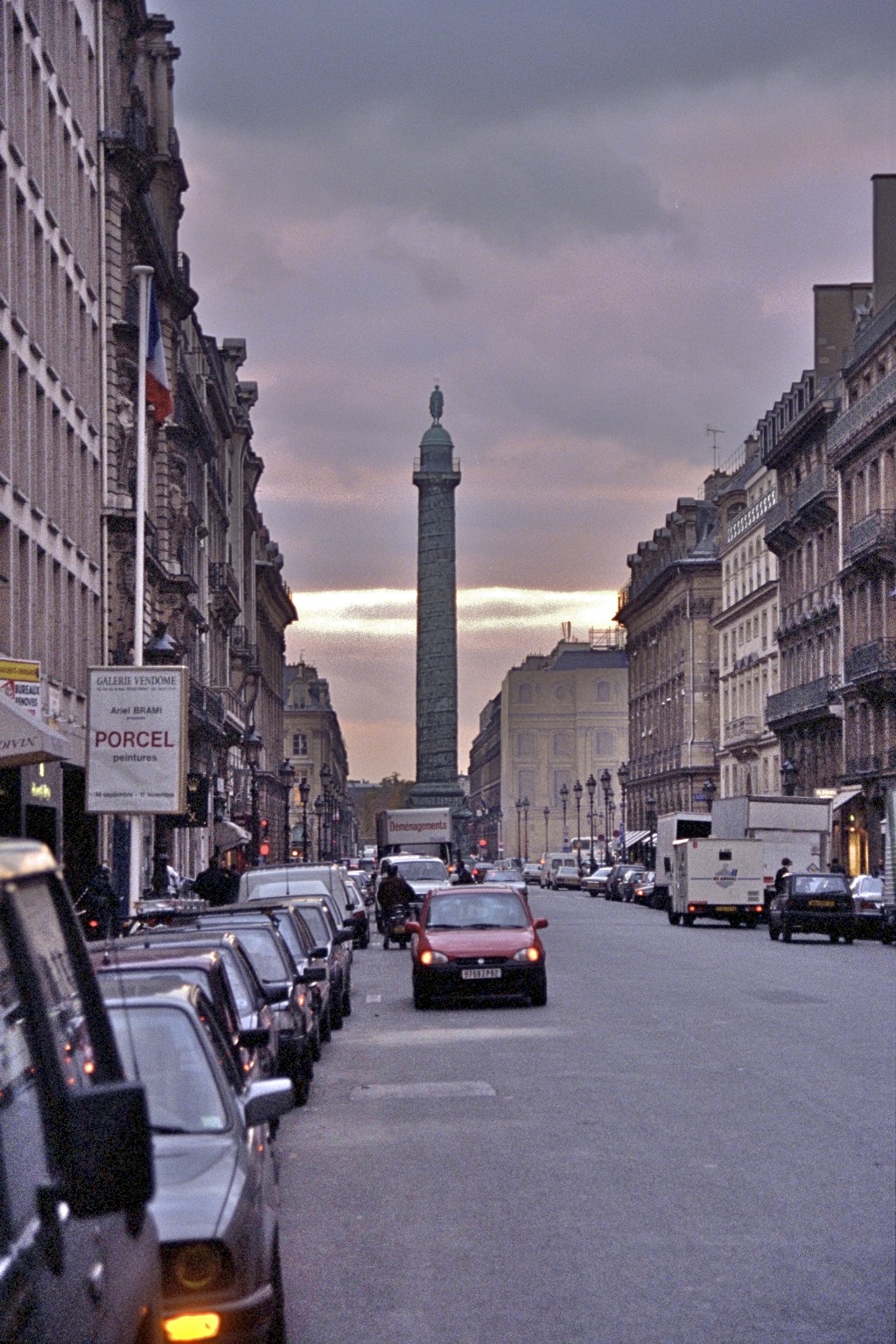
Napoleon, Place Vendome, Paris

Napoleon’s column at Place Vendôme

From Place de l’Opéra we turn back over Boulevard des Capucines and turn right into Rue de la Paix.

Famous for its jewellers. Many will recall names such as Christofle at no. 24, Cartier at no. 13, Mellers at no. 9, Poiray at no. 8, Jean Dinh Van at no. 7,; and at the square in front of us, Place Vendôme, Verney at no. 8, Chaumet at no. 12, Mauboussin at no. 20, Cleef et Arpels at no. 22 and Boucheron at no. 26.

Place Vendôme

We turn our attention to Place Vendôme.

All the way to Place Vendôme we recognized Napoleon’s column of victory, standing in its middle, made of bronze from 1200 captured cannons in the battle of Austerlitz in 1805. There is a statue of Napoleon himself on the top.

The square itself and the surrounding buildings are older, from 1702-1720. They were all designed by the architect Hardouin-Mansart in the years after 1685. He also designed Dome des Invalides and was responsible for the final appearance of Versailles. His Place Vendôme is the apex of 17th C. architecture in France.

On the ground floor arcades cover the side walks. Above there are pilasters reaching up two storeys. In the roofs there is a continuous row of dormer windows. The houses in the corners and the in middle of the wings have pediments. The best know building is the Ritz hotel.

Next steps

2. Mode – Opéra Garnier

Borgarrölt

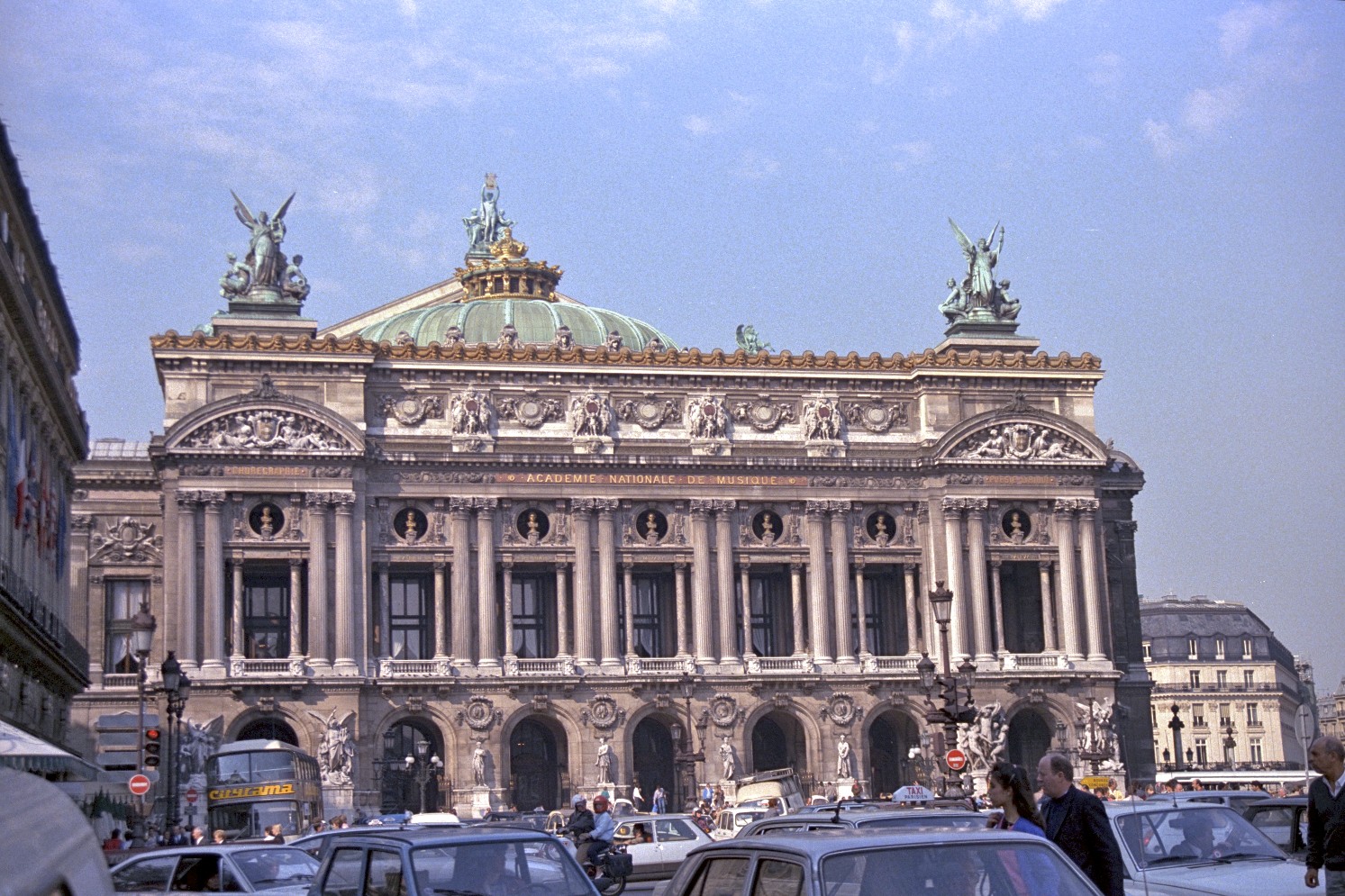
Opera Garniér, Paris

Opéra de Paris Garnier

When we come to Place de l’Opéra we cross another of Haussmann’s boulevards, Boulevard des Capucines, go past the famous Café de la Paix to reach the Opéra, which we have had in view the whole way.

The palace was built in 1862-1875 by the architect Charles Garnier after he won the first price in a competition sponsored by Napoleon III. The Opéra has always been criticized as an architectural mixture of styles. Opponents profess to have found in it aspects of all styles in history. Nevertheless, it is accepted that Garnier was better at such mixtures than most others.

The best-known part of this impractical building is the staircase in the lobby, especially designed to make the ornately dressed guests look splendid on them. They are in itself worth a visit. Also famous is the stage which can take 450 artists at the same time. And the ceiling painted by the 20th C. Russian painter Marc Chagall, contrasting sharply with everything else.

The centre of opera and ballet has until recently been here. Now the opera has moved to a new building at Place de la Bastille, also considered horrible by critics.

Next steps

5. Passages – Palais Royal

Borgarrölt

Jardin du Palais Royal

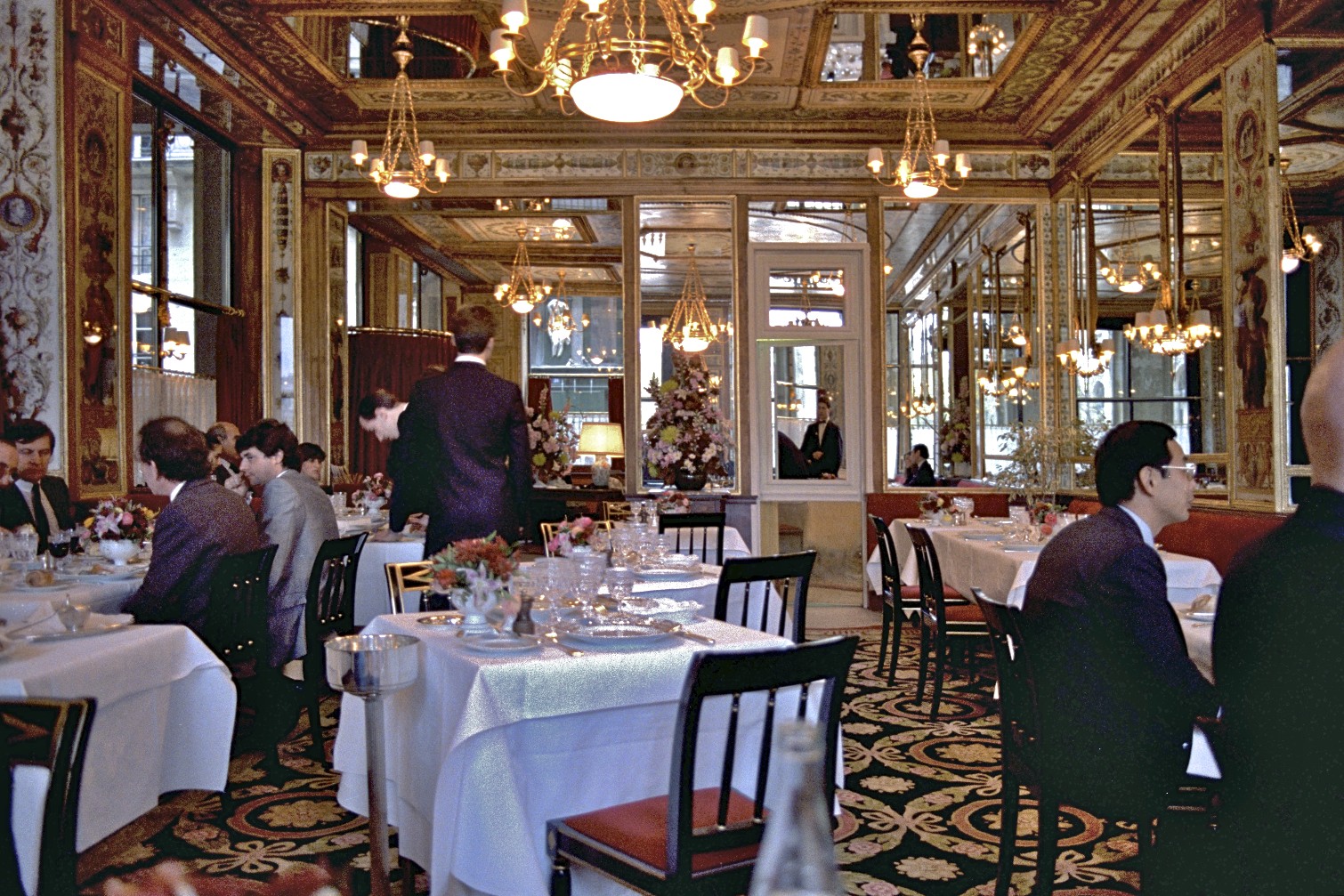
Grand Véfour, restaurant, Paris

Grand Véfour

At the other end we arrive into Rue des Petits Champs where we turn left and go past Biblioteque Nationale on our left. Having passed it we have a look into the beautiful Galerie Vivienne on our left before we cross Rue des Petits Champs, go a few meters along Rue Vivienne, cross Rue Beaujolais and continue through a colonnade into the peaceful Jardin du Palais Royal.

All around Jardin du Palais Royal the traffic noise abounds, particularly at the south west, in Place André-Malraux. But here in the garden we hear no din from the outside world. Any many are unaware of this peaceful garden as it is only entered through a few modest passages.

From the colonnade we can enter Grand Véfour, one of the most famous and most bewitching restaurants in the world, if we have succeeded in booking a table. If we cannot afford to lunch there we only need a few steps to go to Rue Richelieu, where we find the unbelievably cheap restaurant Incroyable

Palais Royal

We look at the building at the southern end of the garden, Palais Royal.

Built in 1632 for cardinal Richelieu. Shortly after his death the palace became the royal residence for a while. It has retained its name since then. It now houses the council of State. The palace is best known from Louis-Philippe d’Orléans who came into possession of it in 1780 and had the three other wings built around the garden.

In those years this was the centre of high living in Paris. Elegant shops lined the ground floor behind the arcades. The next floors housed the aristocracy and the rich. General Blücher is said to have lost here a million francs and a half in a gambling den when he arrived from Waterloo.

The high life has disappeared. At noon some clerks come here to lunch out of their bags. A few dogs are walked around. Every now and then a child is seen. A few stroll around the arcades and peep into the windows of speciality shops in medals, coins, books or pipes. The place is good for rest after shopping or running traffic or after becoming tired of the nearby Louvre.

Comedie Francaise, Paris

Comédie Française

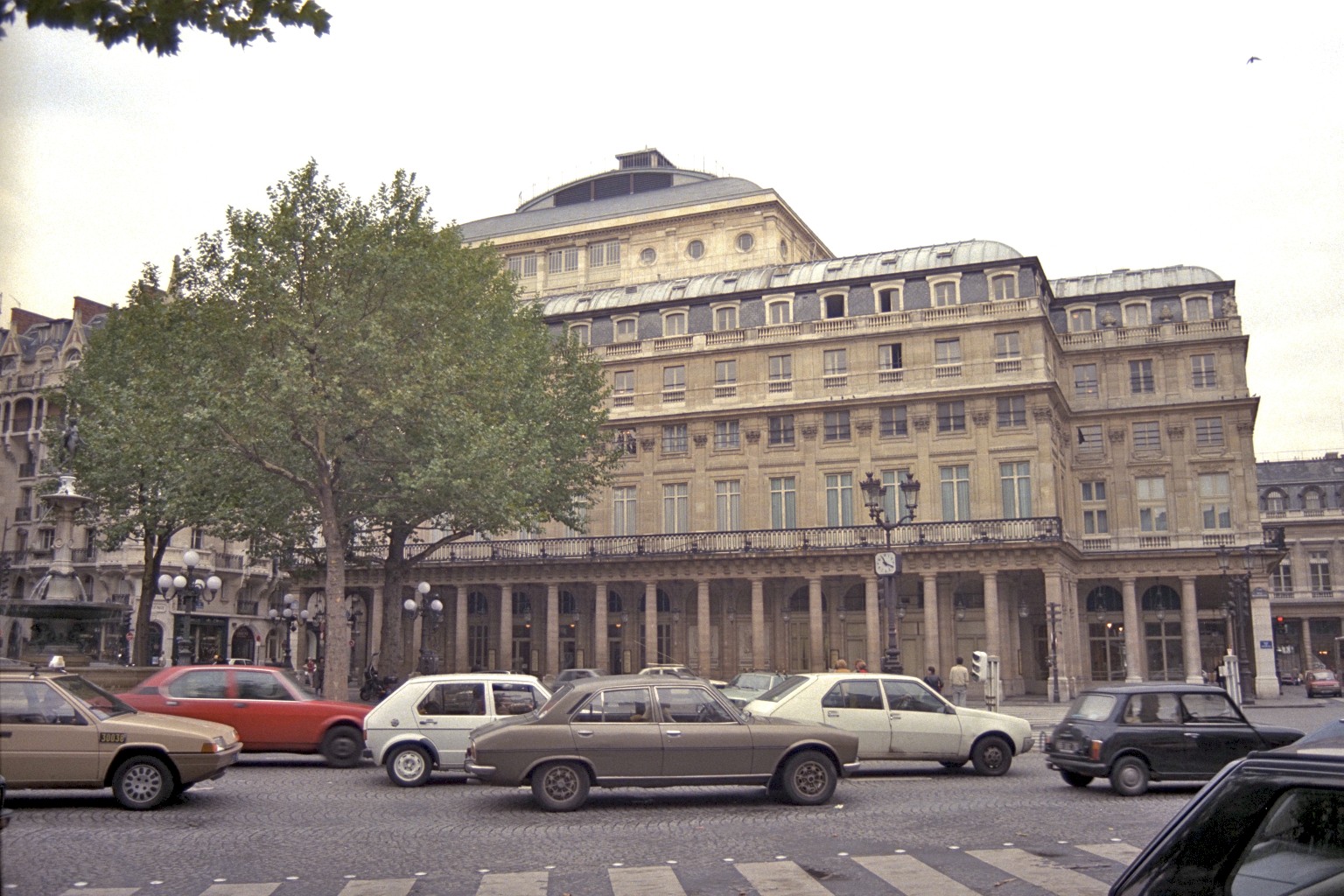
If we leave at the south western corner we come out at Place André Malraux, where Comédie Française rises on the garden side of the square.

It has been operated as a national theatre at this location since just before the turn of the century. But its ensemble is much older, from 1680.

It now stresses traditional plays of authors like Molière. When we were last time in Paris, two out of four plays in the repertory were by Molière, one by de Becque and one by Tschekov.

From the square there is an excellent view up Rue de l’Opéra.

Next steps